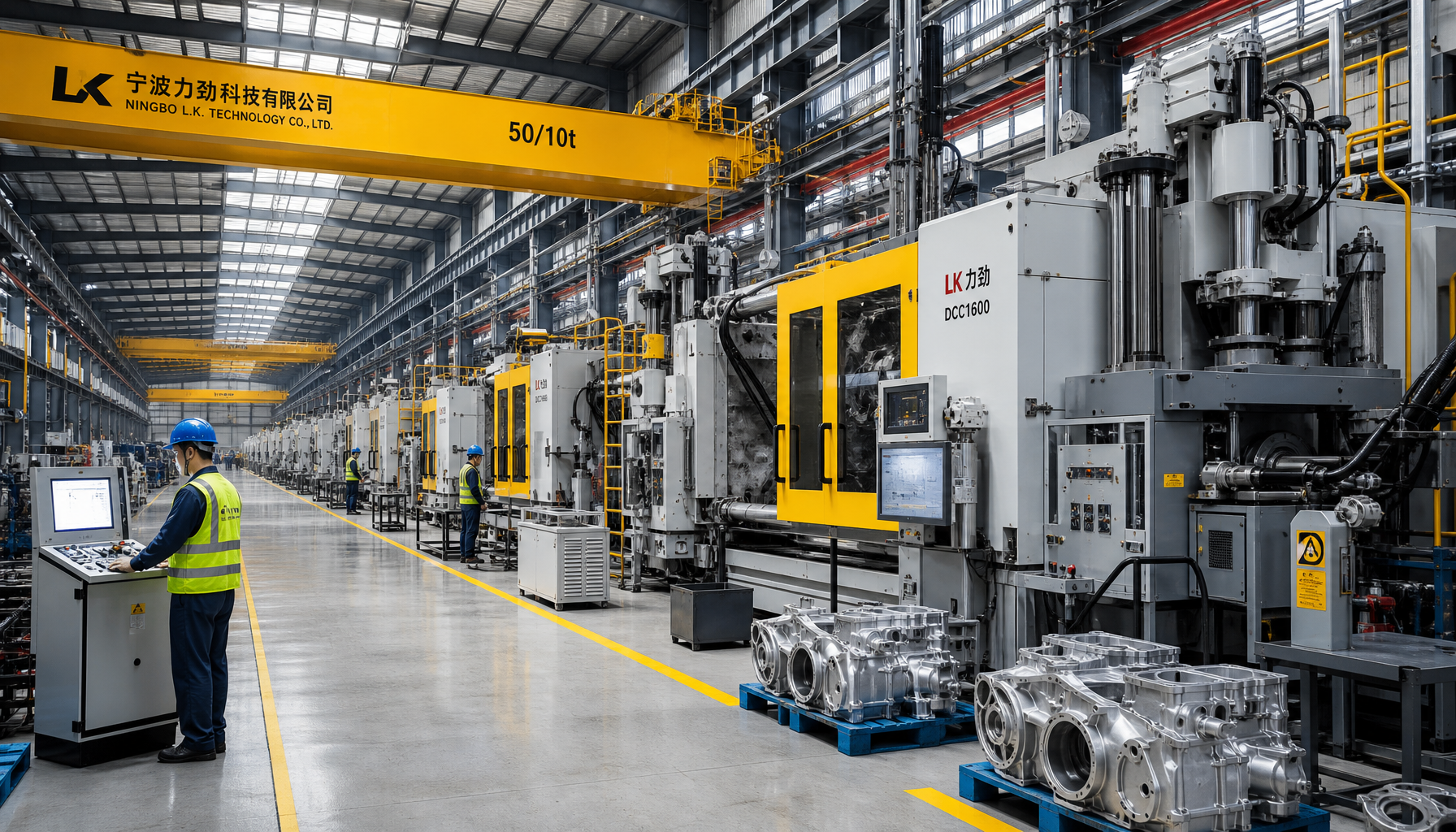
China poured roughly 52 million metric tons of castings in 2024. About a third of that ended up in vehicles — engine blocks, transmission housings, steering knuckles, subframes, brake calipers, turbocharger housings. If you're sourcing automotive castings right now, those numbers cut both ways. The capacity is real. So is the noise: of roughly 20,000 casting enterprises in the country, only around 1,800 to 2,200 carry a valid IATF 16949 certificate linked to automotive production. Everything else advertises itself as automotive-capable anyway.
This guide is about the second number. It's the one that decides whether your project ships on time or eats three months of rework.
The Chinese automotive casting market, by the numbers
Before you shortlist anything, it helps to know the shape of the supply base you're shopping in. These are the figures that matter for planning — keep them handy, because half of them decide your shortlist before you ever send an RFQ.
| Metric | 2024–2025 estimate |
|---|---|
| China total casting output | ~52 million metric tons |
| Share going to automotive | ~30% (15–16 million tons) |
| China's share of global casting output | ~45% |
| Vehicles built in China (2024) | ~31 million units |
| Aluminum's share of automotive castings | ~22% (2016) → ~37% (2025 est.) |
| Enterprises with automotive-grade IATF 16949 | ~1,800–2,200 |
The aluminum shift is the one to watch. EV platforms need lighter structural parts, and the industry responded by converting tons of traditional iron capacity into aluminum. A steering knuckle that was ductile iron five years ago is often an aluminum high-pressure die casting now. If you're sourcing legacy iron parts, that means fewer suppliers than the headline numbers suggest — and the good ones know it.
Where the factories actually sit — five clusters, five different animals
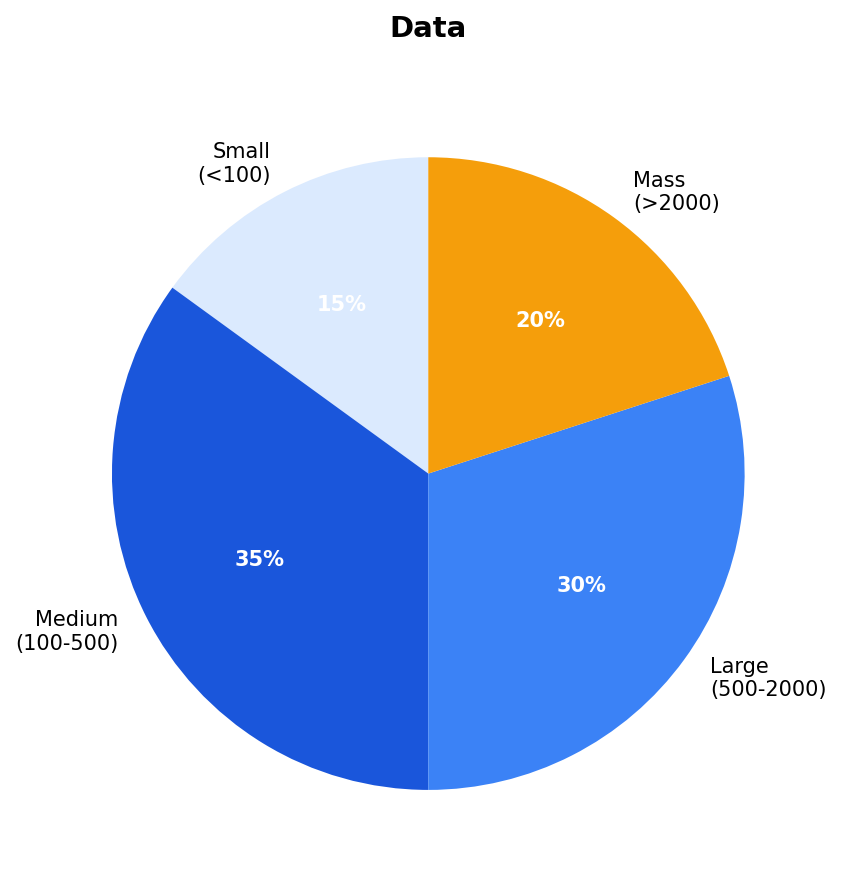
"China" isn't a sourcing location. It's a country with at least five distinct casting regions, each with its own strengths, floor rates, and failure modes. Pick the wrong cluster and you'll spend the next year teaching a supplier a process they've never run at scale.
Ningbo, Zhejiang — the die casting capital
Ningbo and the surrounding Beilun–Yinzhou area holds an estimated 3,000+ die casting-related manufacturers. It's the densest aluminum HPDC concentration on earth. If your part is an aluminum transmission housing, an inverter enclosure, or a battery tray component, this is where the tooling shops, alloy suppliers, and heat treaters all sit within a 40-minute drive. Machine tonnage scales from 800 to 4,400 tons, and the top 50 factories run lights-out cells.
Downside: labor costs here are 20–30% above the inland average. For a price-shopped part, Ningbo is rarely the cheapest quote — but it's usually the most repeatable.
Cangzhou and Botou, Hebei — the iron heartland
The Cangzhou region, with Botou at its center, hosts well over 1,000 foundries producing gray iron and ductile iron by sand casting. Brake calipers, exhaust manifolds, differential carriers, and truck axle components live here. Casting weights run from 0.5 kg to several tons.
Three things to know. First, quality spread is enormous — the top 30 factories are genuinely automotive-grade with automated molding lines; the bottom 300 are job shops with floor molding and no traceability. Second, the environmental compliance crackdowns of 2017–2021 closed hundreds of small iron foundries, which pushed surviving capacity into fewer, larger hands. Third, price competitive for iron sand castings: $1.40–$2.20/kg for ductile iron at automotive spec.
Shandong — heavy castings and trucks
Shandong specializes in larger, heavier components — commercial vehicle castings, wind turbine parts, and mining equipment. For automotive you'll find axle housings, brake drums, and heavy-duty suspension parts. Roughly 1,200 casting enterprises across the province. Weaker on precision aluminum, stronger on thick-wall iron and steel.
Jiangsu — investment casting and precision
Jiangsu, especially around Wuxi and Suzhou, is the investment casting (lost wax) corridor. Turbocharger housings, EGR components, sensor bosses, and small precision steel parts. Tolerances down to CT4–CT6, surface finish as-cast at Ra 6.3 or better. Suzhou also has a cluster of Japanese and German joint-venture foundries that serve OEMs directly and typically won't touch projects under 20,000 pieces per year.
Guangdong — die casting, but consumer-driven
Guangdong runs strong aluminum HPDC capacity, though the region's commercial culture is still tilted toward consumer electronics and appliance castings. Automotive work is growing — several Shenzhen and Dongguan factories now run IATF-certified lines for EV startups — but the automotive process discipline is less mature than Ningbo's. If you're sourcing there, ask specifically how many automotive PPAP submissions the plant completed in the last 24 months.
Which process are you actually buying?
Half the bad quotes floating around come from buyers asking for "casting" without naming the process. The process determines the alloy, the tooling cost, the tolerance, and the part geometry that's even possible. Match these five.
High-pressure die casting (HPDC)
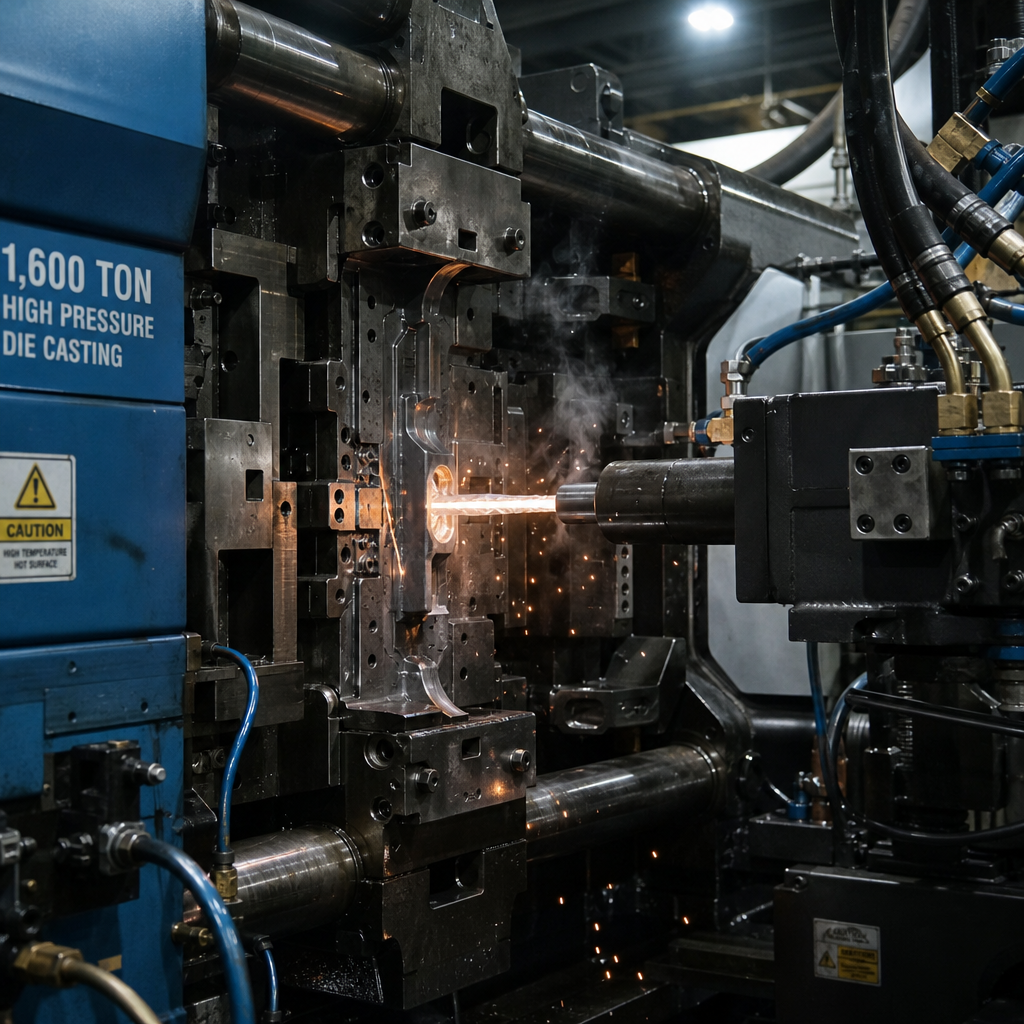
Molten aluminum or magnesium forced into a steel die at 700–1,200 bar. Cycle times under 120 seconds. Best for thin walls (1.5–4 mm), high volume (50,000+ pieces/year), and complex net shapes. Typical parts: gearbox housings, valve bodies, structural battery components. Tooling: $25,000–$180,000 per die. Surface finish excellent, porosity control is the whole game.
Low-pressure die casting (LPDC)
Fill pressure of 0.2–0.8 bar, better for thick-wall aluminum and wheels. Density is higher than HPDC, porosity lower. Cyclical, slower — 3–8 minutes per part. Common for EV motor housings and structural nodes where fatigue matters.
Sand casting
The workhorse for iron. Green sand or resin-bonded. Wide size range, low tooling cost (patterns $2,000–$20,000), tolerances looser (CT8–CT10 typical). If your part is a differential housing or an exhaust manifold, this is your process. Expect final machining allowance of 2–5 mm.
Investment (lost wax) casting
Wax pattern, ceramic shell, pour, break out. Excellent surface finish, tight tolerances, good for small to mid-size steel and stainless parts. Turbo housings, exhaust valves, sensor bodies. Higher unit cost per kg — often $4.50–$9.00/kg — but few alternatives for the geometry.
Lost foam
Polystyrene pattern vaporized by the pour. Cleaner parting lines, more design freedom than sand, but a smaller supplier base and less familiarity outside a handful of plants. Worth asking about for complex iron geometries where you'd otherwise weld three sand-cast pieces together.
The real landed cost — what you're actually paying per kg
Quoted piece price is a third of your cost. Here's the whole picture, using a 1.8 kg aluminum HPDC part in steady production as the example.
| Cost element | Typical share | What moves it |
|---|---|---|
| Aluminum alloy (ADC12 / A380) | 45–55% | LME plus a $250–$450/ton domestic premium; scrap return credited back |
| Melting energy | 8–12% | Gas vs electric holding furnaces; regional power price |
| Direct labor | 8–14% | Cluster wage rate: Ningbo runs ~20–30% above Shandong |
| Die amortization | 5–10% | Volume assumption; a 20% volume miss can add 4–6% to unit price |
| Scrap and rework | 3–8% | PPM performance; runs above 1,500 PPM eat margin fast |
| Machining and finishing | 10–20% | Complexity, number of ops, whether you source it in-house or at a sub-tier |
| Packaging and inland freight | 2–4% | Returnable racks vs one-way pallets |
| Factory margin | 8–15% | Healthy range; anything under 6% is a warning sign, not a win |
Total for a mid-complexity automotive aluminum HPDC part, FOB Shanghai: $2.20–$3.80/kg. The same geometry cast domestically in the US: $6–$12/kg. Ductile iron sand castings land at $1.40–$2.20/kg ex-works versus $4–$7/kg in Europe or North America.
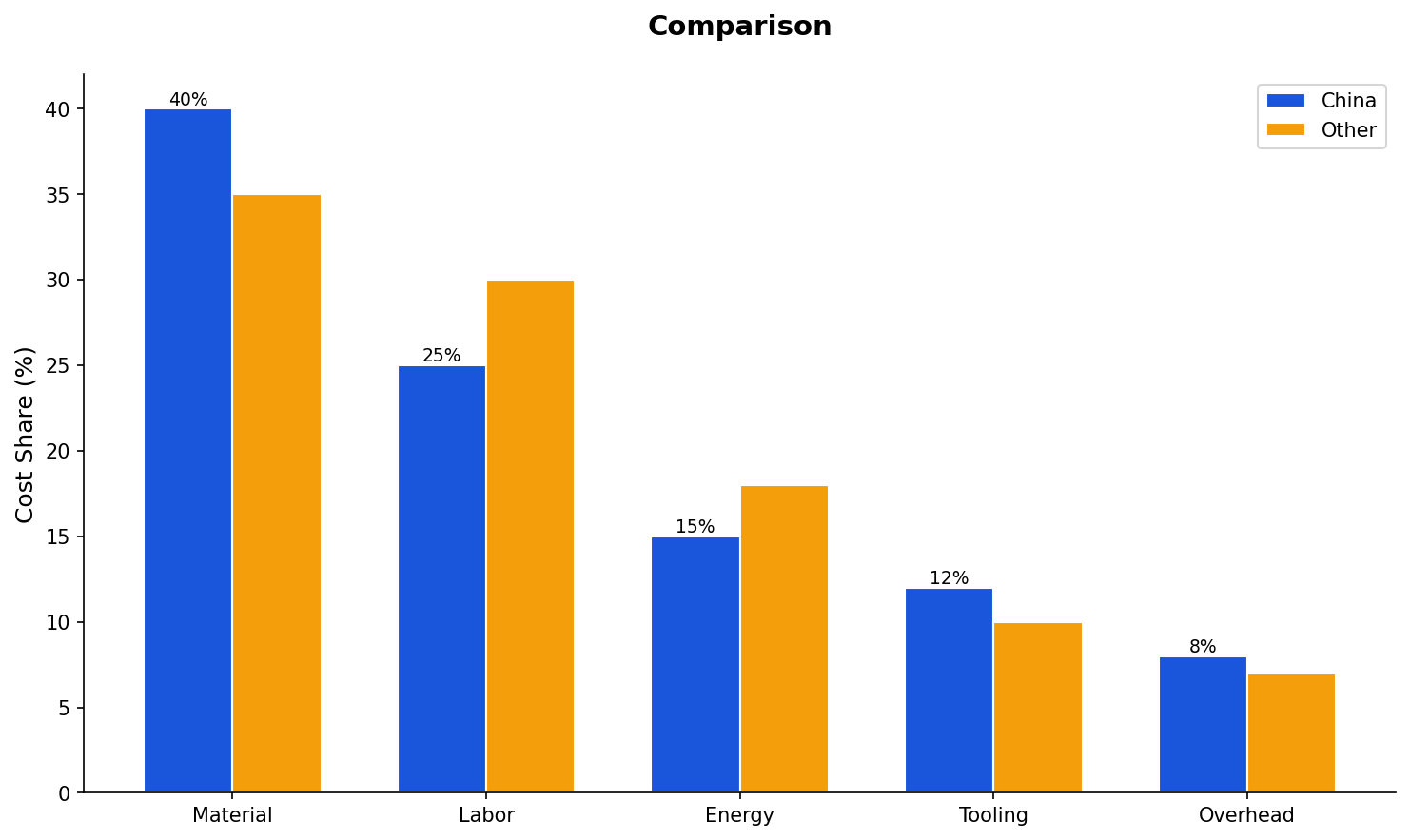
Two things to catch before you lock a price. First, how the factory handles alloy scrap credit. Every runner, sprue, and reject goes back into the melt. If the supplier builds that credit into the quote, fine. If they don't and then quietly sell the scrap, you're paying twice. Second, whether the tooling amortization assumes your stated volume. Get the volume assumption written down. If you commit to 60,000 pieces and take 35,000, the supplier will come back for the difference — and they'll be entitled to it.
IATF 16949 and how the certificate game works
Every serious Chinese automotive casting factory will send you a PDF certificate within an hour of your first email. Roughly a quarter of those PDFs have a problem — expired, covering a different site, or scoped to a product category the plant doesn't actually run.
Verify it yourself. The IATF maintains a public database at iatfglobaloversight.org. You can search by certificate number, company name, or certification body. What you're checking:
- Validity date. IATF certificates run on a three-year cycle with annual surveillance audits. An expired surveillance means the certificate is suspended until resolved.
- Site address. The certificate applies to a specific manufacturing site. A group holding company's certificate does not cover the satellite plant your parts will come from.
- Scope statement. It should name the product family. "Manufacture of aluminum die castings" covers your housing. "Manufacture of aluminum components" on a certificate whose scope line reads "consumer electronics housings" does not.
- Certification body. TÜV, SGS, DEKRA, BSI, Intertek, and a short list of others are IATF-recognized. A certificate from an unrecognized body is worth nothing to your OEM customer.
Beyond IATF 16949, the credentials that actually change your risk profile:
| Certification | What it tells you | When it matters |
|---|---|---|
| ISO 14001 | Environmental management system | Anything exported to the EU; increasingly requested by OEMs for ESG reporting |
| ISO 45001 | Occupational health and safety | Signals mature plant management; correlates with lower turnover |
| ISO 9001 only | General quality system | Fine for industrial castings; not sufficient for automotive Tier-1 or OEM supply |
| CQI-9 (heat treat) | NADCAP-aligned heat treat control | Any cast part requiring heat treatment — aluminum T6, ductile iron austempering |
| CQI-11 (plating) | Plating and coating control | Parts with zinc plating, e-coat, or passivation |
| CQI-27 (casting) | Special process audit for castings | Increasingly demanded by OEMs; still uncommon in China, so it's a filtering criterion |
One more. Ask for the PPAP level the plant last submitted to an automotive customer, and ask to see the PSW (Part Submission Warrant) redacted. A factory that can't produce a PSW has never completed a real automotive launch. That single question will eliminate half your shortlist in five minutes.
The 7-point audit — run this before you sign
An on-site audit is non-negotiable for automotive work. Here's the checklist that catches the problems that cost you money.
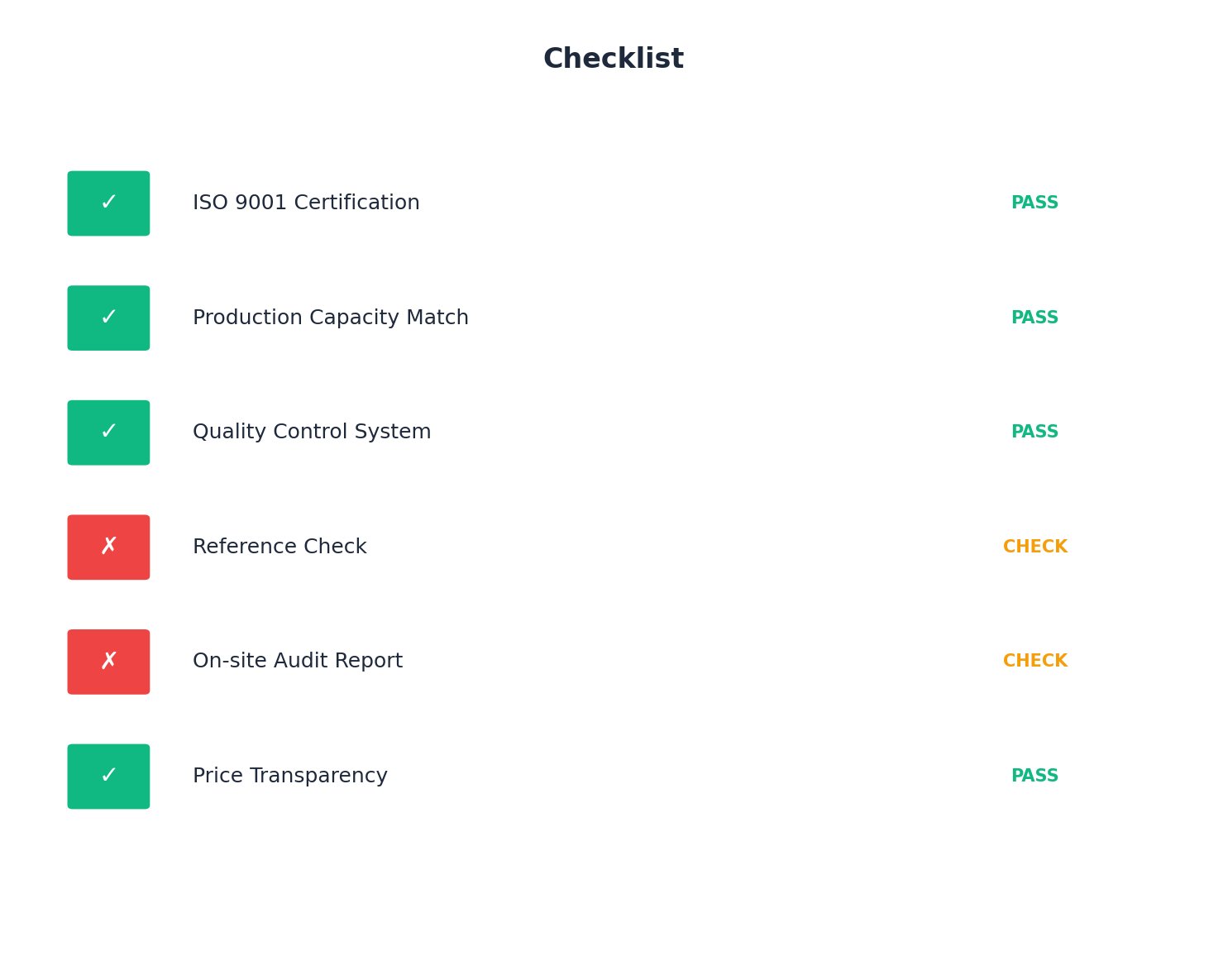
- Melt traceability. Can the plant show you, for a specific heat number, the alloy certificate, the charge makeup, and which castings came out of that melt? If traceability starts and ends at the warehouse door, walk.
- Real NDT capability. X-ray or CT for internal porosity, plus FPI or MPI for surface defects. Ask to see yesterday's images, not the showreel. A plant with no in-house X-ray is sending your critical parts out for inspection, which kills cycle time.
- Dimensional lab. CMM with current calibration certificate, gauge R&R records under 10% for critical characteristics, and a controlled temperature room. If the CMM sits in the machine shop floor next to the grinders, you're looking at a decorative instrument.
- Process control on the floor. Ask the line supervisor to show you the SPC chart for a critical characteristic from the shift running right then. Not a printed report from last month. Today's chart, on the floor, with the operator's initials.
- PPAP history. Which automotive programs has this plant launched in the last three years, and what PPAP level? Under NDA they can share program codes. Three launches at Level 3 with OEMs tells you more than any brochure.
- Sub-tier control. Who supplies the alloy? Who does the heat treat? Who does the coating? Are they approved on the supplier's own ASL, and how? Uncontrolled sub-tiers are where recalls are born.
- Corrective action closure rate. Pull the last 12 months of 8D reports. What percentage closed inside the customer's deadline? Anything under 85% means the plant is firefighting, not managing.
Three things every new buyer gets told that aren't true
"We're an OEM supplier"
Ask which OEM. Ask which program. Ask which part number. In roughly seven out of ten cases, the "OEM supplier" claim turns out to mean the plant supplied a Tier-3 job shop that supplies a Tier-2 that supplies a Tier-1. That's not disqualifying — but it changes your risk model. Direct Tier-1 experience is what compresses your learning curve, and there's a wide gap between one launch and fifty.
"Our PPM is under 100"
Almost everyone quotes a PPM under 100, and almost none of them measure it the way you do. The number depends entirely on what counts as a defect and who's counting. Ask to see the defect definition, the inspection frequency, and the sample size. A plant running AQL sampling at 0.65% and calling out-of-tolerance parts "acceptable variation" can post any PPM it likes.
"Tooling is included in the piece price"
Sometimes it is — and then you don't own the die. When you change suppliers, the die stays. Read the tooling clause carefully. If you're paying for tooling as a line item, you should get: a tool ownership certificate, the die drawing, a maintenance log, and the die itself on request. If tooling is baked into unit price, get a written buy-out schedule that transfers ownership after a stated volume.
Frequently asked questions
How many automotive casting factories are there in China?
Around 20,000 casting enterprises operate nationally, but only an estimated 1,800 to 2,200 hold a valid IATF 16949 certificate covering automotive production. For a specific process and part weight class, your realistic shortlist is usually 30 to 60 credible candidates, and maybe 8 to 12 you'd want to actually audit.
What's the going rate for aluminum die casting in China in 2026?
For mid-complexity automotive HPDC parts, expect $2.20 to $3.80 per kg FOB Shanghai, freight excluded. Factors pushing you to the top of that band: tight wall thickness control, cosmetic Class A surfaces, high machining content, or a low annual volume that spreads the die cost thinly. Ductile iron sand castings run $1.40 to $2.20/kg ex-works.
Is IATF 16949 really mandatory?
If your end customer is an OEM or a Tier-1, yes — it's contractual. If you're building industrial equipment or aftermarket parts, ISO 9001 may be sufficient contractually, but the process discipline that comes with IATF is still what keeps your defect rate predictable. Verify the certificate on the IATF public database rather than trusting the PDF.
How long does tooling and launch take?
High-pressure die casting dies for a mid-size part: 8 to 14 weeks from design freeze to first shot. Sand casting patterns: 3 to 6 weeks. Then add 2 to 4 weeks for first-article inspection, dimensional reports, and PPAP documentation before you release volume. Plan on 4 to 6 months from PO to steady production for a new automotive casting.
What defect rate should I accept?
Mature automotive casting lines run 200 to 800 PPM in steady state. Anything above 1,500 PPM after six months of volume production is a process control issue, not a learning curve. Set the target in the contract with a corrective action trigger, and hold the supplier to the 8D closure timeline.
Where to go from here
The Chinese automotive casting supply base is deep, competitive, and genuinely capable. It's also crowded with factories that will say anything to get your RFQ. The difference between a smooth launch and a nine-month nightmare usually comes down to two things: verifying the certificates yourself, and walking a plant floor before you sign anything.
If you want to compress that work — pre-qualified plants, verified IATF scope, PPAP history on file, and someone on the ground for the audit — start by telling us what you're sourcing. Process, part weight, annual volume, target price. We'll come back with a shortlist of plants that actually fit, no brochure quality claims.
Get a shortlist, not a sales pitch
Send us your part drawing and target volume. You'll get back a narrow list of IATF-verified casting factories matched to your process — plus the audit findings we already have on file for each one.
Submit your part for a factory shortlist