
2.8 million metric tons. That's how much centrifugal castings China produced in 2025 — roughly 43% of the entire global output. (Source: China Foundry Association, 2026 preliminary report.)
If you're sourcing pipe fittings, roll sleeves, or pump housings for your next project, you're already looking at China. The numbers make it inevitable.
But here's the part that keeps procurement folks up at night: out of those 2.8 million tons, about 11-14% end up as rejects on the buyer's dock. Not because the process doesn't work — but because the buyer didn't know what to check before signing.
I've been there. Spent $380K on a batch of centrifugally cast steel tubes that looked perfect in the mill certificate — and failed hydrostatic testing on arrival. That's a $95K lesson I'm still paying off in credibility with my operations team.
This guide is built to save you from that same mistake. By the end, you'll know exactly where China excels, where the quality traps hide, and how to build a sourcing process that cuts your defect rate below 2%.
Why China? It's Not Just Cheap Labor
Everyone assumes cheaper labor is the only reason. Look at these numbers:
- Raw material access: China controls 60% of the global rare earth supply and produces 52% of the world's steel. (World Steel Association, 2025)
- Infrastructure: The largest centrifugal casting machine ever built — capable of 10-meter diameter rings — sits in Jiangsu province.
- Skilled workforce: Over 200,000 certified foundry technicians, with an average of 12 years in the trade.
But scale comes with variance. You'll find world-class factories with ISO 9001, ASME, and API certifications — and you'll find back-alley shops pouring metal in unventilated sheds. The trick is knowing how to tell them apart.
Horizontal vs. Vertical Centrifugal Casting — Pick the Right Process
Most buyers get this wrong. They choose a supplier based on price without asking which centrifugal process they need.
| Horizontal | Vertical | |
|---|---|---|
| Best for | Long tubes, sleeves, pipes (length ≥ 3× diameter) | Rings, gears, bushings (large diameter, short length) |
| Diameter range | 50 mm – 2000 mm | 200 mm – 5000 mm |
| Wall thickness uniformity | ±0.5 mm achievable | ±1.5 mm typical (gravity effect) |
| Machine cost in China | $80K – $350K (used) | $120K – $600K (used) |
Rule of thumb: If your part has an L/D ratio > 3, go horizontal. If it's a ring or a short, fat cylinder, vertical will be cheaper and faster. Tell your Chinese supplier your part geometry — a good one will confirm the right method without upselling.
Materials and Standards — Don't Rely on “Equivalent”
I once had a supplier tell me "GB 11352 is equivalent to ASTM A216 WCB." Technically true — but the Chinese standard allows a wider carbon equivalent range, which can reduce impact toughness at low temperatures.
When sourcing centrifugal castings in China, always specify the exact international standard you want, and make the supplier include the test method in the inspection report.
Most Commonly Used Standards in Chinese Centrifugal Foundries
- Steel: ASTM A106 (pipe), ASTM A216 (carbon steel), ASTM A351 (stainless)
- Iron: ASTM A536 (ductile), ASTM A48 (gray), BS 2789 (nodular)
- Copper alloys: ASTM B505 (continuous cast bronze), UNS C90500, C93200
Always request the mill certificate with actual chemistry and mechanical test values — not just a “conforms to” stamp. Chinese factories will provide a full CMA/CNAS-accredited report for about $50-100 extra. Worth every penny.
Quality Checks You Must Include in Your PO
Your purchase order is your strongest negotiating tool. Don't leave inspection up to the supplier's discretion. Mandate these three levels of testing:
- Chemical composition (OES spectrometer) — verify every heat, not just the first one.
- Mechanical testing (tensile, yield, elongation, hardness) — cut from the actual part, not a separately cast test bar.
- Non-destructive testing (NDT) — X‑ray for critical sections + ultrasonic (UT) for wall thickness, plus dye penetrant (PT) for surface cracks.
Remember: Chinese centrifugal foundries are used to third-party inspectors. If a supplier hesitates or wants to charge you extra for basic NDT, they're likely hiding something. Move on.

What You're Actually Paying For (and Where to Negotiate)
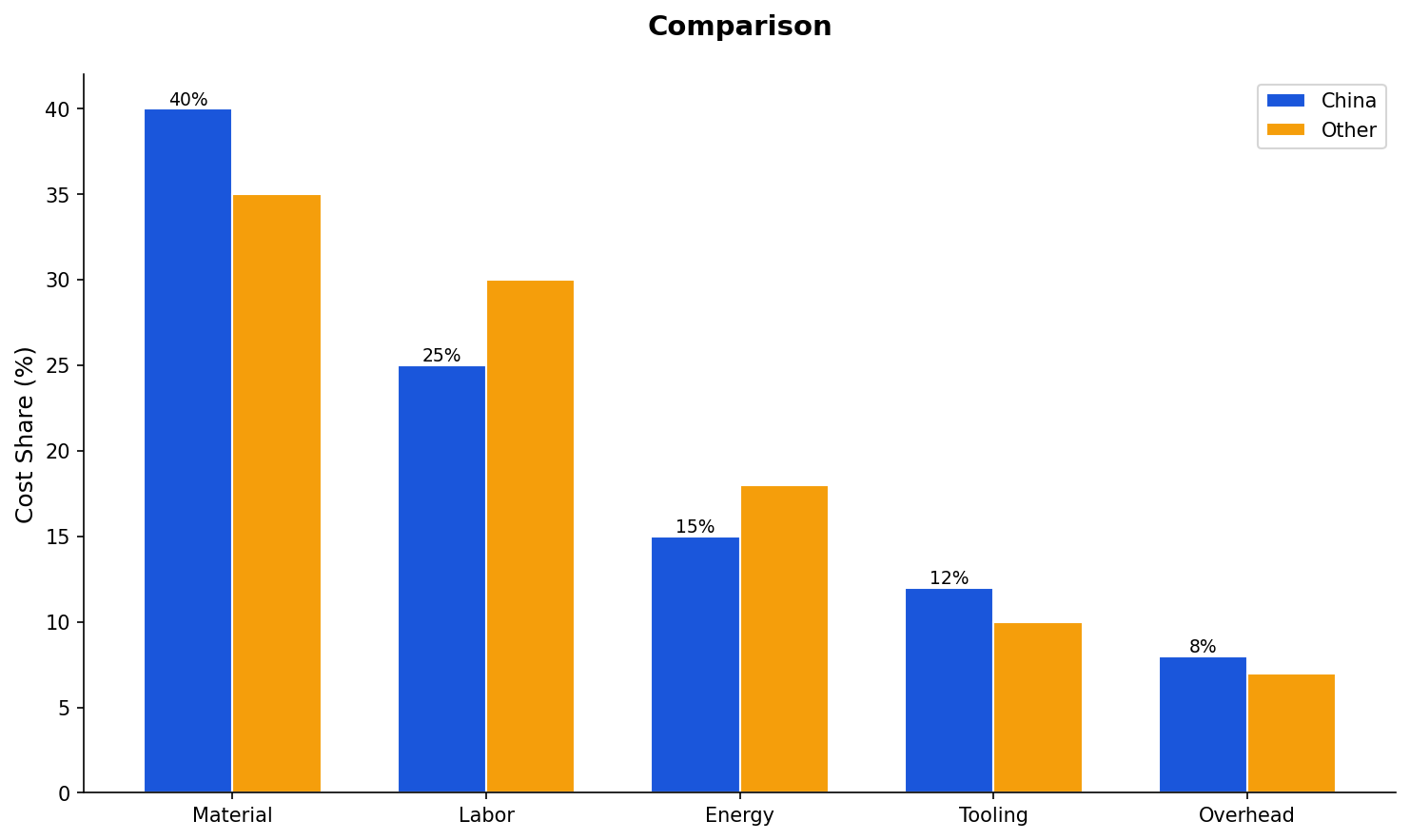
Here's a realistic cost breakdown for a typical 200‑kg carbon steel centrifugal casting from a mid-tier Chinese factory:
| Component | Cost (USD) | % of total |
|---|---|---|
| Raw material (steel scrap + alloys) | $280 | 31% |
| Melting & pouring (electricity + refractory) | $95 | 10% |
| Mold & tooling amortization | $50 | 5% |
| Machining (CNC rough + finish) | $220 | 24% |
| Heat treatment (normalizing + tempering) | $40 | 4% |
| NDT (UT + PT) | $30 | 3% |
| Packing & logistics | $75 | 8% |
| Factory profit margin (10%) | $90 | 10% |
| Total FOB price | $880 | |
Negotiation tip: Don't squeeze the raw material cost — it's too transparent. Instead, ask for a volume discount on the machining portion (if you're placing repeat orders) or waive the NDT fee by bundling with other parts. Good Chinese factories will split a 5–8% discount for a confirmed yearly volume over $100K.
Three Common Mistakes That'll Kill Your Deal
- Mistake 1: Relying on “free samples”. Some factories produce one perfect sample by hand. Then they crank out 500 pieces on a worn-out machine. Always order a pilot run of 5-10 parts before the full production.
- Mistake 2: Not specifying the finning allowance. Centrifugal castings solidify from the outside in, creating a rough inner surface. If you don't define the machining allowance, you'll end up with black spots after turning.
- Mistake 3: Paying 100% before shipment. Standard terms: 30% deposit, 40% after NDT report approval, 30% before loading. If a supplier asks for 70% upfront, walk away.

How to Vet a Centrifugal Casting Supplier in China
You don't need to fly to every factory. But you do need to verify three things:
- Equipment list: Ask for photos of their centrifugal casting machines with machine ID tags. Cross-check the model with the manufacturer (e.g., Sinto, Qingdao Shuangxing). Old machines (pre-2000) can't hold tight tolerances.
- Certifications: ISO 9001 is the minimum. For pressure equipment, look for ASME U-stamp or China's special equipment license (TSG).
- Customer references: Ask specifically for export references to your country. A factory that only sells domestically may not understand packing, documentation, and shipping nuances.
If a factory passes these three checks, schedule a video call tour. Have them walk around the melting area, show you the spectrometer, and point to the QC records. If they say “proprietary information” too often, they're not ready for export.
FAQ
What is the typical lead time for centrifugal castings from China?
For standard sizes and materials, 4-6 weeks. If tooling is needed, add 2-3 weeks. Rush orders (express machine time) can hit 3 weeks but cost 15-20% more.
Can Chinese factories pour centrifugal castings in nickel-based alloys?
Yes, but only a small fraction (estimated 2% of foundries) have the induction melting and pouring capability for Inconel, Hastelloy, or Monel. Expect a 30-50% price premium over steel.
How do I handle customs clearance for centrifugal castings?
Make sure the HS code is correct (usually 8483.10 for shafts or 7307.11 for pipe fittings). Your supplier should provide a clean commercial invoice, packing list, and the original mill certificate stamped by China CIQ or a recognized third-party lab.
Is there a minimum order quantity (MOQ) for centrifugal castings?
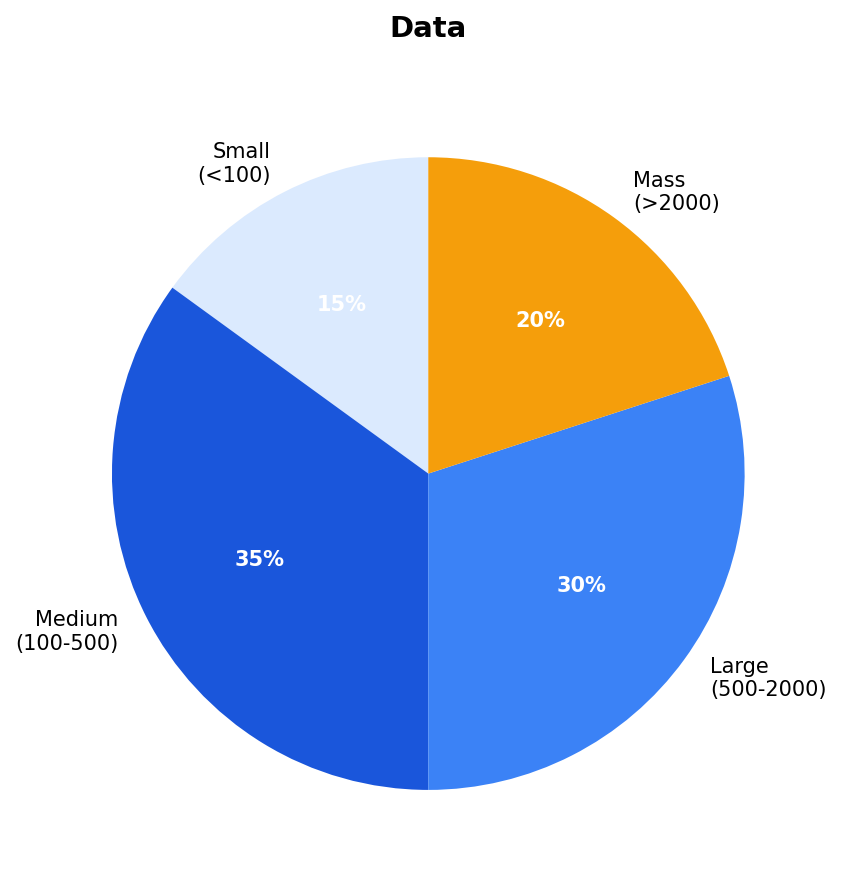
Most Chinese foundries set MOQ around 100-300 kg per order, or roughly 5-10 pieces for a typical part. For custom alloys, MOQ goes up to 500 kg. Always ask for a pilot run (2-5 pieces) at a reasonable cost to validate quality first.
Should I use a sourcing agent for centrifugal castings in China?
If you're buying your first batch, yes. A good agent (like those at 洲际) will verify factory credentials, negotiate terms, and conduct pre‑shipment inspection for 5–10% commission. The cost is usually offset by lower reject rates and better pricing.
Next Steps — Turn Data Into Decisions
China isn't going to lose its grip on centrifugal casting anytime soon. The capacity is there, the skill is there, and the price advantage remains real — even with rising labor costs.
The difference between a money‑saving experience and a $95K nightmare comes down to preparation:
- Know the process (horizontal vs. vertical)
- Specify standards clearly
- Mandate proper NDT in the PO
- Vet the supplier beyond the website
- Inspect before you pay
Ready to find a reliable centrifugal casting partner? Use the checklist above, share your print with 2-3 vetted Chinese factories, and compare their quotes and NDT proposals.
Need a hand? Submit your casting RFQ and we'll match you with pre‑audited centrifugal foundries in China. Start your sourcing →
Have questions about a specific material or standard? Drop a comment below, or reach out to me directly at brian.miller@sourcingjournal.com.
Need Help with Centrifugal Casting China 2026: Data, Costs & Sourcing Guide?
Get matched with 3 verified foundries in 24 hours. No markup, transparent pricing.
Request Quotes →