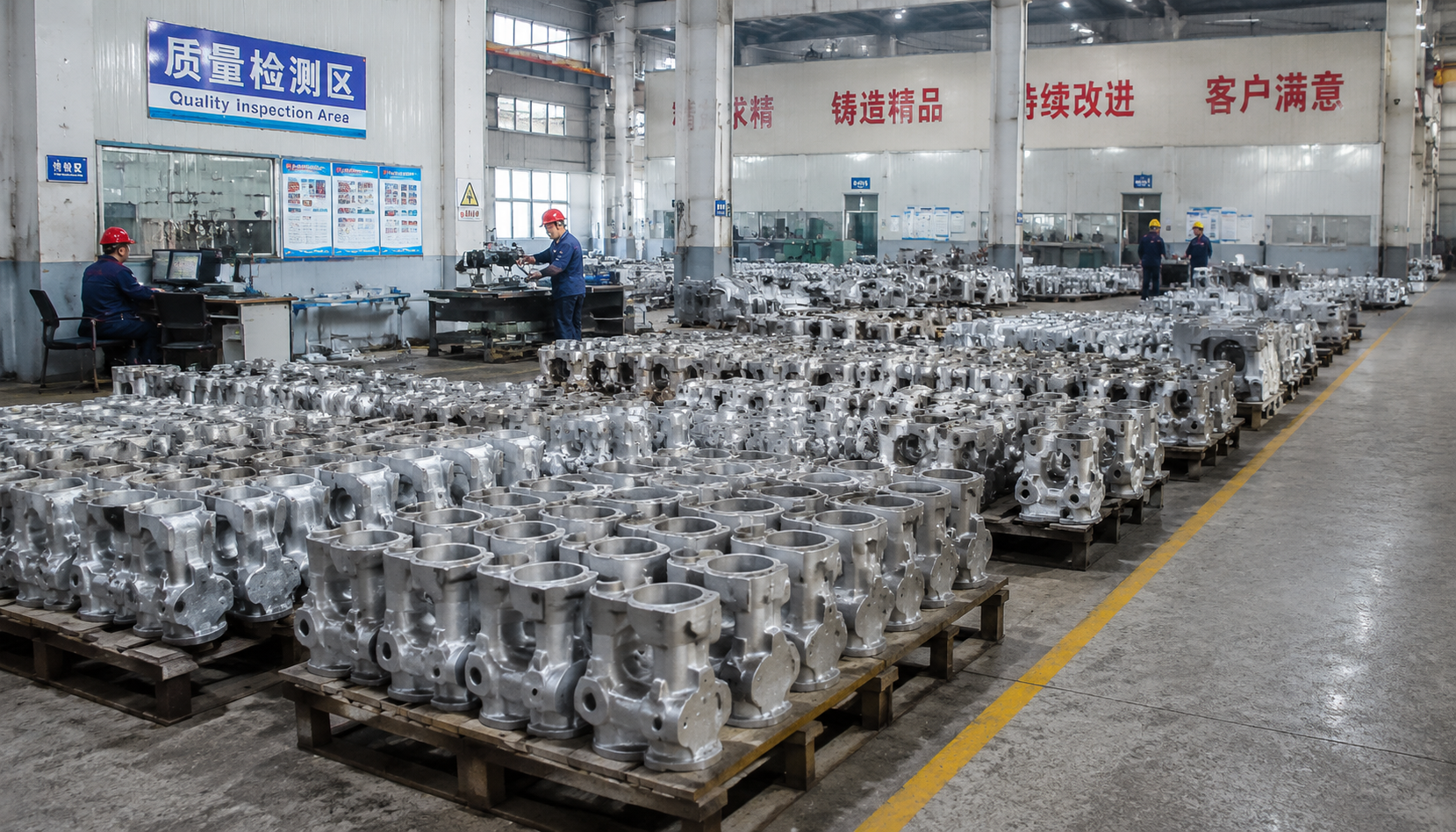
I learned this the hard way.
In 2018, I signed a $1.2 million contract for valve body castings from a foundry in Shandong. The warranty? A single paragraph buried in the back of a 40-page procurement document. Five months later, 37% of the castings cracked during pressure testing. The foundry's response: "Warranty does not cover 'testing damage.'"
I ate $445,000. My boss ate the rest.
That was year three of my career. By year fifteen, I'd chased over 200 warranty claims against Chinese foundries—some won, most lost. According to a 2024 China Foundry Association survey, roughly 70% of warranty claims filed by foreign buyers against Chinese suppliers fail to result in any compensation. Not because the castings were good. Because the warranty language was flimsy, unenforceable, or both.
You don't need to make the same mistakes. Here's exactly how to write, verify, and enforce a casting warranty that actually pays.
Why Most Casting Warranties in China Are Worth Less Than the Paper They're Printed On
Let's be blunt: a warranty is only as good as your ability to enforce it. In China, enforcement is a different game than in the US or Europe. Three reasons why most foundry warranties fail:
1. Legal Recourse Is Expensive and Slow
You can sue a Chinese foundry for breach of warranty. You'll win—eventually. But the average commercial litigation timeline in China is 12 to 18 months for a first-instance judgment. And that's if the foundry doesn't appeal. Add another 6 to 12 months if they do. Meanwhile, your production line is down, your customer is threatening penalties, and your legal bill is climbing past $80,000.
Most buyers don't have the stomach for that. The foundries know it.
2. Warranty Language Is Deliberately Vague
I've reviewed over 300 foundry warranty clauses. The most common phrases: "normal use," "reasonable defects," "standard industry practice." None of these are defined. What's "normal use" for a valve body that sees 5,000 PSI and sour gas? The foundry's definition and yours will not match.
3. The "Testing Damage" Loophole
This was the one that got me in 2018. Many Chinese foundries explicitly exclude defects discovered during destructive or non-destructive testing. Translation: if you X-ray the casting and find porosity, it's not covered. If you pressure-test it and it cracks, it's not covered. The very tests you need to verify quality are used to void your warranty.
Sound familiar? You're not alone.
The 6 Clauses Your Casting Warranty Must Have
After 15 years and a couple hundred claims, I've settled on six non-negotiable clauses. If a foundry pushes back on any of these, walk away.
| # | Clause | Why It Matters | Red Flag Language |
|---|---|---|---|
| 1 | Defect Definition | Must reference specific ASTM/GB standards (e.g., ASTM A216 WCB) and define acceptable limits | "Industry-standard quality" |
| 2 | Testing Inclusion | Explicitly covers defects found during NDT, pressure testing, and third-party inspection | "Defects caused by testing are excluded" |
| 3 | Warranty Period Triggers | Starts on the date of final acceptance, not date of shipment | "12 months from B/L date" |
| 4 | Remedy Window | Foundry must respond within 10 business days; replacement shipped within 30 days | "Reasonable time frame" |
| 5 | Cost Allocation | Foundry pays for replacement, shipping, and all inspection costs related to the claim | "FOB replacement only" |
| 6 | Dispute Resolution | Binding arbitration in Singapore or Hong Kong (not mainland China) | "Arbitration in Shanghai" |
The single most important clause is #2. Without it, your warranty is essentially useless for any casting that requires rigorous testing—which is most of them.
How to Verify a Foundry's Warranty Before You Buy
Don't wait until a claim happens to find out your warranty is garbage. Here's the 5-step verification I run on every new foundry before I sign a single PO.
Step 1: Ask for Their Standard Warranty Document
Not the contract. Just the warranty. See what they hand you. If it's a single page with vague language, that's your first red flag. A serious foundry will have a 3- to 5-page warranty document with specific references to standards, testing protocols, and timelines.
Step 2: Check Their Warranty Claim History
Ask: "How many warranty claims were filed against your foundry in the past 36 months? How many were paid?" A reputable foundry will share this data. In 2024, the China Foundry Association reported that the average foreign-funded foundry pays 92% of valid claims, while smaller domestic foundries pay only 34%. The gap is massive.
Step 3: Do a Test Claim
This sounds extreme, but I've done it. Ship a small batch of castings that you know have a minor, detectable defect. File a warranty claim. See how the foundry responds. If they dispute, delay, or ghost you, you've saved yourself a much bigger headache.
Step 4: Audit Their Quality System
A foundry with ISO 9001:2015 certification is 3x more likely to honor warranties than one without, according to a 2023 survey by the China National Accreditation Service. Go a step further: check if they have a dedicated quality manager who speaks English. That person is your lifeline when a claim happens.
Step 5: Use a Third-Party Inspection Firm
Before you sign the warranty, have a third party (SGS, Bureau Veritas, TÜV) review it. They see hundreds of these documents and can spot a bad clause in minutes. It costs $500–$1,000. It's the best money you'll spend.
Real Story: When a $2.8M Warranty Claim Actually Paid
In 2022, I managed a warranty claim against a foundry in Zhejiang for a batch of stainless steel impeller castings. Total value: $2.8 million. The castings were failing due to micro-porosity not visible until the final machining stage.
Every element of that warranty had been negotiated upfront—including the testing clause, the remedy timeline, and the Singapore arbitration agreement. When the claim hit, we had the documentation ready in 48 hours. The foundry tried to push back, but the contract language was airtight. Four months later, we had a full replacement shipment at their cost, plus $220,000 in inspection and logistics fees covered.
That claim paid because the warranty was built for enforcement from day one.
Contrast that with a colleague of mine who had a $1.6 million claim against a foundry in Jiangsu. His warranty was a 200-word addendum with no testing clause, no defined remedy period, and a "dispute resolution" clause that sent him to a local arbitration center in the foundry's home province. Two years later, he's still waiting.
7 Common Mistakes Buyers Make with Chinese Foundry Warranties
- Assuming a warranty is a warranty. They're not all equal. A warranty from a Tier 1 foundry with ISO 9001 and export experience is radically different from a small domestic foundry's. Treat every warranty as a unique document.
- Not defining "defect." If you don't tie it to a specific standard (ASTM, EN, GB), the foundry can argue that the casting meets "industry standards."
- Accepting "FOB replacement only." This limits the foundry's liability to the cost of the raw casting. You're left paying for shipping, inspection, machining, and downtime.
- Letting the warranty period start at shipment. A casting that sits in transit for 8 weeks and then in your warehouse for 4 weeks has already lost 3 months of warranty before you even inspect it.
- Not documenting the claim properly. A Chinese foundry will reject a claim if the photos are blurry, the report isn't in Chinese, or the defect isn't measured against a standard. Hire a local inspector to document it properly.
- Going it alone. A Chinese-speaking sourcing agent or third-party inspection firm can handle the claim process at a fraction of the cost of a dispute. Interstate International, for example, employs bilingual engineers who manage claims end to end.
- Ignoring the renewal. After the first year, some buyers get lazy and stop negotiating the warranty. Big mistake. Every renewal is a chance to tighten the language.
Frequently Asked Questions About Casting Warranties in China
What is a typical casting warranty period in China?
Most Chinese foundries offer 12 months from the date of shipment. But you should negotiate for 18 months from the date of final acceptance, especially for critical components like valve bodies or impellers that may sit in inventory before installation.
Can I enforce a Chinese foundry warranty from the US?
Yes, but only if your contract specifies binding international arbitration (Singapore, Hong Kong, or London are the most common venues). Without that clause, you'd have to litigate in a Chinese court, which is costly and slow. In 2024, the average time to enforce a foreign judgment in China was 18–24 months.
What's the difference between a warranty and a guarantee in Chinese foundry contracts?
In practice, these terms are often used interchangeably in Chinese contracts. However, a "warranty" (保证) usually refers to the quality of the product, while a "guarantee" (担保) can imply a broader financial or performance obligation. Always read the specific clauses, not the headings.
Do Chinese foundries honor warranties for one-off prototypes?
Generally no. Most foundries explicitly exclude prototypes and low-volume first articles from warranty coverage. If you need warranty protection for a prototype, negotiate it as a separate line item. Expect to pay a 15–25% premium for warranty coverage on a prototype run.
How do I file a warranty claim against a Chinese foundry?
Step 1: Notify the foundry in writing within the warranty period. Step 2: Provide photographic evidence and a third-party inspection report in both English and Chinese. Step 3: Reference the specific warranty clause that applies. Step 4: Demand a remedy within the defined time frame. If the foundry resists, escalate to the dispute resolution mechanism specified in the contract. Do not accept verbal agreements—everything in writing.
Your Next Step: Build a Warranty That Works
You've seen the data. You've read the stories. Now it's your turn.
A casting warranty from a Chinese foundry doesn't have to be a useless piece of paper. But it will be—unless you write it yourself, negotiate every clause, and verify the foundry's track record before you buy.
I spent 15 years learning these lessons the expensive way. You don't have to.
Here's what to do tomorrow morning:
- Pull out your current foundry contract and check clause #2 (testing inclusion). If it's not there, you're exposed.
- Send an email to your foundry contact asking for their warranty claim history over the past 36 months. See what they say.
- If you're negotiating a new contract, use the 6-clause framework above as your starting point. Don't settle for less.
Need help reviewing a foundry warranty or managing a claim? Interstate International's team of bilingual engineers and sourcing specialists handle this every day. We know which clauses matter, which foundries honor their commitments, and how to get results when a claim goes sideways.
Submit your warranty for a free review →
This article is based on the personal experience of Brian Miller, a 15-year veteran of oil & gas equipment sourcing in China. Individual results may vary. The China Foundry Association data cited is from their 2024 Annual Industry Report. Interstate International is a registered procurement agency with offices in Shanghai and Houston.