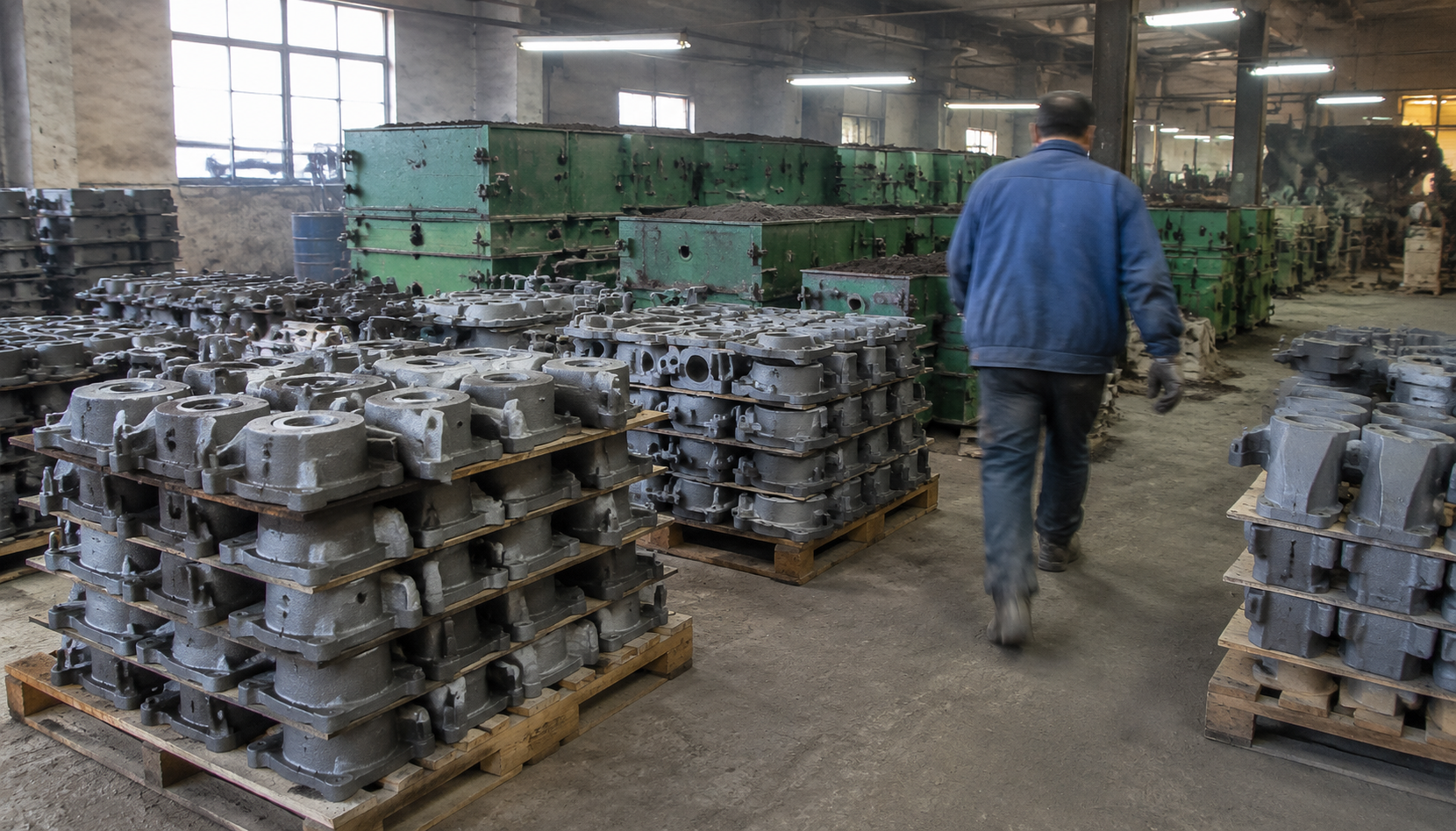
Here's the number that matters first: gray iron castings out of China in the third quarter of 2026 were quoting between USD 0.95 and USD 4.50 per kilogram FOB, for parts cleaned and fettled but not machined.
That range is useless on its own. A 400 kg counterweight and a 0.8 kg valve bonnet both fall inside it, and the two have nothing in common except the alloy.
What you actually need is the position of your part inside that range, and the reasons it sits there. So this is not a pretty pricelist for cast gray iron with a diamond rating next to each grade. It's a breakdown of the four variables that move the number — grade, weight and geometry, process route, and batch — plus the six line items that get bolted on after you've shaken hands.
Per-kg ranges by part weight and complexity
Weight is the single strongest predictor of piece price. The bigger the part, the more the cost is metal and melting energy, and the less it is labor per unit. Small parts invert that: you're paying for molding time and handling, not iron.
| Cast weight | Simple (blocks, plates, covers) | Moderate (housings, covers with cores) | Complex (thin-wall, multi-core, tight tolerance) |
|---|---|---|---|
| Under 1 kg | USD 1.80 – 2.60/kg | USD 2.40 – 3.40/kg | USD 3.20 – 4.50/kg |
| 1 – 5 kg | USD 1.50 – 2.20/kg | USD 2.00 – 2.90/kg | USD 2.80 – 4.00/kg |
| 5 – 25 kg | USD 1.20 – 1.80/kg | USD 1.60 – 2.40/kg | USD 2.20 – 3.20/kg |
| 25 – 100 kg | USD 1.05 – 1.55/kg | USD 1.40 – 2.00/kg | USD 1.90 – 2.80/kg |
| Over 100 kg | USD 0.95 – 1.35/kg | USD 1.25 – 1.75/kg | USD 1.70 – 2.40/kg |
Three conditions sit behind those numbers. First, they assume a base grade around HT200 / GJL-200 / ASTM A48 Class 25. Second, they exclude tooling. Third, FOB China, not delivered. They're built from quotes we've seen move through Chinese foundries in Q3 2026, not from a list-price sheet — which is why they move a few percent each quarter.
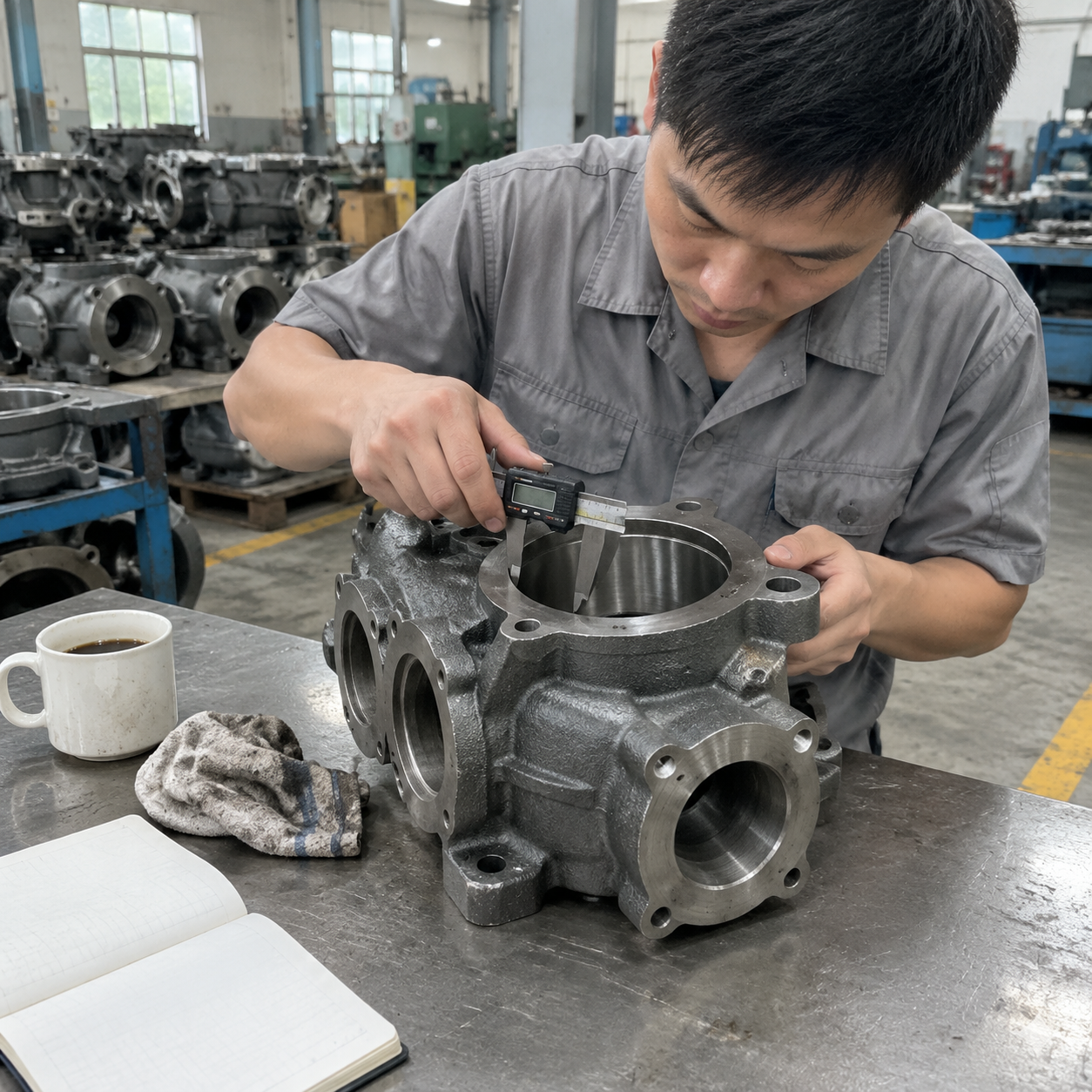
Machining changes the picture a lot. If your drawing calls for bored bores, faced flanges or drilled and tapped holes, add USD 0.60 to USD 4.00 per kg depending on how much material comes off. A pump housing with three machined faces can easily double in price after the machining step, and the machine shop is often a different building from the foundry. That handoff is where lead times quietly grow by three weeks.
The grade ladder: how much each step up costs
This is where buyers get sloppy. A drawing says "gray iron, HT250" and the next drawing says "HT300", and the assumption is that the price barely moves. It moves.
| Designation | Approx. tensile | Cost vs. Class 25 baseline | What drives the change |
|---|---|---|---|
| HT150 / GJL-150 / A48 Class 20 | 150 MPa | −3% to −6% | Higher carbon, more scrap tolerance |
| HT200 / GJL-200 / A48 Class 25 | 200 MPa | Baseline | — |
| HT250 / GJL-250 / A48 Class 30 | 250 MPa | +4% to +7% | Tighter charge control, more steel scrap |
| HT300 / GJL-300 / A48 Class 35 | 300 MPa | +8% to +14% | Lower CE, inoculant practice, more testing |
| HT350 / GJL-350 / A48 Class 40 | 350 MPa | +15% to +22% | Higher scrap ratio, tighter process window |
| Class 50 / 60 (alloyed) | 350 MPa+ | +25% to +40% | Cu, Mo, Ni additions; heat control |
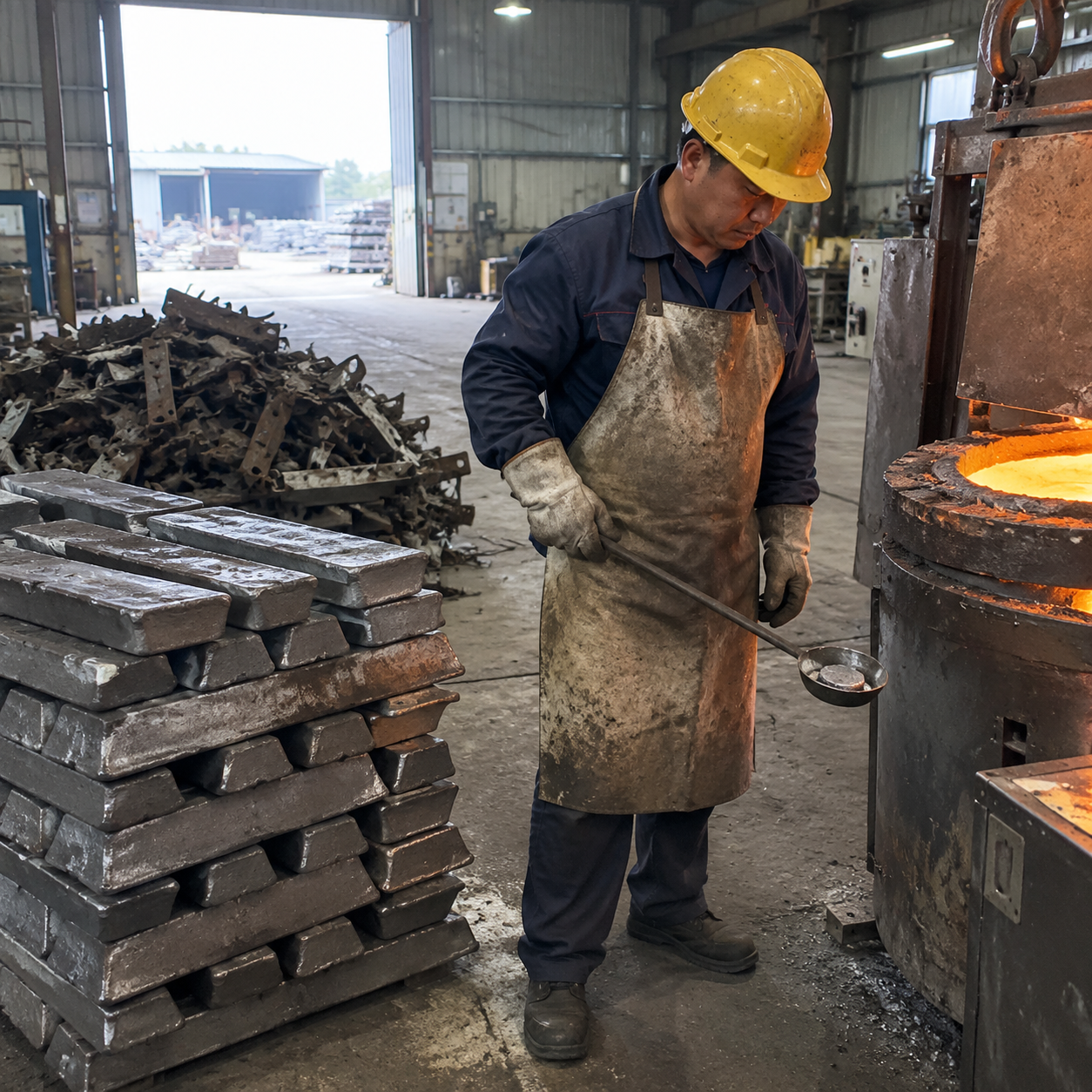
The premium isn't greed. Getting 300 MPa out of gray iron means a carbon equivalent down around 3.6–3.9, more steel scrap in the charge instead of pig iron, tighter pouring temperature control, and test bars cut from every heat. More scrap means more oxidation loss. Tighter control means slower melting. You pay for all of it.
Here's the mistake I see over and over. A buyer copies "gray iron GG25" off a 1998 drawing, the Chinese foundry quotes HT250 because that's what matches, and nobody ever checks whether the part actually needs 250 MPa or whether 200 would have done. If your housing carries a bearing at 40 MPa bearing stress, you're paying 6% extra for margin you never use.
"We used to order everything as HT250 because the drawing said so," Sarah Chen, who buys gray iron housings for a Canadian industrial pump builder at roughly 400 tons a year, told us. "Then we pulled the stress calculations and found two-thirds of our parts were fine at HT200. That single change moved our cost base more than three rounds of price negotiation ever did."
Flip the screw the other way and it bites harder. Specify too low and you don't get a discount — you get scrap. More on that below.
Where the per-kg number actually comes from
Ask a foundry to break down a casting price and most will refuse. That refusal is not a trade secret — it's usually because they don't have a clean cost model themselves.
Here's a typical split for a mid-weight, moderate-complexity gray iron part in a Chinese foundry running at reasonable utilization:
- Metallic charge — 38% to 48%. Pig iron plus steel scrap plus ferroalloys. This line tracks the scrap market and moves month to month. A 10% swing in scrap prices shows up as 4–5% on your piece price within one or two quotes.
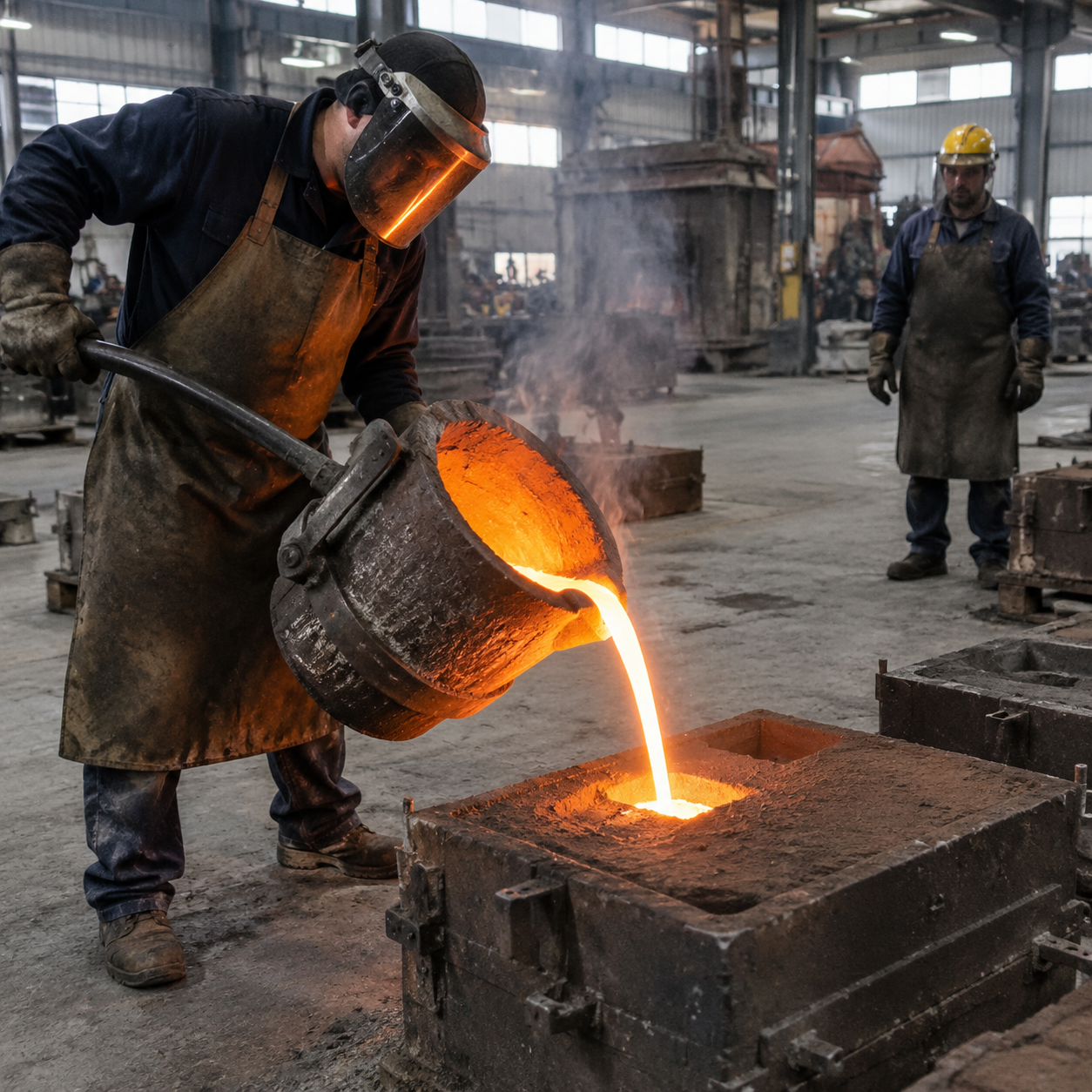
- Melting energy — 10% to 14%. Cupola versus induction furnace. Induction is cleaner and more controllable, and it costs more per ton melted.
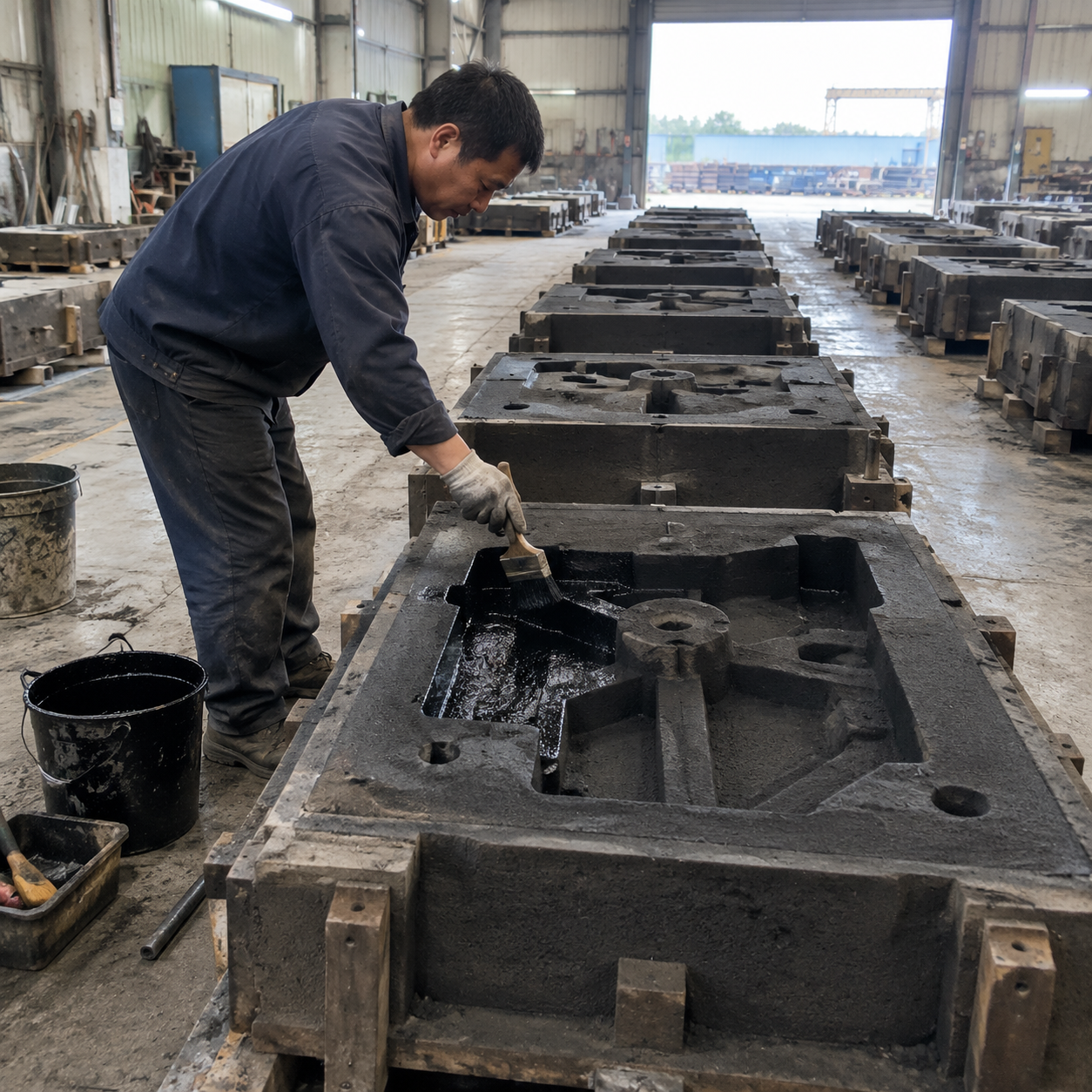
- Molding materials and sand handling — 8% to 13%. Green sand is cheap and recyclable. Resin-bonded sand is neither.
- Direct labor — 12% to 18%. Molding, core setting, pouring, shakeout, fettling. Fettling is the silent cost — a casting with heavy flash and burnt-on sand can eat 15 minutes of grinding per piece.
- Tooling amortization — 3% to 10%. Depends entirely on how the pattern cost is spread across your order quantity.
- Cleaning, shot blasting, primer — 5% to 8%.
- Inspection and reject allowance — 3% to 6%. Higher for complex cored parts. Foundries that quote 2% here are either very good or very optimistic.
- Overhead and margin — 10% to 15%. Below 8% and you should ask what they're skipping.
If a quote comes in 30% under everyone else, one of these lines is being understated. Usually it's labor and reject allowance, and the gap shows up as late delivery and a scrap argument three months in.
One more variable the sheet doesn't show: currency. A foundry quoting in USD while paying RMB for labor and energy is carrying FX risk. The factory-gate price in RMB tells you what they actually need to earn. The USD number tells you what they'll accept this month. If the USD quote moves 8% on a flat RMB cost base, you're looking at a margin hedge, not a real change in the cost of iron.
Process route: the 20% you can design out
Same grade, same weight, different molding method, different price. This is the part most RFQs ignore, and it's worth real money.
| Process | Typical use | Cost vs. hand-molded green sand | Economic batch |
|---|---|---|---|
| Hand-molded green sand | One-offs, very large parts, prototypes | Baseline | 1 – 50 pcs |
| Machine-molded green sand | Small to mid parts at volume | −10% to −20% | 1,000+ pcs |
| No-bake / resin sand | Mid to large parts, complex cores | +8% to +18% | 20 – 500 pcs |
| Shell molding (precoated sand) | Thin walls, good surface finish | +15% to +30% | 500+ pcs |
| Lost foam | Complex shapes, minimal draft, less machining | +10% to +25% | 100+ pcs |
Two things worth knowing. First, if your part is under 10 kg and you're ordering 2,000 a year, hand molding is money down the drain — a machine-molded line will cut 12–18% off the piece price, and you'll get better dimensional consistency as a bonus.
Second, lost foam deserves a serious look on any part with a complicated cavity that currently needs three cores. The piece price looks 15% higher until you work out that you're saving a machining setup and a core-assembly defect source.
What you don't want is a foundry defaulting your part to resin sand because that's what they run. Ask the process question explicitly in the RFQ: "Which molding process is this quote based on, and what would green sand come in at?" If they can't answer both, they only have one line.
Batch tiers: why the same part has five prices
Piece price falls steeply with order quantity, then flattens. Here's the curve, indexed against a 1–49 piece order:
| Order batch | Relative piece price index | What's really changing |
|---|---|---|
| 1 – 49 pcs | 100 | Setup, pattern handling, single-shift scheduling |
| 50 – 199 pcs | 92 | Setup spread, better melt scheduling |
| 200 – 999 pcs | 85 | Pattern stays mounted, fewer changeovers |
| 1,000 – 4,999 pcs | 78 | Dedicated molding line time, bulk material buying |
| 5,000+ pcs | 72 | Continuous scheduling, lower per-unit inspection cost |
Get this straight: it's per-order batch, not annual volume. They are not the same thing and confusing them is one of the most expensive mistakes in sourcing gray iron.
A foundry will happily book your 6,000-piece annual forecast and quote as if it were one batch. Then you place four releases of 1,500, and the price is right — but the foundry is doing changeovers and small-lot procurement every quarter and quietly resenting it. Six months in, quality gets sloppy or they ask for a price adjustment. Either way you lose.
Get both numbers into the quote in writing: annual requirement, and minimum batch per release. And ask what happens to the price at each release size.
Tooling: the second invoice nobody budgets for
Patterns, core boxes and jigs are usually quoted separately, paid up front, and treated as the foundry's property unless you say otherwise.
| Part weight | Wooden pattern (green sand) | Metal pattern plate | Resin core box |
|---|---|---|---|
| Under 5 kg | USD 250 – 700 | USD 900 – 2,500 | USD 400 – 1,200 |
| 5 – 50 kg | USD 700 – 1,800 | USD 2,500 – 8,000 | USD 1,200 – 3,500 |
| 50 – 500 kg | USD 1,800 – 6,000 | Rarely economical | USD 3,500 – 12,000 |
Two clauses to insist on. First: "Pattern ownership transfers to buyer upon payment; patterns to be returned or transferred to an alternate supplier on request." Foundries that resist this clause are telling you exactly how they plan to keep your business. Second: a wear allowance. Wooden patterns for green sand move and wear; after 5,000–8,000 molds your dimensions drift. Ask who pays for pattern refurbishment and at what shot count.
If your annual volume is under about 300 pieces, run the math before buying tooling at all. A USD 1,400 pattern spread over 250 pieces adds USD 5.60 to each unit. On a 6 kg part quoted at USD 1.55/kg — USD 9.30 each — that's a 60% premium. Sometimes the honest answer is "machine it from bar stock instead."
The costs that show up after you sign
The piece price is maybe 70% of your landed cost. Here's the rest, and here's what to expect in 2026.
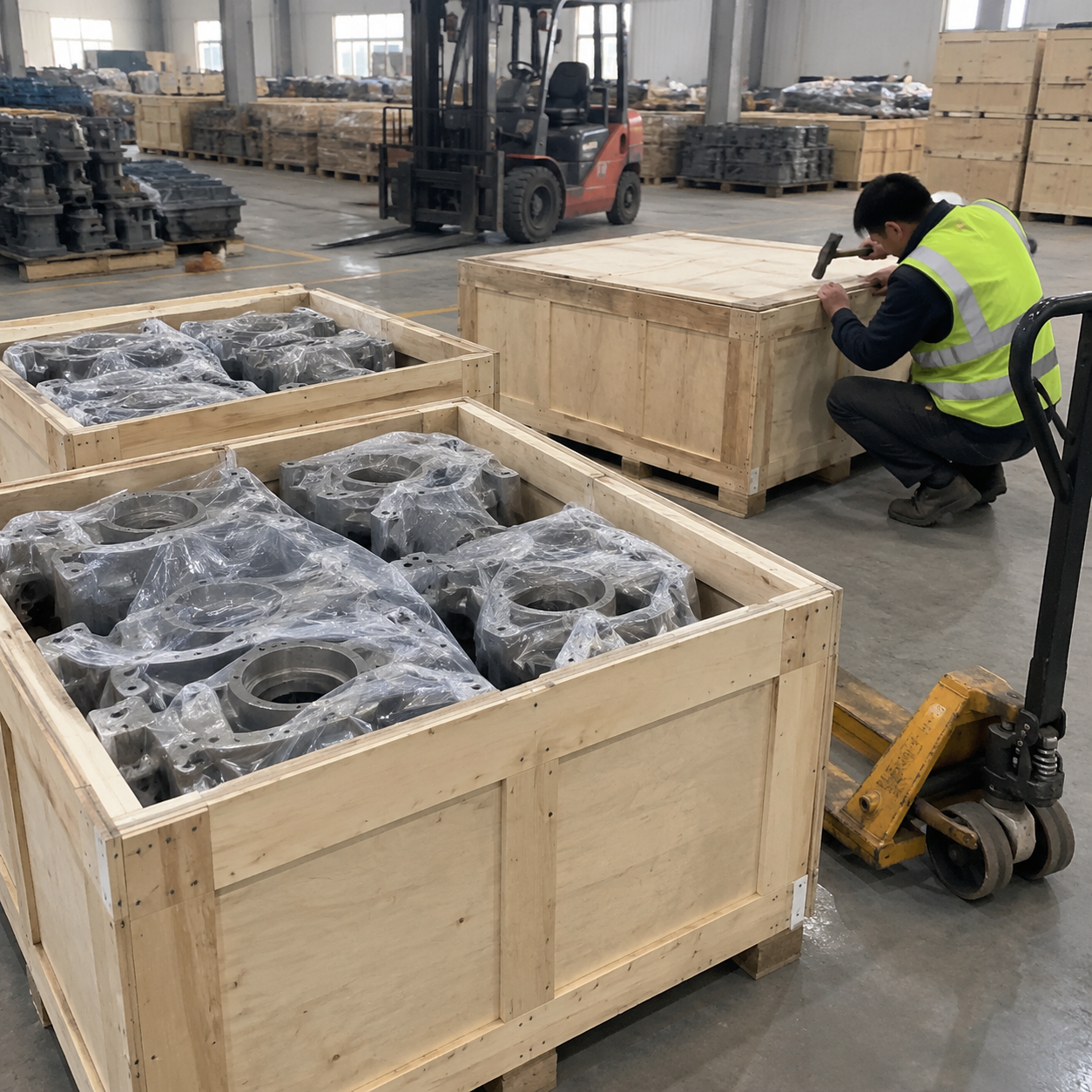
- Export packing. USD 18–45 per crate for standard parts; large or fragile castings are charged per cubic meter and can hit USD 120/m³. Sea-worthy fumigated crates, not the free pallets.
- Ocean freight. A 40' container from Shanghai or Ningbo to US West Coast sat in the USD 2,600–4,200 range in Q3 2026. To US East Coast add 35–55%. LCL adds 30–60% per cubic meter versus the FCL equivalent — for anything over about 8 CBM, buy the whole container yourself.
- US Section 301 tariff. Most gray iron castings under HTS 7325 carry an additional 25% on customs value. On a USD 30,000 shipment that is USD 7,500 that never appears on the foundry's quote sheet.
- Payment terms. 30% deposit / 70% before shipment is standard. A letter of credit costs 0.5–1.5% of invoice value in bank fees and takes four to six weeks to set up. The discount a supplier offers for 100% prepayment is usually not worth the risk.
- Third-party inspection. USD 300–900 per inspector-day. Worth it on a first order over about USD 15,000; skip it and you'll spend more than that arguing about a defect you can't prove.
- Certification. A routine MTC is normally free. EN 10204 3.1 with third-party witness runs USD 200–500 per heat.
Add it up on a USD 25,000 order: freight, packing, tariff and inspection commonly land at USD 9,000–13,000. That's a 36–52% uplift. If you're comparing quotations on piece price alone, you're comparing the wrong number.
"Your first email determines what you get back," Chen said. "Send 'please quote your best price' and you'll get a number designed to keep the conversation alive. Send the drawing revision, the grade with the standard, the annual tonnage, the release size, the machining state and the delivery term, and you get a number the foundry has to stand behind."
What quality actually costs, and why underspecifying is expensive
Gray iron is cheap to test and easy to fake. That combination is a problem.
A foundry can pour a heat at HT200 chemistry and ship it against an HT250 drawing, and unless somebody pulls a test bar, nobody knows. The part looks right, weighs right, machines fine. It fails under load in eighteen months, which is well past your warranty window and firmly in your customer's memory.
Testing that closes the gap costs very little relative to the batch:
- Spectrochemical analysis of each heat — usually already done in-house, normally free to include in the MTC
- Tensile test on separately cast test bars — USD 30–80 per set
- Metallographic examination for graphite form and matrix — USD 40–120 per sample
- Ultrasonic or magnetic particle inspection — USD 15–60 per piece depending on coverage
- Hardness survey — usually free at the bench
Put tensile results in the purchase specification, not just chemistry. Chemistry tells you what went into the furnace. Tensile tells you what came out of the mold.
"A thirty-dollar tensile bar has saved us more money than any price negotiation we've ever run," Chen told us. "We had a batch of housings that would have gone straight into pump assemblies at HT200 strength against an HT250 drawing. One test bar caught it. The rework conversation was short because we had the certificate and they didn't have an argument."
If you're buying from a new source, budget a first-article inspection on top: full dimensional report, full chemistry, tensile and a hardness map. USD 300–700 depending on how many features need checking. On a 500-piece order it's noise. On a part that stops a production line, it's the cheapest insurance you'll buy all year.
How to write the RFQ that gets you a real range
Nine out of ten RFQs for gray iron castings are one paragraph long. That's why nine out of ten quotes are meaningless.
Here's what to put in the first email. All of it, in one go.
- Drawing with revision number. PDF plus STEP if possible. Say explicitly whether you will accept anything outside the tolerances shown.
- Grade with the standard named. "ASTM A48 Class 35" not "high strength iron." Include tensile requirements if they're non-standard.
- Annual requirement, in pieces and in tons. Both. Foundries schedule in tons and invoice in pieces.
- Release size and frequency. "1,500 pieces per quarter" tells them far more than "6,000 per year."
- Machining state. As-cast with machining allowance, or cast-and-machined. If machined, say whether you supply the machining tolerances or accept theirs.
- Inspection level. Which dimensions are critical, whether you need dimensional reports per lot, what acceptance criteria apply to porosity.
- Delivery term and destination. FOB port, CIF, or DDP warehouse with a zip code. The DDP number will shock you, but at least it's real.
Then ask three questions the quote should answer:
"What is your price at each release size?"
"Which molding process is this based on, and what's the alternative?"
"How long is this price valid, and what scrap index is it tied to?"
That last one matters more than buyers realize. In a rising scrap market, a foundry that quotes firm for twelve months is either hedged, desperate, or planning a renegotiation. A foundry that quotes firm for thirty days with a stated scrap adjustment formula is being honest with you. Take the honest one.
Common mistakes that cost money
Comparing FOB quotes across countries as if they were equal
FOB Ningbo and FOB Chennai aren't the same door. Freight, transit time and tariff treatment differ. Convert everything to landed cost at your warehouse before you compare a single number.
Treating the base grade as a formality
Every step up the grade ladder costs 4–14%. If your engineering doesn't actually require it, you're donating margin. If it does require it and you bought below it, you're buying scrap.
Forgetting that fettling is a line item
A casting with poor surface finish and heavy flash costs the foundry 10–15 minutes of grinding per piece, and that cost is inside your price whether they itemize it or not. When you visit, look at the fettling area. If it's three people with angle grinders and a mountain of parts, you're paying for it.
Assuming all MTCs are equal
A certificate that lists chemistry only is not a grade certificate. Insist on tensile results from separately cast bars, with the heat number traceable to your pieces.
Negotiating price before negotiating specification
You can always get 5% off. You can get 15% off by changing the molding process, relaxing a tolerance that didn't need to be tight, or dropping from HT250 to HT200 on a part that never sees real load. Do the engineering first, then talk price. The other order doesn't work.
Frequently asked questions
What is the price per kg for cast gray iron in 2026?
For as-cast, cleaned and fettled parts FOB China: USD 0.95–1.35/kg above 100 kg, USD 1.20–1.80/kg in the 5–25 kg band, USD 1.80–2.60/kg under 1 kg. Complex geometry, thin walls or machining add 30–120%.
Is ASTM A48 Class 35 the same price as GB HT250?
No. Class 35 / GJL-300 / HT300 runs roughly 8–14% above a Class 25 / HT200 baseline, because it needs tighter charge control, lower carbon equivalent, more steel scrap and often alloy additions.
Who pays for the pattern or tooling?
You do, separately and usually up front. Wooden patterns for parts under 5 kg run USD 250–700; 5–50 kg parts run USD 700–1,800. Get ownership and transfer rights in writing before you pay.
Do gray iron castings need a material test certificate?
Ask for EN 10204 3.1 with heat traceability and tensile results from separately cast test bars. Chemistry-only certificates don't prove grade. Third-party witness adds USD 200–500 per heat.
How do I get a real price range instead of a lowball quote?
Send a complete package in the first email: drawing revision, grade with standard, annual volume, release size, machining state, inspection level and delivery term. Incomplete RFQs get fishing prices.
Next step: build the landed cost before you negotiate
Take your top three candidate part numbers. For each one, get a quote at two release sizes, in two process routes, and convert both to landed cost at your own warehouse — including packing, freight, duty and inspection.
You'll find the picture changes. The lowest piece price is rarely the lowest landed cost, and the gap is often 15–25%. That gap is your negotiating room, and it only exists if you've done the arithmetic before you open the conversation.
If you want a starting point, we can put together a cost breakdown for your specific part — grade, weight, process route, batch size and destination — with each line item shown separately so you can see where the money actually goes.
Send us your drawing and volume →
Need Help with Cast Gray Iron Pricelist: 2026 Per-Kg Rates by Grade & Qty?
Get matched with 3 verified foundries in 24 hours. No markup, transparent pricing.
Request Quotes →