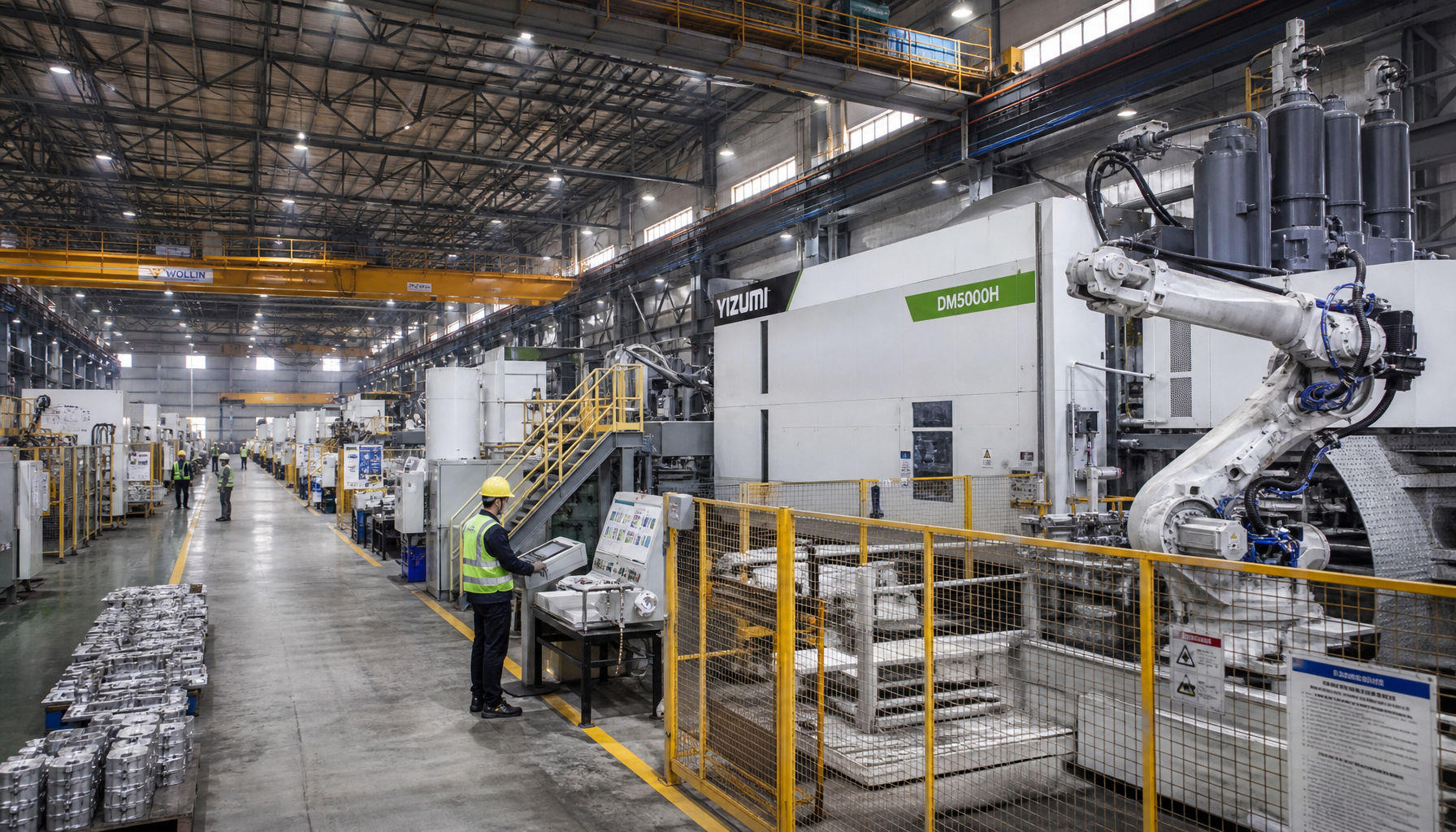
Every quarter, someone on your team sends the same question down the line: can we re-source this bracket, this housing, this differential cover from China without opening a quality can of worms two years later? The honest answer is that the country isn't the variable. The supplier is. And the way you vet that supplier — before the first PO, not after the first escape — decides whether you're running a program or a fire drill.
This isn't a list of factories. It's the checklist a European or North American Tier-1 should actually run against Chinese casting suppliers, written around the things that go wrong in practice: PPAP submissions that stall at Level 3, tooling that mysteriously becomes "not yours," Cpk data that looked fine on the sample and collapsed at ramp.
Why China Still Anchors Automotive Casting Supply in 2026
Start with the structural picture, because it explains why your competitors keep coming back even after a bad experience.
China represents roughly 45-50% of global casting production by tonnage, according to the World Foundry Organization's most recent production survey. For aluminum specifically — the material that dominates powertrain housings, e-motor enclosures, structural nodes, and battery tray components — Chinese foundries account for an estimated 40% of world output. On the die casting side alone, there are more than 2,000 facilities with automotive-relevant capability, concentrated in Guangdong, Jiangsu, Zhejiang, and Shandong.
The number that matters to you is not the total count. It's this: based on our 2024 internal supplier baseline — cross-checked against the IATF certification database — fewer than 15% of those facilities hold a current IATF 16949 certificate that would survive an OEM-customer CSR audit. That's the funnel. You're not shopping in a market of 2,000 suppliers. You're shopping in a market of a few hundred that can legally be named on a PPAP.
Three forces are reshaping the top of that funnel right now:
- EV structural parts. Giga-casting and large thin-wall aluminum parts pushed Chinese toolmakers and machine builders ahead of many European shops on very large tonnage presses. If you're sourcing e-mobility components, some of the most advanced process capability in the world sits in Ningbo and Shenzhen, not in Baden-Württemberg.
- Vertical consolidation. The strongest suppliers now own their own tooling shops, heat treatment, and CNC finishing. That's a big deal for you, because it removes the two most common failure points: tooling subcontracted to a shop nobody audited, and secondary operations outsourced to a third party that never saw your control plan.
- Wage and energy drift. Eastern China labor and electricity costs have climbed steadily for a decade. The days of a 60-70% price gap are over. Realistic landed-cost savings for mid-complexity castings now sit in the 25-40% range. Anyone promising more is either cutting scope or cutting corners — and you'll find out which at first-article.
So the market is real. The capability is real. The trap is real too, and it's almost never about melting metal. It's about documentation depth, process discipline, and whether the factory treats your program as an engineering job or a quota-filling order.
What "Automotive-Grade" Actually Means for a Chinese Casting Supplier
When a supplier tells you they're "automotive," ask for three things and watch how fast the conversation changes: a current IATF 16949 certificate with a scope that names casting, a customer-specific requirements list from at least one OEM, and their last three PPAP closure dates.
Here's the reality behind each.
IATF 16949 — the Certificate Is the Floor, Not the Ceiling
The certificate proves a quality system exists on paper. It does not prove your part will hold a 1.67 Cpk at ramp. What matters more is which certification body audited them and whether the certificate has ever been suspended. IATF publishes a suspension and withdrawal list — check it before you proceed. A supplier with a current certificate from a recognized European or North American certification body, whose scope explicitly covers the casting process you need, is your baseline. A supplier with a certificate covering only "machining" who happens to pour metal out back is a different risk entirely.
Customer-Specific Requirements (CSR)
Every OEM layers its own requirements on top of IATF. Volkswagen has a CSR document. So does BMW, Mercedes, Stellantis, and the Korean and Japanese OEMs. Your supplier needs to be able to name at least one CSR they've been audited against, and their QMS needs to reflect it in the actual procedures — not just a PDF on a shelf. If they can't answer "which OEM CSR are you currently audited to?" without looking it up, they are not a Tier-1-ready automotive supplier.
PPAP Track Record
Ask for three recent Part Submission Warrant reference numbers and the submission level. A supplier who's only ever submitted Level 1 (warrant only, no data) is not the same animal as one who routinely closes Level 3 with dimensional, material, and capability data. You want the second kind. Level 3 is the default for most European and North American Tier-1 programs, and it's where the real work lives.
The Four Casting Processes — and Which One You're Buying
Half of all sourcing mistakes I see trace back to a supplier being asked to make a part with the wrong process, or quoting a process they don't actually run in-house. Know the difference before you send an RFQ.
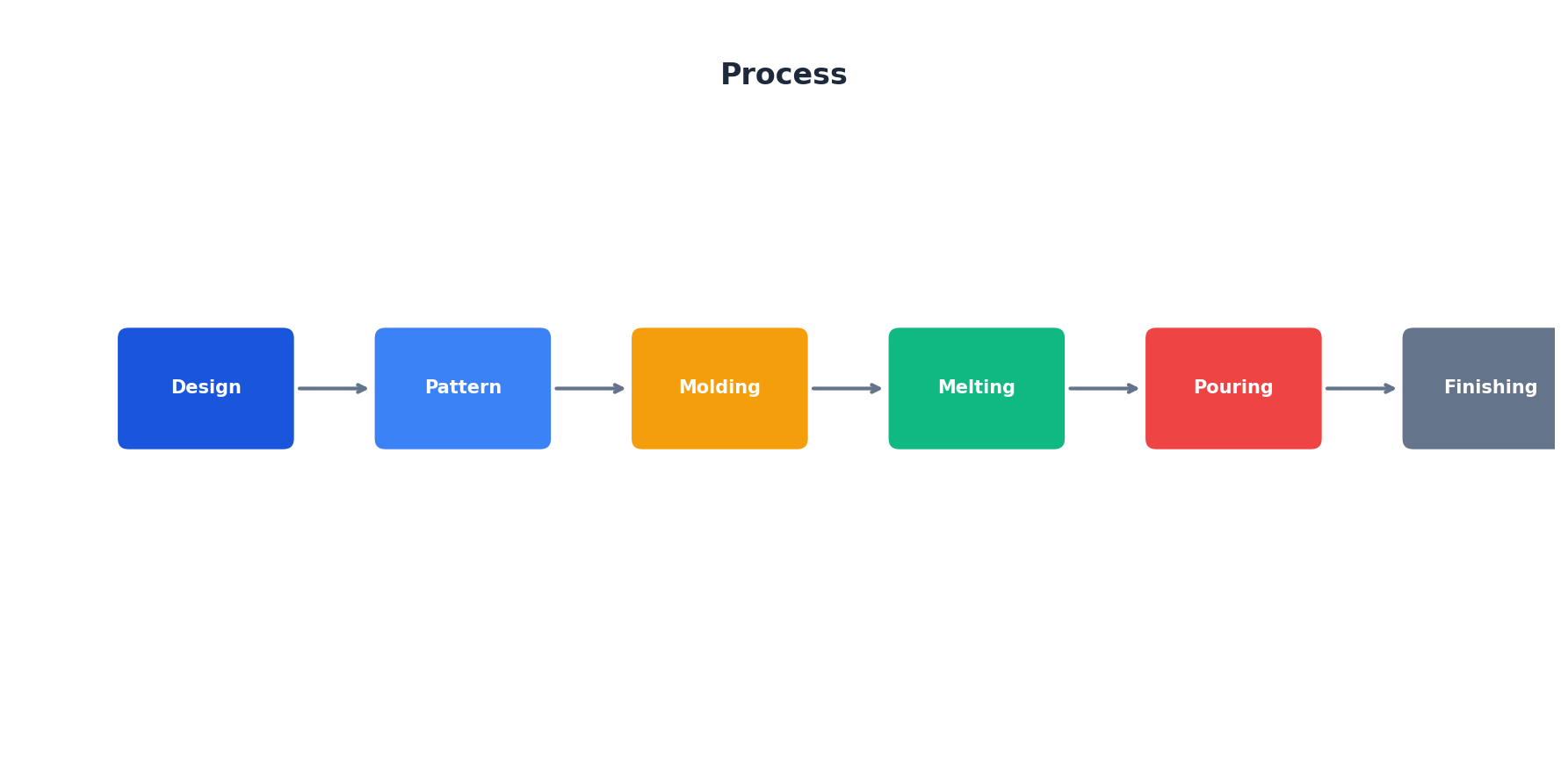
High-Pressure Die Casting (HPDC)
Your workhorse for aluminum powertrain, housings, structural brackets, and increasingly large EV body parts. Fast cycle times, good tolerance for non-critical dimensions, low per-part cost at volume. The catch: porosity. HPDC parts can trap gas, which is why you'll see vacuum-assisted or squeeze-casting variants for structural parts where porosity class is specified. If your drawing calls out a porosity grade, your supplier needs to have the vacuum system, not just a promise.
Low-Pressure and Gravity Die Casting
Slower but denser. Better for wheels, some structural parts, and any component where you need lower porosity without investment-casting economics. If a supplier markets HPDC but quietly routes your low-porosity part to gravity casting, that's a process-deviation finding waiting to happen.
Sand Casting
The oldest process and still the most flexible for large ductile iron and aluminum parts — engine blocks, exhaust manifolds, large brackets. Tolerances are looser, tooling is cheaper, and it's the right choice for low-to-medium volume. Watch the sand control and molding line automation; a manual sand line has far more process variation than an automated one.
Investment (Lost-Wax) Casting
When you need near-net shape, tight tolerance, and excellent surface finish — turbocharger housings, small precision components, aerospace-adjacent automotive parts. Higher unit cost, higher precision. Fewer Chinese suppliers hold genuine automotive investment-casting capability, so vet this category harder.
The point: match the process to the part on the drawing, then confirm the supplier runs that process in-house and has the machine tonnage to hit your cycle and part size. Ask for the exact machine model numbers and tonnage on their floor plan.
Where PPAP Usually Breaks with Chinese Suppliers
PPAP is not a casting problem. It's a documentation and discipline problem, and it's where most Tier-1 programs lose their schedule.
In our experience running submissions across dozens of Chinese foundries, the failures cluster in four places:
- Dimensional reports that don't match the drawing revision. The supplier measures the part from the version they were given three months ago. You updated the drawing, they didn't. This is almost always a change-control failure on their side and a communication failure on yours. Lock the drawing revision into the PO.
- MSA done late or done wrong. Gage R&R studies need to happen before capability data means anything. If the supplier runs Cpk on a gage they haven't qualified, the numbers are theater. Insist on the MSA before the capability study — in writing.
- Cpk on a sample that isn't representative. Everyone's first-article passes. The question is whether the process holds at 300 units/hr run rate. Require capability data from a run that reflects serial conditions, not from the three polished samples on the engineering manager's desk.
- PSW signed before the FMEA and control plan are current. If the process FMEA still describes the pre-launch process and the control plan lists an inspection that's no longer performed, the PSW is technically invalid. Auditors find this. OEMs find this. You get a containment request.
Practical fix: build PPAP milestone payments into the contract. A meaningful chunk — 10-15% of the tooling or first-year value — released only on PSW sign-off. Money is the only language that reliably tightens the schedule.
Tooling: The Clause That Keeps You Out of Court
Your tooling is your asset. In China, it's also your biggest exposure if you don't document it properly from day one. We've written separately about how tooling disputes actually play out once a relationship sours — the short version is that undocumented tools never come home cleanly.
Three rules:
- Name the owner in the contract, explicitly. "All tooling, fixtures, and patterns manufactured or paid for under this agreement are the exclusive property of [your company], regardless of where they are located or who holds them." No ambiguity. No "the parties will discuss."
- Tag and photograph every tool. Each mold and die gets your identification number stamped or engraved on it, photographed, and logged in a tooling register with its location, condition, and last maintenance date. If you ever need to transfer the tool, you can prove what you own.
- Include a transfer clause with a timeline. If the relationship ends, the supplier must release tooling, drawings, and process documentation within a defined window (30-60 days is standard), and you have the right to send a third party to collect it. Vague language here costs months.
One more thing people forget: the CAD and CAM files, the process parameters, and the inspection programs are part of the asset package. Your tooling is worth less than half its value if you can't run it without the original supplier's undocumented know-how. Ask for a process data package as a deliverable at PPAP sign-off.
The 9-Point Supplier Audit You Should Actually Run
Certificates and paperwork lie. A factory visit doesn't. Here's the checklist I run — adapt it to your program, but don't skip the shop floor.
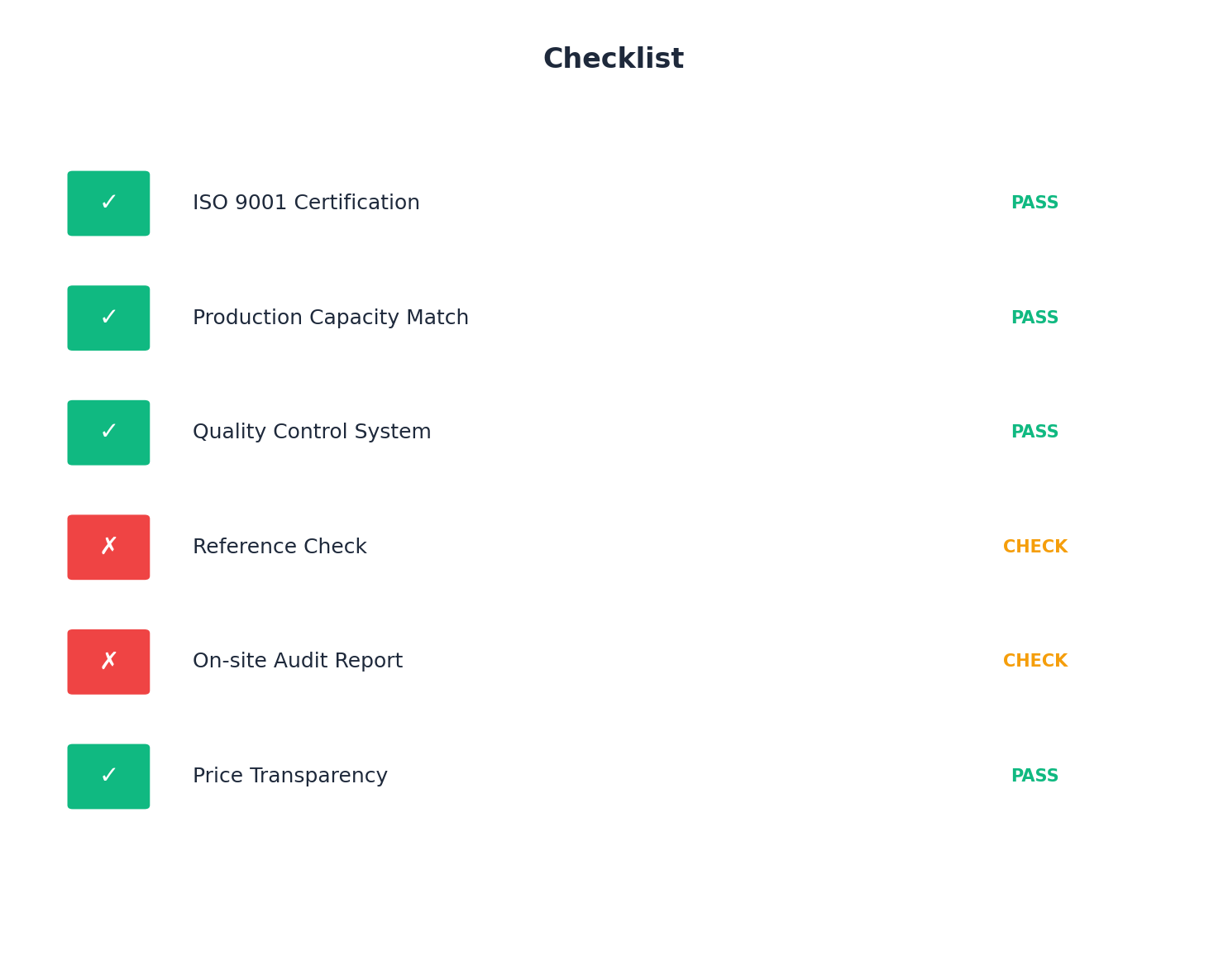
- Verify the IATF certificate at the source. Check the IATF database in front of them. Confirm scope, expiration, and no suspension history.
- Pull Cpk data on a real production part. Not the sample. Ask for the last six months of SPC charts for a part similar to yours in size and complexity.
- Trace raw material to the heat number. Ask them to walk you from a finished casting back to the ingot batch and the mill certificate. If they can't do it in ten minutes, traceability is a poster, not a process.
- Inspect the tooling register. Are tools tagged? Are maintenance records current? Is there a spare-cavity strategy for high-run parts?
- Look at the dimensional lab. CMM model and calibration status, temperature-controlled environment, trained operators. A lab that's a table with calipers in a corner is not a PPAP-capable lab.
- Walk the heat treatment line. Furnace calibration, load thermocouples, quench control. This is where many "mystery" metallurgical failures originate.
- Review last three months of nonconformance reports. Every factory has them. The question is whether they're released, actioned, and closed, or swept into a drawer.
- Check incoming inspection records for the sub-tier parts you care about. If your casting gets machined or coated at a sub-tier, you need evidence the sub-tier is controlled.
- Ask to see a real PSW folder. Open it. If it's complete, current, and matches the process you just walked, you've found a serious supplier.
Six Mistakes Tier-1 Buyers Keep Making
These are the recurring ones, and they cost real money.
1. Chasing the lowest quote. The cheapest three quotes out of ten are usually the ones cutting the process step you specified. On castings, the quote you want to examine hardest is the one that's 30% below the cluster. Something structural is missing.
2. Sharing the drawing before the NDA and the technical package are locked. Without a mutual NDA and a defined technical data package, you're handing your design to a supplier who may quote it to your competitor next quarter.
3. Treating the factory tour as a sales event. A supplier that won't let you into the heat treatment line or the nonconformance filing room is telling you something. Insist on seeing the areas that represent your risk, not the showroom.
4. Skipping the sub-tier map. You audit the foundry. The foundry subcontracts the impregnation seal, the heat treat, sometimes the machining. That subcontractor never saw your control plan. Require a full sub-tier list with IATF status before you approve the PPAP.
5. Writing a loose quality agreement. "Supplier shall maintain quality in accordance with good manufacturing practice" is not a quality agreement. It's a wish. Specify AQL, PPM targets, containment obligations, and the cost of a quality escape — including your line-down cost — in the contract.
6. Assuming the relationship will last. Every sourcing plan should include an exit path from day one: tooling ownership, data package ownership, transfer timeline, and a qualified second source either approved or actively in development.
Reading Total Landed Cost, Not the Quoted Price
The unit price on the RFQ is maybe 55-65% of your real cost. Here's what the rest looks like.
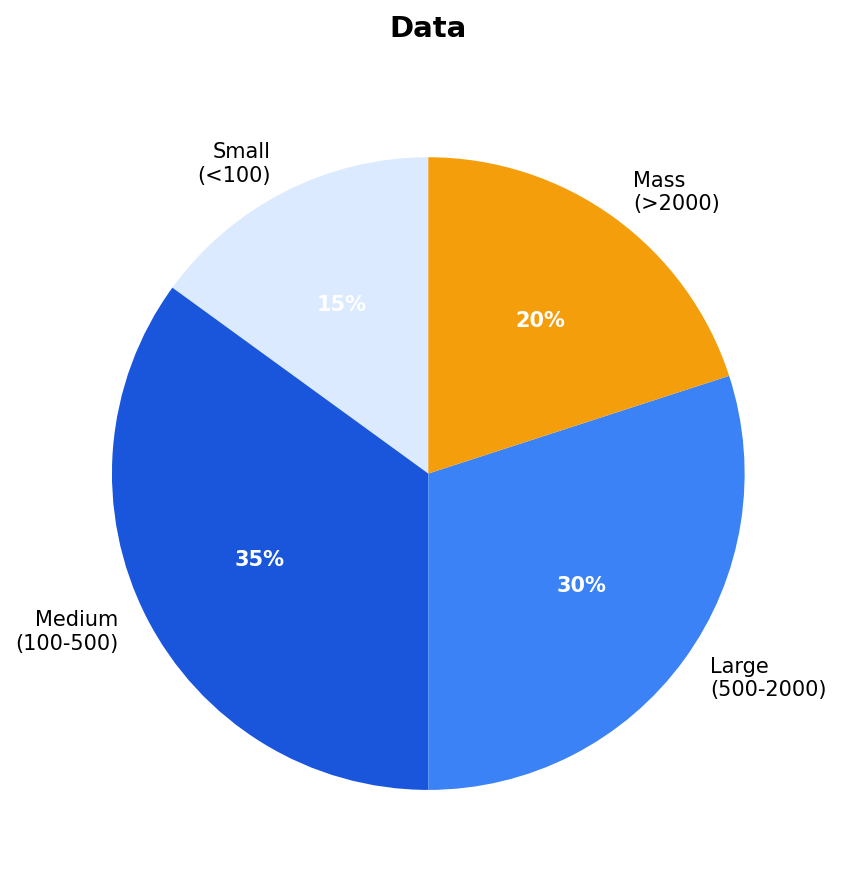
- Tooling amortization. Spread over expected lifetime volume, and if the program doesn't reach volume, you eat the difference. Model it at 70% of forecast.
- Freight and insurance. Castings are heavy and low-value-per-kg, so freight is a real fraction. Sea freight for volume, air for urgent PPAP samples and containment. Budget air freight into the launch phase.
- Import duty. EU and US anti-dumping measures on some aluminum products have shifted over the years. Verify the current HS code tariff before you model the business case, and confirm the supplier provides country-of-origin documentation that satisfies customs.
- Quality and inspection. Third-party pre-shipment inspection, source inspection visits, and the internal cost of managing a distant supplier. This is often underestimated by a factor of three.
- Inventory carrying cost. Longer lead times mean more safety stock. A 45-day sea transit plus buffer inventory ties up cash you wouldn't tie up with a European supplier.
- Risk contingency. The cost of a quality escape, a supplier shutdown, or a port delay. Even a rough allowance here changes supplier ranking.
Do the math honestly, including the contingency. Then compare. For mid-complexity aluminum die castings, a realistic 25-40% advantage over Western European landed cost is credible. If your model shows 50%+, recheck the assumptions — usually the tooling amortization or the quality contingency is too optimistic.
FAQ: What Buyers Ask Before They Commit
Do Chinese casting suppliers need IATF 16949 for automotive work?
Yes. For any safety-relevant or OEM-supplied casting, your customer's CSR almost always requires IATF 16949. A supplier holding only ISO 9001 is a red flag for automotive programs, not a starting point. Verify the certificate in the IATF database before you go further.
How long does PPAP approval take with a Chinese foundry?
Plan for 8-16 weeks from tooling kickoff to PSW sign-off for a Level 3 submission. The bottleneck is rarely the casting itself — it's dimensional reports, MSA, and Cpk data arriving late or incomplete. Build milestone payments into the contract to keep it moving.
Who owns the tooling I pay for in China?
You do, but only if the contract says so explicitly and the tool is tagged with your identification number. Undocumented tooling becomes a bargaining chip during a dispute or a supplier change. Register every tool, photograph it, and put a transfer clause in writing.
What's a realistic price gap between Chinese and European castings?
For mid-complexity aluminum die castings, Chinese landed cost typically runs 25-40% below Western European pricing once tooling amortization and freight are included. A gap below 20% often signals scope compromises. A gap above 45% usually means someone's assumptions are wrong — verify before signing.
Can I start with low volume and scale later?
Yes, and you should. Run a pilot order — one tool, one part number, full PPAP — before you move a family of parts. The pilot tells you everything about how the supplier handles documentation, communication, and problem-solving under real conditions. Scale what works. Don't scale a hypothesis.
Next Steps
The Chinese casting market will not reward shortcuts. It rewards buyers who arrive with a checklist, a locked technical package, and a contract that names the things that can go wrong. If you're evaluating suppliers right now, download the 9-point audit checklist and take it to your next factory visit. If you're earlier in the process, get the technical data package and NDA in place before the first RFQ goes out.
Either way, treat the supplier selection as an engineering decision, not a procurement one. The factories that pass a real audit pass it for a reason — their process discipline holds when you're not watching. That's the whole game.
Get the Automotive Casting Supplier Vetting Pack
A 9-point factory audit checklist, a PPAP readiness template, and a landed-cost model you can drop your own numbers into.
Download the vetting pack