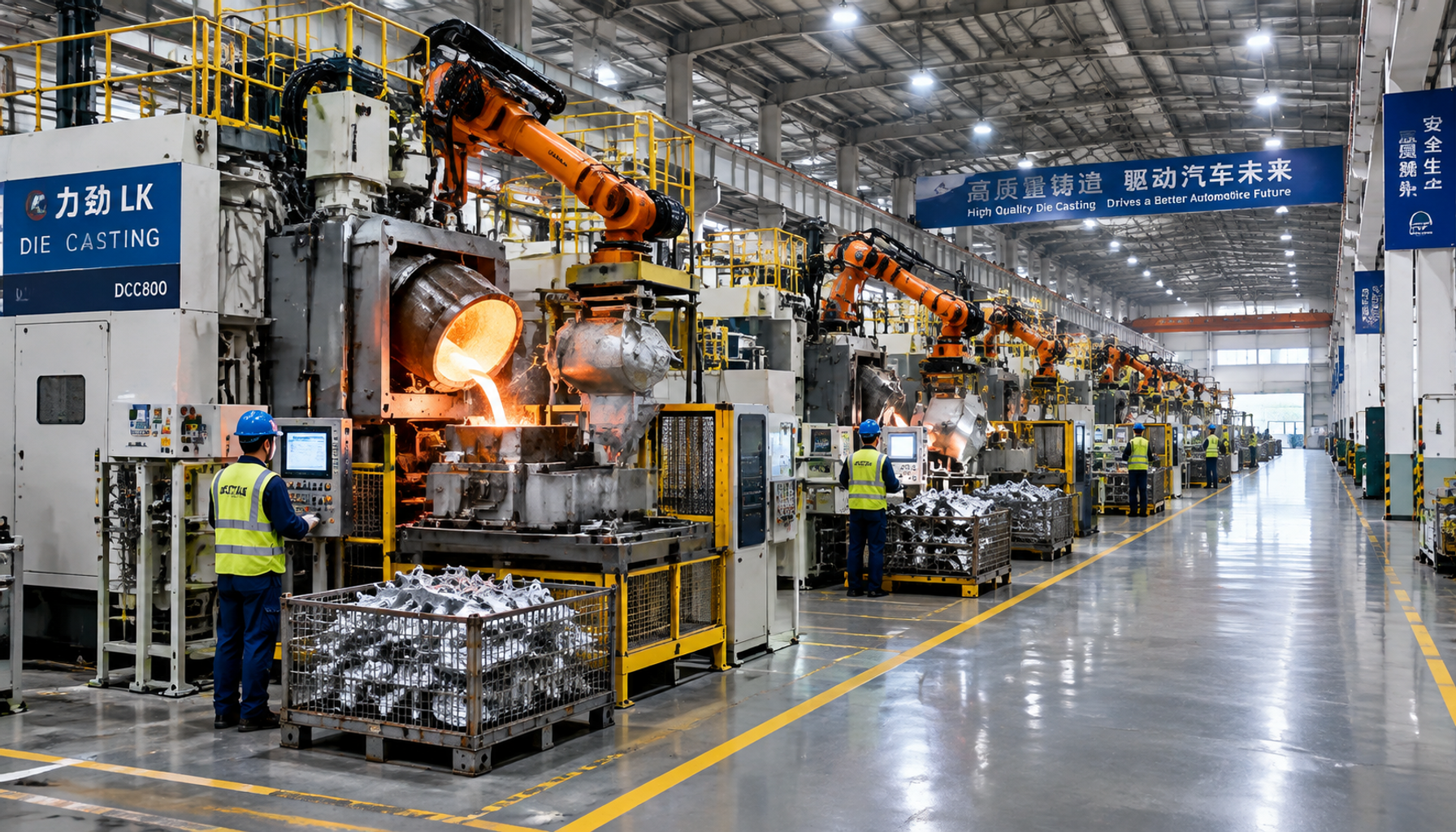
A single IATF 16949-certified die caster running at 3% internal scrap will ship you roughly 30,000 bad parts out of every million. At $4 a piece, that's $120,000 of defective product — before you add flatbed freight, sorting labor, rework, and whatever line-down penalty clause you didn't read closely enough.
That's the part nobody puts in the brochure.
You're sourcing automotive castings. You've got quotes in front of you that range from $2.80/kg to $11.50/kg for what looks like the same part on the same drawing. The spread is too wide to be explained by labor rates. Something else is going on.
This guide is about what that "something else" is. Not the marketing version. The version with the numbers attached.
The Market Math Behind Your Quote Sheet
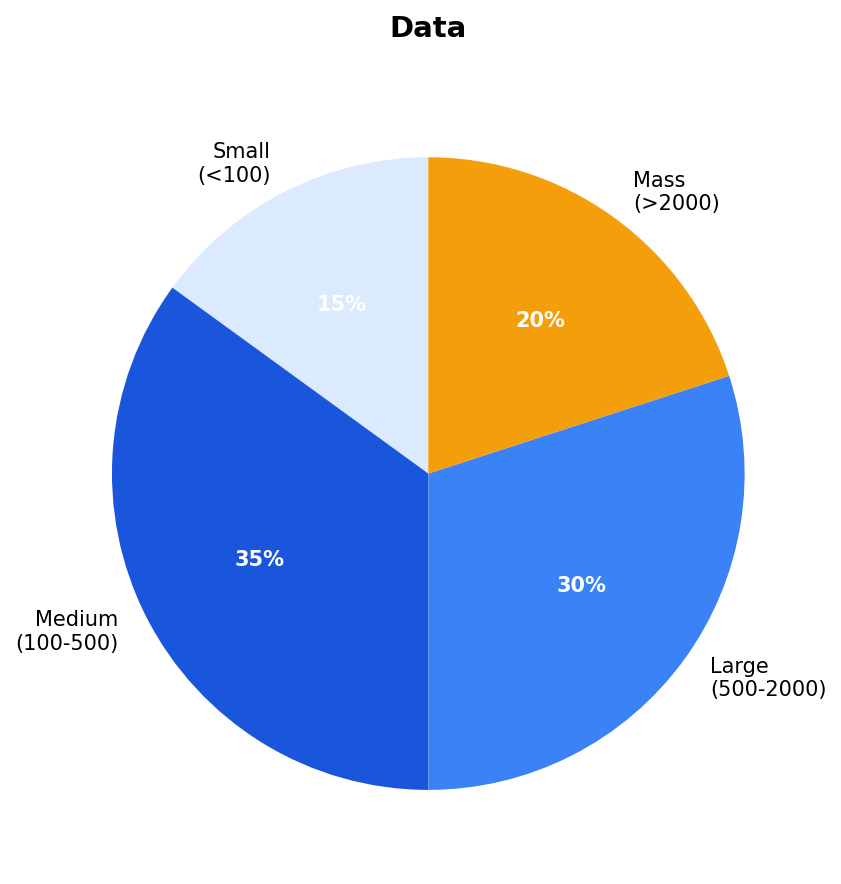
The global automotive casting market crossed an estimated $58 billion in 2026, up from roughly $42 billion in 2021. Aluminum castings account for about 62% of that figure by value and are growing faster than iron, mostly because every EV platform needs a structural battery tray, a motor housing, and a shock tower that used to be stamped steel.
Here's what that growth actually did to your sourcing problem. It pulled capacity away from small buyers.
Between 2022 and 2025, the number of Chinese die casting plants capable of running 2,500-ton-plus machines grew, but the number willing to take a 5,000-piece annual program shrank. Top-tier casting houses in Ningbo, Chongqing, and Suzhou now run their schedules around three or four OEM-level customers. If your annual volume is under 20,000 units, you are not the customer they're optimizing for — and you can feel it in the quote turnaround time.
That shift matters computationally. Scrap rate, machine utilization, and alloy sourcing all behave differently at a plant running 85% capacity versus one running 55%.
Plants above 80% utilization quote faster and cut less. Plants below 60% are hungry — and hungry plants will sometimes take your program at a loss to fill a press, then quietly cut corners on melt quality to claw margin back.
The number to ask for, and most buyers never do: current machine utilization on the tonnage class your part needs. That single figure predicts more about your first-year experience than the part price does.
Where Castings Actually Come From: Country Cost Reality
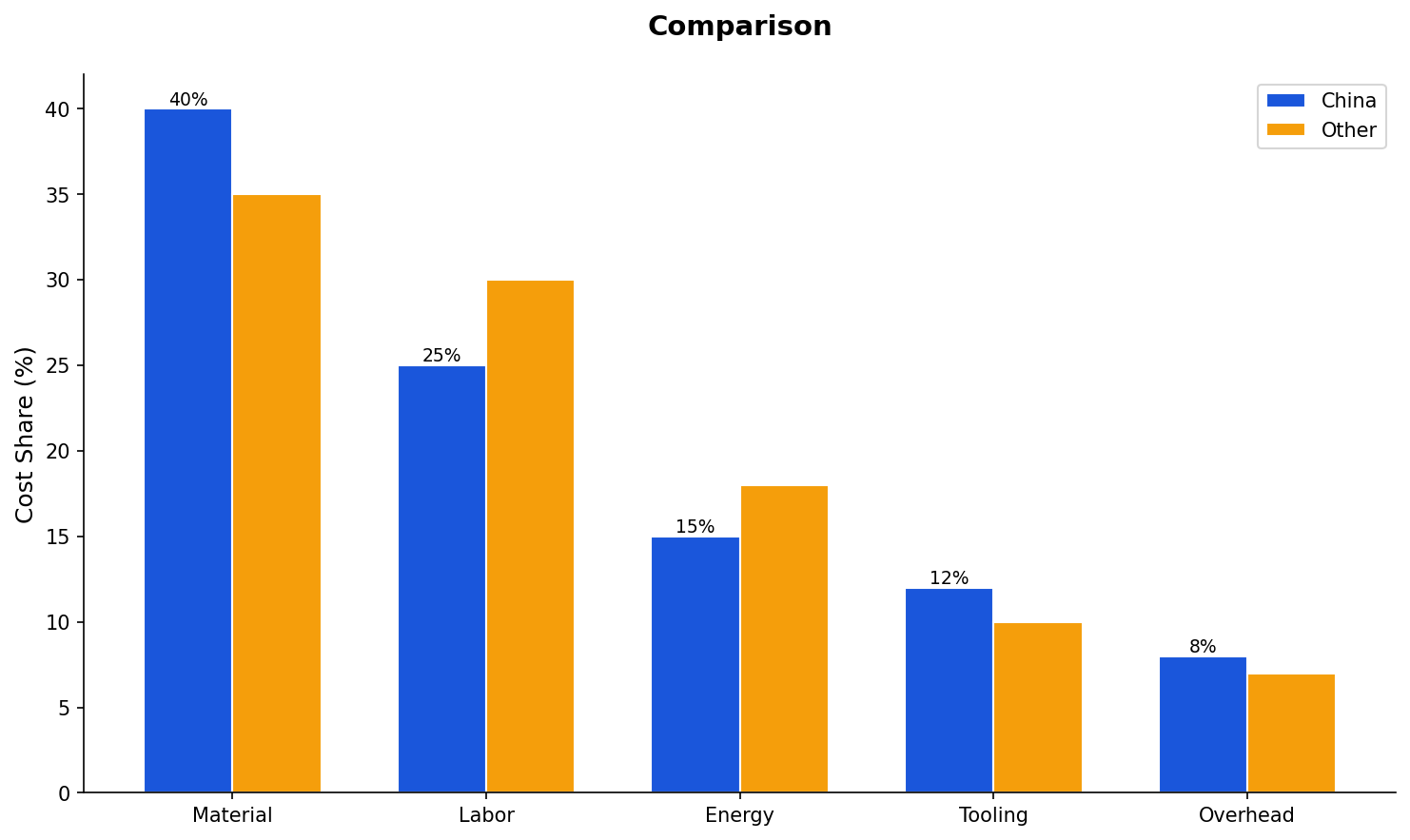
Country-level pricing comparisons get thrown around a lot, usually without the landed-cost adjustment that decides whether the comparison means anything. Here's a working baseline for aluminum automotive castings in 2026, per kilogram, FOB.
| Region | FOB $/kg (Al) | Landed Adj. (US, 2026) | Best Fit For |
|---|---|---|---|
| China | $2.00–4.00 | +18–32% | High volume, tolerance-critical, tooling investment |
| India | $3.00–5.00 | +14–22% | Medium volume, iron castings, machining-included programs |
| Mexico | $3.50–5.50 | +6–12% | USMCA-qualified parts, JIT automotive programs |
| Eastern Europe | $4.50–7.00 | +9–16% | EU OEM supply, lower freight, shorter lead time |
| US / Germany | $6.00–12.50 | 0% | Safety-critical, low volume, re-shoring mandates |
Two things kill this table in practice.
First, the landed adjustment swings hard on tariff classification. A raw aluminum casting under HTS 7616 can clear at a very different rate than the same part classified as a finished component. Classification errors show up 90 days after the shipment, as a bill.
Second, and bigger: the FOB price only tells you what the part costs when the process is running right. It tells you nothing about what the part costs when it isn't. A $3.10/kg quote from a plant running 6% scrap is more expensive per good part than a $3.80/kg quote from a plant running 1.5%.
Do that math before you compare anything.
Match the Process to the Part Before You Match the Part to a Supplier
Half the sourcing mistakes buyers make happen before a single supplier is contacted. They send a wheel hub drawing to a die caster, or a structural node to a sand foundry, and then wonder why the quote looks wrong or the prototype fails.
| Process | Typical Wall Thickness | Annual Volume Sweet Spot | Components |
|---|---|---|---|
| High Pressure Die Casting (HPDC) | 2.5–6 mm | 20,000–500,000+ | Transmission housings, e-motor housings, structural battery trays |
| Low Pressure Die Casting (LPDC) | 4–12 mm | 10,000–150,000 | Wheels, steering knuckles, subframe nodes |
| Gravity / Sand Casting | 5–25 mm | 500–50,000 | Brake calipers, exhaust manifolds, differential carriers |
| Investment Casting | 1.5–8 mm | 1,000–100,000 | Turbo impellers, valves, drivetrain gears |
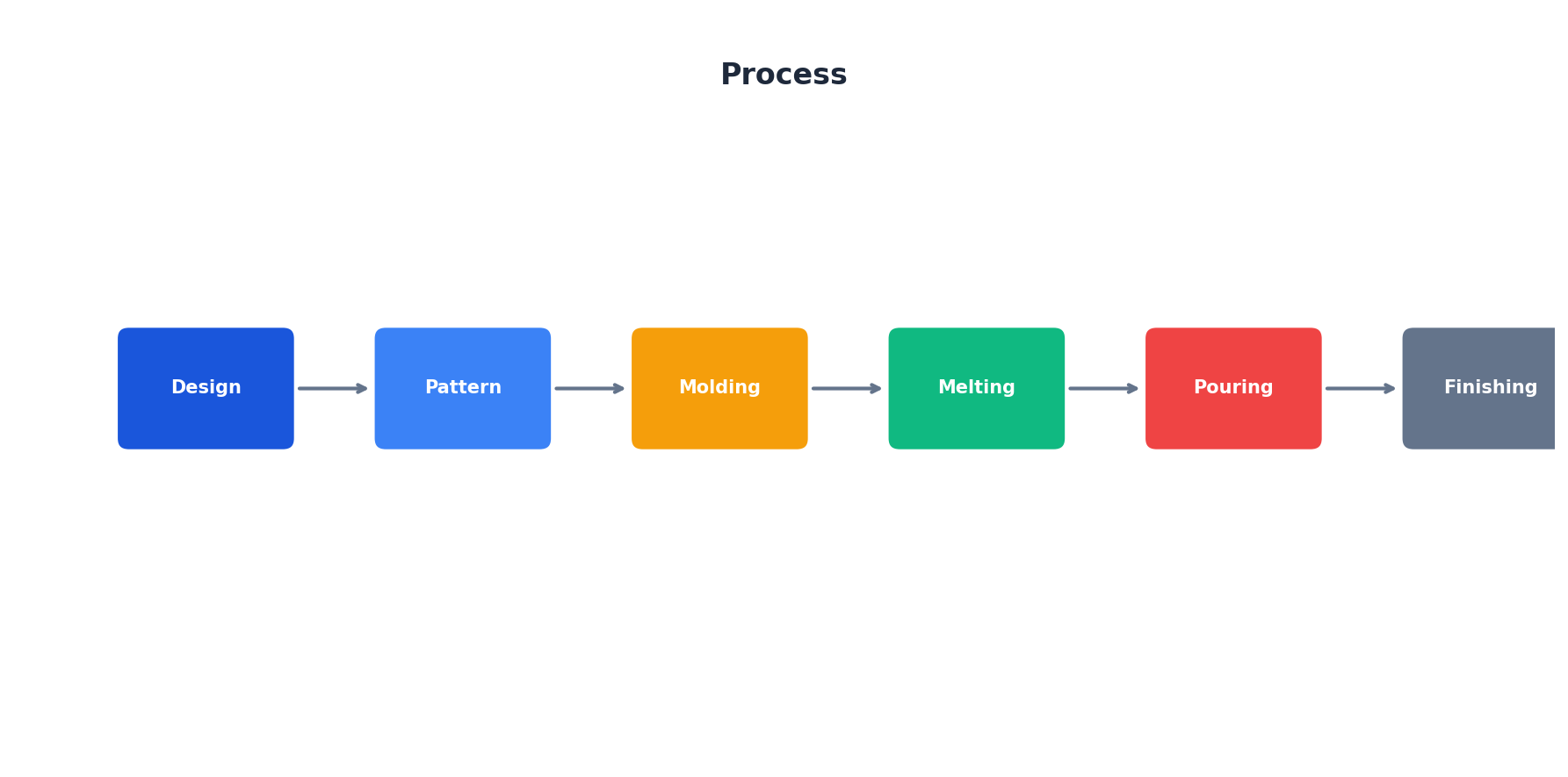
The process choice locks in your tooling cost, your porosity profile, and your realistic tolerance band. HPDC gives you tight dimensions and thin walls but traps gas — which means no T6 heat treatment on a conventional machine, and a hard ceiling on how much you can weld-repair a rejected part.
LPDC and gravity casting give you better internal density and heat-treatability at the cost of cycle time and surface finish consistency.
If you spec HPDC for a part that will see cyclic fatigue loads, you'd better have a supplier who runs vacuum-assisted or high-vacuum die casting. Otherwise you're buying porosity you'll discover at 80,000 miles.
For a deeper look at where these process decisions show up in price, the casting cost breakdown walks through material, cycle time, and tooling amortization line by line.
Scrap Rate: The Number That Decides Your Real Cost
This is the single most useful metric you can pull from a casting supplier, and it's the one they're least likely to volunteer.
| Scrap Band | What It Signals | Cost Impact Per 100k Parts @ $4 |
|---|---|---|
| 1.0–1.5% | Process in control, SPC active, die thermal management dialed in | $40k–$60k |
| 2.0–3.0% | Normal for a competent plant on a mature part | $80k–$120k |
| 3.5–5.0% | Worn die, inconsistent alloy, or weak melt control | $140k–$200k |
| 5.5–8.0% | Process drift, operator variability, no closed-loop feedback | $220k–$320k |
| >8.0% | The process is not in control. Walk away. | $320k+ |
Three things to know about how suppliers report this.
Internal scrap is not the same as shipped scrap. A plant with 6% internal scrap that sorts every part 100% before shipment may deliver a 0.2% defect rate to you — but you paid for the sorting in the piece price. Ask which one you're buying.
Scrap rate is not linear with part complexity. A simple flat plate at 8% scrap is a red flag. A thin-wall structural node with 14 slides at 8% scrap is a different conversation. Normalize by comparing plants on the same part.
Ask for scrap by shift. A plant at 3% average with a night shift at 7% has a supervision problem, not a metallurgy problem. That kind of split shows up in your delivered quality and it shows up fast.
One more: on state-owned and large private Chinese plants, scrap data is often tracked in the MES and genuinely available. On smaller workshops, "scrap rate" means whatever the quality manager estimates. Ask to see the last 30 days of production records for a comparable part. If they won't show you, that's your answer.
IATF 16949: What the Certificate Does and Doesn't Prove
Every serious automotive casting manufacturer has an IATF 16949 certificate on the wall. It has become table stakes, and that's exactly why it stopped being a useful filter.
IATF 16949 certifies that a factory has a documented quality management system and passed a third-party audit against it. It does not certify your part. It does not tell you the die is thermally balanced. It does not tell you the plant actually runs PFMEA reviews or just has a binder on a shelf.
Three things to verify beyond the certificate:
Scope. Check that the certificate scope specifically covers your process and your part family. A plant certified for gravity casting that takes on an HPDC program is operating outside its audited scope — which means the systems you're relying on weren't audited for what you're buying.
Certificate validity and issuing body. Look up the certificate number on the IATF database directly. Recycled or expired certificates appear in RFQ packages more often than anyone admits.
Customer-specific requirements. The certificate doesn't say whether the plant has done a Ford, VW, or Stellantis-specific audit. If your program rolls up to an OEM tier-one, those CSR addenda are where the real requirements live.
The audit that actually matters is a process audit on your part, on your press, with your die. That's where you learn whether the control plan reflects reality or aspiration. For the step-by-step documentation review and on-floor verification checklist, see the IATF 16949 foundry audit guide.
The Costs That Never Make It Into the Quote
Buyers compare part price. Suppliers compete on part price. Both sides know the part price isn't the cost. Here's where the gap goes.
| Cost Item | Typical Range | Why It Bites |
|---|---|---|
| Tooling ownership | $15k–$250k per die | If the supplier owns it, you can't move the program without starting over |
| PPAP Level 3 | $3k–$18k | Often quoted separately and forgotten in the total |
| Die maintenance amortization | $0.05–$0.30/part | Omitted from quotes, then added as a "tool refurbishment" invoice at year 2 |
| Freight to port vs door | 12–28% of FOB | FOB quotes look cheap until you price drayage and detention |
| Change notification window | Contract term | Plants that can change alloy sourcing without telling you will |
| Annual price-down clause | 2–5% | Signs a 3-year deal at a discount you may not be able to absorb |
The tooling question is the one that changes the relationship. If you pay for the die, you own the die, and you can physically move it. That means when performance slips in year two, you have leverage. When the supplier owns the die, your "leverage" is a conversation with their sales director.
Pay for the tool. Get a tool ownership certificate. Photograph the die cavity number and the die ID plate before it goes into the press. It costs you nothing and it saves programs.
Nine Things to Check Before You Approve a Casting Supplier
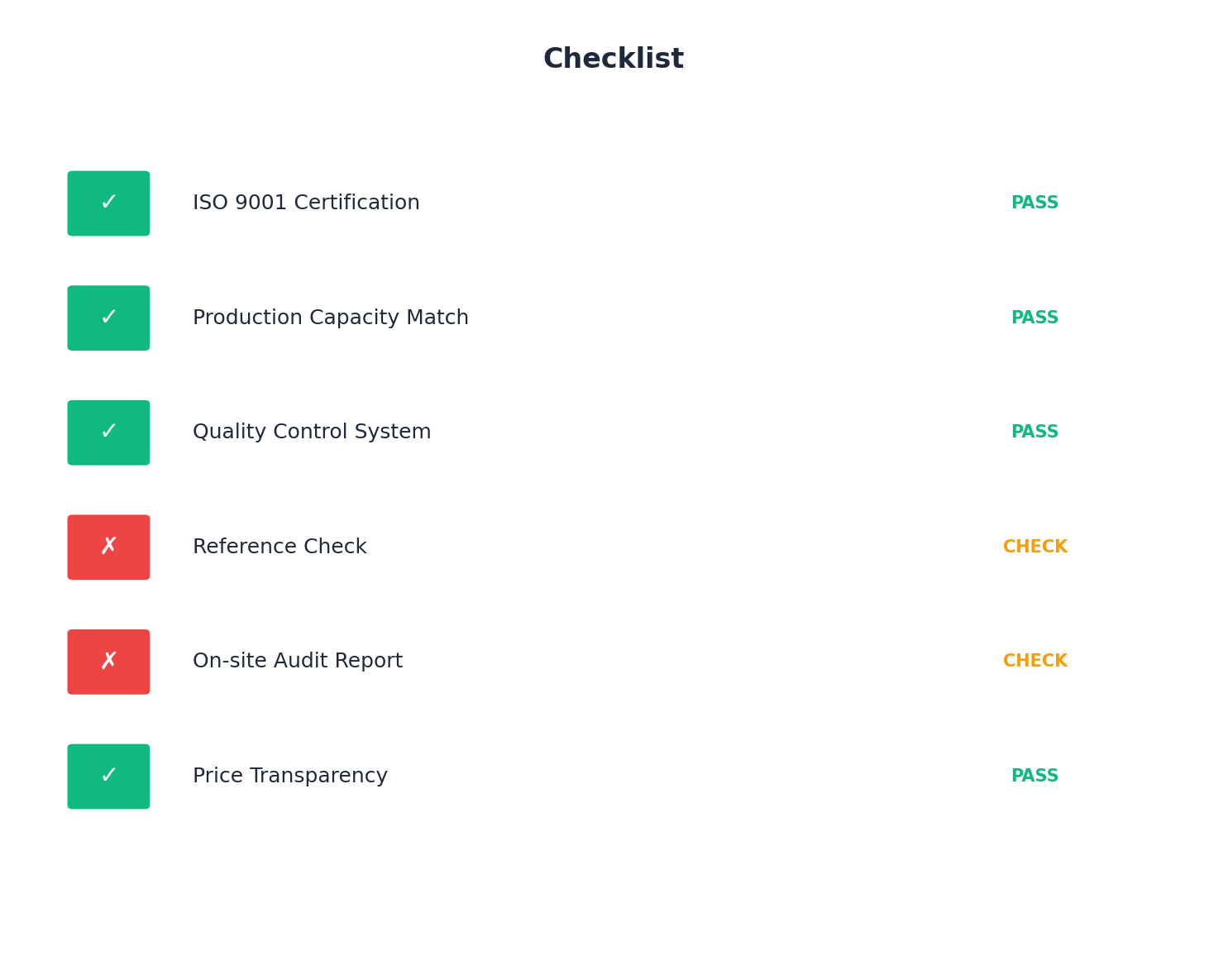
Bring this to every supplier visit or video audit. Score each item 1 through 5, then weight them.
- Current machine utilization on your tonnage class. Below 50% or above 90% both warrant a follow-up question. Ask what happens to your program when a big customer arrives.
- Last 30 days of scrap data, broken out by shift. If the split is under 1.5 points, they're running a controlled process. If it's above 3 points, you're buying the variability.
- Die ownership and transfer terms in writing. Not verbal. Not "we can discuss." Clause-level.
- PPAP capability and historical timing. Ask for the last three PPAP submissions and how long each actually took versus the promised date.
- Melt quality records. Spectrometer logs, hydrogen content readings, and furnace temperature charts. Degassing and fluxing frequency. This is where porosity defects are born.
- Dimensional layout report methodology. Who signs it, what equipment (CMM brand and calibration date), and whether they run full layout or just CTQ sampling.
- Change notification policy. Written commitment on how many days' notice before changing alloy source, tooling, or subcontractor for machining.
- Financial stability. Ask for the last two years of revenue trend and business license. A supplier that dies mid-program is far more expensive than one that charges 8% more.
- References from customers of similar part complexity. Ask specifically for a customer running a part with comparable wall thickness and volume. Call them. Ask about the supplier's behavior during the first major quality issue, not the honeymoon period.
Item nine separates real suppliers from sales-ready ones. Everyone's good when things work. The question is who shows up at 2 a.m. when a shipment gets held at the port.
Common Mistakes Buyers Make Sourcing Automotive Castings
Choosing on part price alone. The quote with the lowest number usually has the highest hidden cost. Compare total landed cost per good part, not per part.
Skipping the tooling ownership clause. This is the most expensive oversight in casting sourcing, and it's $0 to fix at the contract stage. Fix it at the contract stage.
Assuming certification equals capability. A certificate is a system. Your part is a process. Audit the process.
Ignoring the machined-feature handoff. Most automotive castings need secondary machining — bearing bores, threaded bosses, sealing surfaces. If the casting plant subcontracts machining to a shop they don't control, you've inserted an unverified link in your quality chain. Ask who machines, on what equipment, and whether that sub-tier is on the supplier's approved list.
Not visiting before tool kickoff. A two-day visit before the die is cut costs you maybe $3,000. Catching a design-for-manufacturing issue at that stage saves you a $60,000 tool rework and eight weeks of schedule.
Treating the first shipment as a finished conversation. The first 90 days of production reveal how the plant behaves on a bad day. Hold back nothing in your review until at least three production runs have shipped.
Frequently Asked Questions
What should an automotive casting manufacturer quote include?
A complete quote covers part price, tooling cost and ownership terms, PPAP level and its cost, packaging spec, freight to port or door, MOQ, annual price-down clauses, die maintenance amortization, and the change-notification window. If any of those are missing, the real cost is hiding somewhere else in the contract.
Is IATF 16949 certification enough to qualify a foundry?
No. It's a system certification, not a product certification. It confirms a documented quality management process exists. It says nothing about whether your specific part will hold tolerance across 200,000 units. Run a process audit on the actual line that will produce your part.
What scrap rate is acceptable for automotive castings?
Well-run die casters hold internal scrap between 1% and 3% on mature parts. Gravity and sand casting runs higher, typically 3% to 6%. Anything consistently above 8% indicates the process is out of control, and you'll absorb that cost through rework, sorting, and late shipments.
How long does PPAP approval take from a new casting supplier?
Level 3 PPAP on a new die-cast part typically runs 8 to 14 weeks from tool kickoff, assuming the die is built, first articles pass dimensional layout, and there's no significant porosity or CTQ deviation. Structural and safety-critical parts take longer when fatigue or crash validation is required.
Should you own the tooling or let the manufacturer own it?
Pay for the tool and own it outright. Manufacturer-owned tooling hands the factory leverage over you at renewal. Buyer-owned tooling means you can move the die to another press if performance drops, and it keeps the supplier competing on part price and service rather than on hostage economics.
What to Do With All This
Pull your current quote sheet. For each supplier, add three columns: machine utilization on the relevant tonnage, last-30-day scrap rate, and tooling ownership status.
Some of those columns will be blank. That's not a problem with your sheet. That's a problem with the supplier, and you just found it.
Then take the nine-item checklist and run it against your top three candidates. Not the top three on price — the top three on the combination of process fit, volume fit, and willingness to share production data. Buyers who do this consistently find that the cheapest quote and the best supplier rarely turn out to be the same company.
If you'd rather not do the discovery phase alone, that's what we're here for. We keep current performance data on 1,800+ casting plants across China, India, Mexico, and Eastern Europe, including scrap benchmarks, capacity status, and audit outcomes. We'll narrow the field to three or four plants that actually fit your part, your volume, and your tolerance requirements — and we'll sit in on the process audit with you.
No cost to you for the sourcing work. Suppliers pay us a success fee, which means our incentive is getting you a plant that performs, not one that pays the highest commission.
For a look at how the regional supplier base has shifted since 2022, see our China die casting supplier landscape overview.
Get Three Vetted Casting Suppliers for Your Part
Send us your drawing, annual volume, and target tolerance. You'll get back a shortlist of plants with real scrap data, capacity status, and tooling terms — usually within four business days.
Need Help with Automotive Casting Manufacturer: 2026 Data, Pricing & Vetting?
Get matched with 3 verified foundries in 24 hours. No markup, transparent pricing.
Request Quotes →