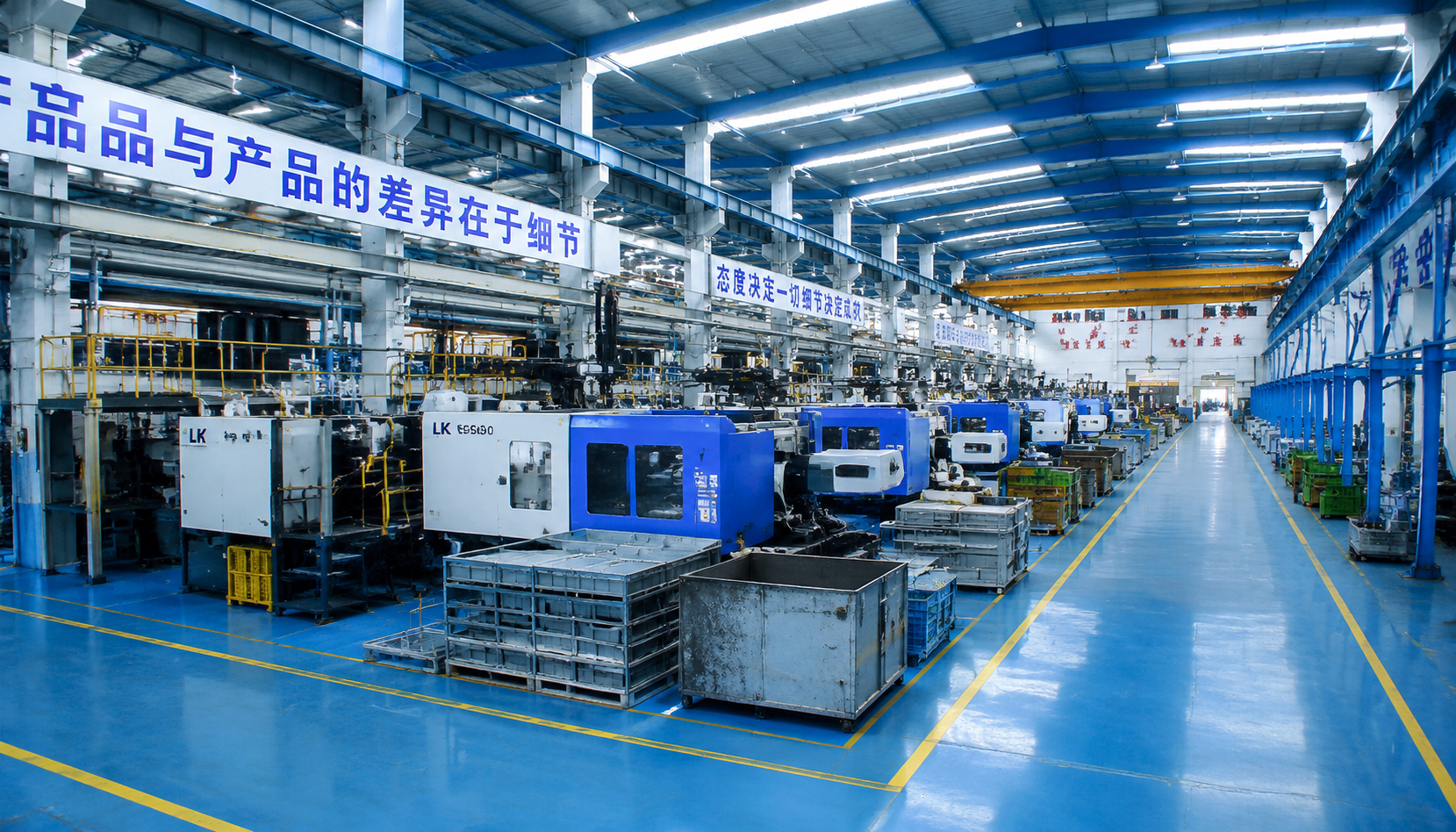
1. Aluminum Die Casting in China: The 2026 Landscape
If you're sourcing aluminum die castings from China in 2026, you're not alone — China produces roughly 45% of the world's aluminum castings, with Guangdong, Jiangsu, and Zhejiang provinces accounting for the bulk of output. But here's the reality: not all Chinese die casting factories are created equal, and the gap between top-tier and bottom-tier suppliers is wider than ever.
The industry has undergone a major shift since 2023. Environmental regulations have forced hundreds of small, unregulated foundries to close. Meanwhile, tier-1 suppliers serving automotive and aerospace have invested heavily in automation, real-time process monitoring, and ISO certifications. The result? A polarized market: you either pay more for quality you can trust, or you risk your supply chain on price alone.
This guide covers what we've learned from auditing over 200 Chinese aluminum die casting suppliers and helping buyers place orders worth $50K to $2M. We'll walk through pricing, supplier evaluation, quality control, and the costly mistakes we see buyers make most often.
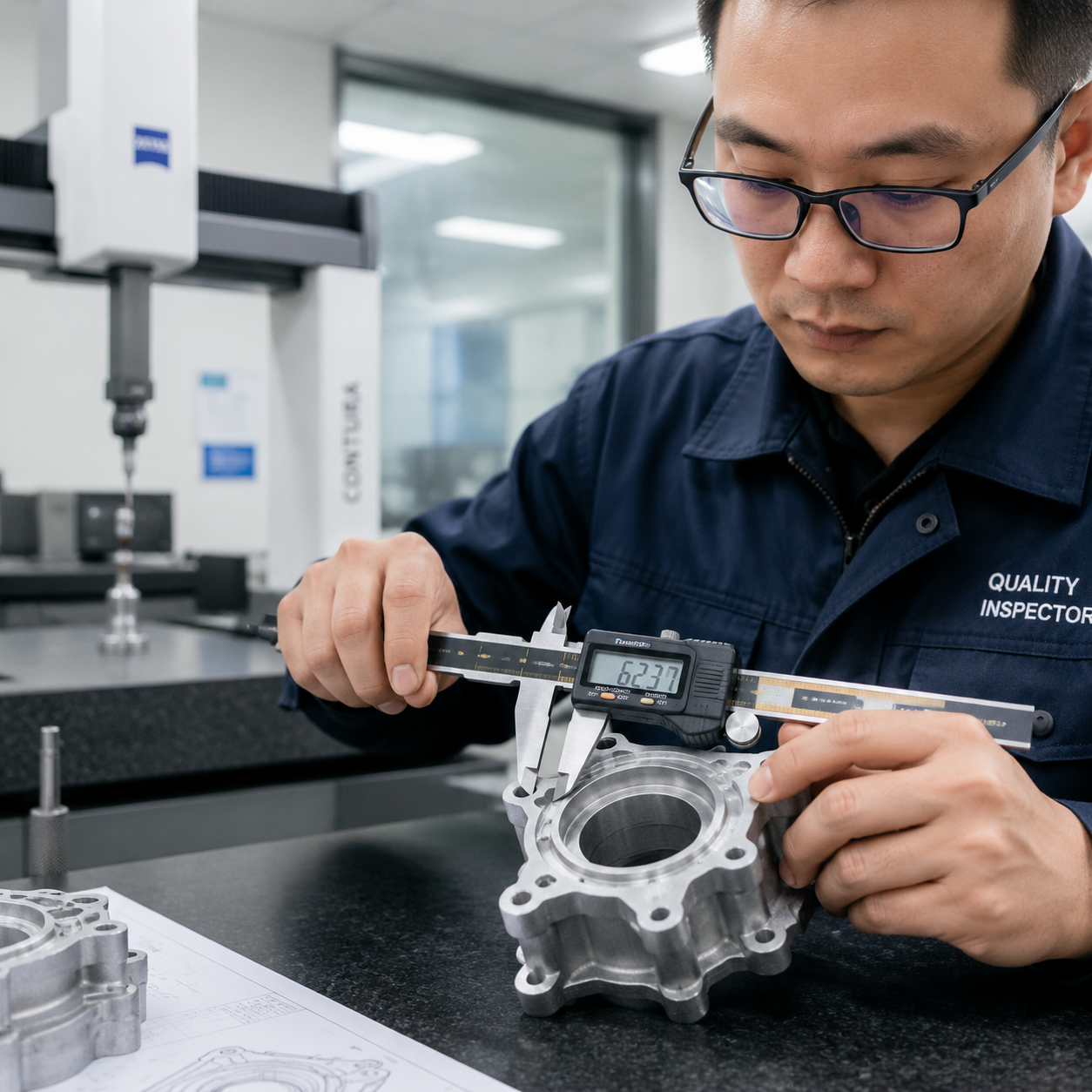
2. Aluminum Die Casting Cost in China: What You'll Pay Per Kg
Let's start with the question every buyer asks first. The short answer: expect to pay between $2.00 and $6.00 per kg for aluminum die castings from China in 2026, depending on complexity, volume, and finishing requirements.
Here's a more detailed breakdown based on our Q1 2026 survey of 35 Chinese aluminum die casting factories:
| Part Complexity | Annual Volume | Price per kg (USD) | Tooling Cost |
|---|---|---|---|
| Simple (brackets, covers) | 10,000+ | $2.00 - $3.00 | $3,000 - $8,000 |
| Medium (housings, frames) | 5,000 - 10,000 | $3.00 - $4.50 | $8,000 - $20,000 |
| Complex (engine blocks, transmission cases) | 1,000 - 5,000 | $4.50 - $6.00 | $20,000 - $50,000 |
| Prototype / Low volume | < 1,000 | $6.00 - $10.00 | $2,000 - $5,000 (soft tooling) |
Prices FOB China port, excluding machining and surface treatment. Based on ADC12 (A383) aluminum alloy.
2.1 What Drives the Price?
Five factors determine your per-kg cost more than anything else:
1. Alloy selection. ADC12 (A383) is the default — it's the cheapest and most widely available. If your drawing calls for A356 (higher strength, better elongation), expect a 15-25% premium. If you need 380 (better corrosion resistance), add 10-15%. And if you spec a custom alloy with specific copper or silicon content, you're looking at 25-40% above ADC12 pricing.
2. Part complexity and wall thickness. This is where inexperienced buyers get burned. A simple flat cover with uniform 3mm walls is cheap. Add thin-wall sections (1.5mm), internal ribs, sliding cores, or zero-draft features, and the price jumps dramatically — not because of material cost, but because of tooling complexity and lower yield rates. Thin-wall die casting requires higher injection pressures, precise temperature control, and more frequent die maintenance. Yield rates can drop from 95% to 75% on complex geometries.
3. Annual volume and tooling amortization. Here's a fact that surprises many buyers: the per-kg price you're quoted almost always includes tooling amortization. A $20,000 die spread over 50,000 parts adds $0.40/kg. Spread over 5,000 parts, it adds $4.00/kg. Always ask for the tooling cost broken out separately, so you can compare quotes apples-to-apples.
4. Machining requirements. Raw as-cast vs. CNC machined is night and day. A housing casting at $3.00/kg becomes $5.50-$8.00/kg after machining critical surfaces. Each additional machined face adds setup time. Each tapped hole adds $0.15-$0.50. Tight tolerances (±0.05mm) vs. standard (±0.15mm) can double machining time. The smartest buyers we work with design for as-cast surfaces wherever possible and only machine what's absolutely necessary.
5. Surface treatment. Basic shot blasting is usually included. Beyond that: powder coating adds $0.50-$1.20/kg, chromate conversion adds $0.30-$0.60/kg, and electroless nickel plating adds $2.00-$4.00/kg.
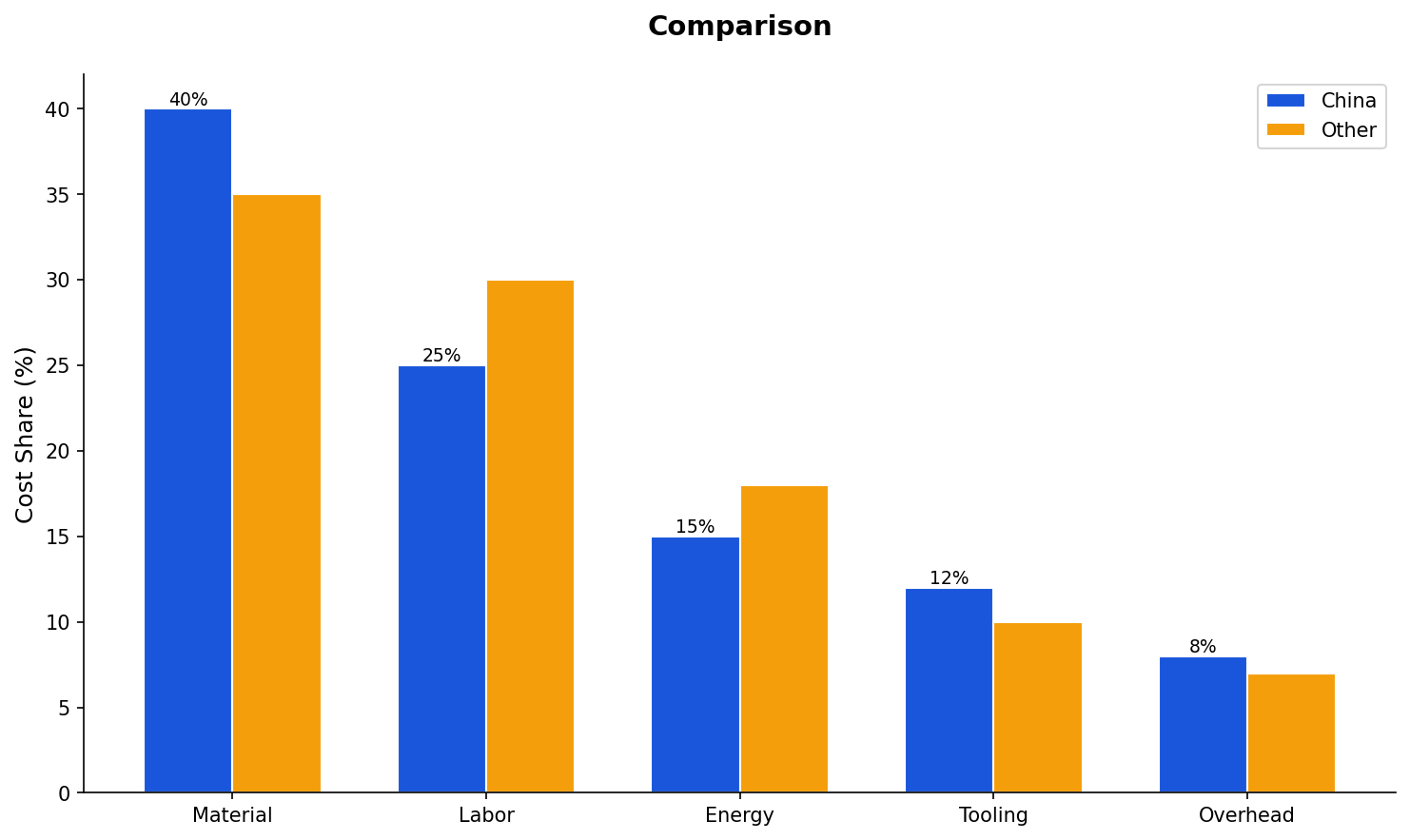
2.2 China vs Other Regions: Price Comparison
| Region | Price per kg (USD) | Lead Time | Quality Range |
|---|---|---|---|
| China (Guangdong/Jiangsu) | $2.00 - $6.00 | 4-8 weeks | Wide — excellent to poor |
| India (Pune/Chennai) | $3.00 - $7.00 | 6-10 weeks | Good for medium complexity |
| Vietnam (Ho Chi Minh) | $4.00 - $8.00 | 6-10 weeks | Growing but limited capacity |
| Mexico (Monterrey) | $5.00 - $9.00 | 3-5 weeks | Good, USMCA advantages |
| USA (domestic) | $8.00 - $15.00 | 4-8 weeks | High, best for critical parts |
China maintains a 40-60% cost advantage over domestic US suppliers, but the gap is narrowing. In 2020, the advantage was closer to 60-70%. Labor costs in China's coastal foundry hubs have risen 8-12% annually for five consecutive years.
3. How to Evaluate Aluminum Die Casting Suppliers in China
This is where most buyers go wrong. They evaluate price, maybe check ISO 9001, and make a decision. That's like buying a car by looking at the paint color. Here's what actually matters:
3.1 Machine Capability (The Most Important Factor)
Aluminum die casting is all about the machine. A supplier with 10 cold-chamber machines ranging from 160 to 1,200 tons clamping force is fundamentally different from one with two ancient 400-ton machines. Always ask for a machine list with make, model, year, and clamping force. Top-tier suppliers in China use LK, Toshiba, or Ube machines from the last 5-8 years. Older machines (10+ years) mean worse consistency and tighter process windows.
3.2 Die Maintenance and Toolroom
Dies for aluminum die casting experience thermal fatigue — they heat up to 200-300°C and cool down with every cycle. Over time, this causes heat checking, erosion, and eventual failure. A supplier with an in-house toolroom that can perform die maintenance, repairs, and minor modifications is worth 2-3x more than one that outsources all die work. Ask about their preventive maintenance schedule. The best shops inspect dies every 10,000-20,000 cycles and perform preventive maintenance at 50,000-cycle intervals.
3.3 Process Control and Automation
The Chinese die casting industry is rapidly automating. Tier-1 suppliers now use: real-time shot monitoring (recording injection speed, pressure, and temperature for every cycle), automatic ladling and spraying (reducing cycle time variation), robotic extraction (eliminating manual handling damage), and X-ray inspection for porosity detection. If a supplier doesn't have shot monitoring, they can't prove process consistency.
3.4 Quality Certifications — What Actually Matters
ISO 9001 is table stakes. If they don't have it, don't even consider them. For automotive parts, IATF 16949 is non-negotiable — it's the automotive quality management standard that goes far beyond ISO 9001. For aerospace or defense, look for AS9100. But here's the reality check: certification means the system exists, not that it's followed. We've audited ISO 9001 certified factories that couldn't produce a single valid SPC chart. The certification gets you in the door; the audit tells you if they actually follow it.
3.5 Communication and Technical Support
This is the most underrated factor. Can they read your English drawing and identify DFM issues before quoting? Or do they quote blind and discover problems during first article? A supplier with English-speaking engineers who can discuss GD&T, draft angles, and wall thickness recommendations is worth paying a premium for. Every $0.50/kg premium on price saves you $5.00/kg in rework, delays, and communication overhead.
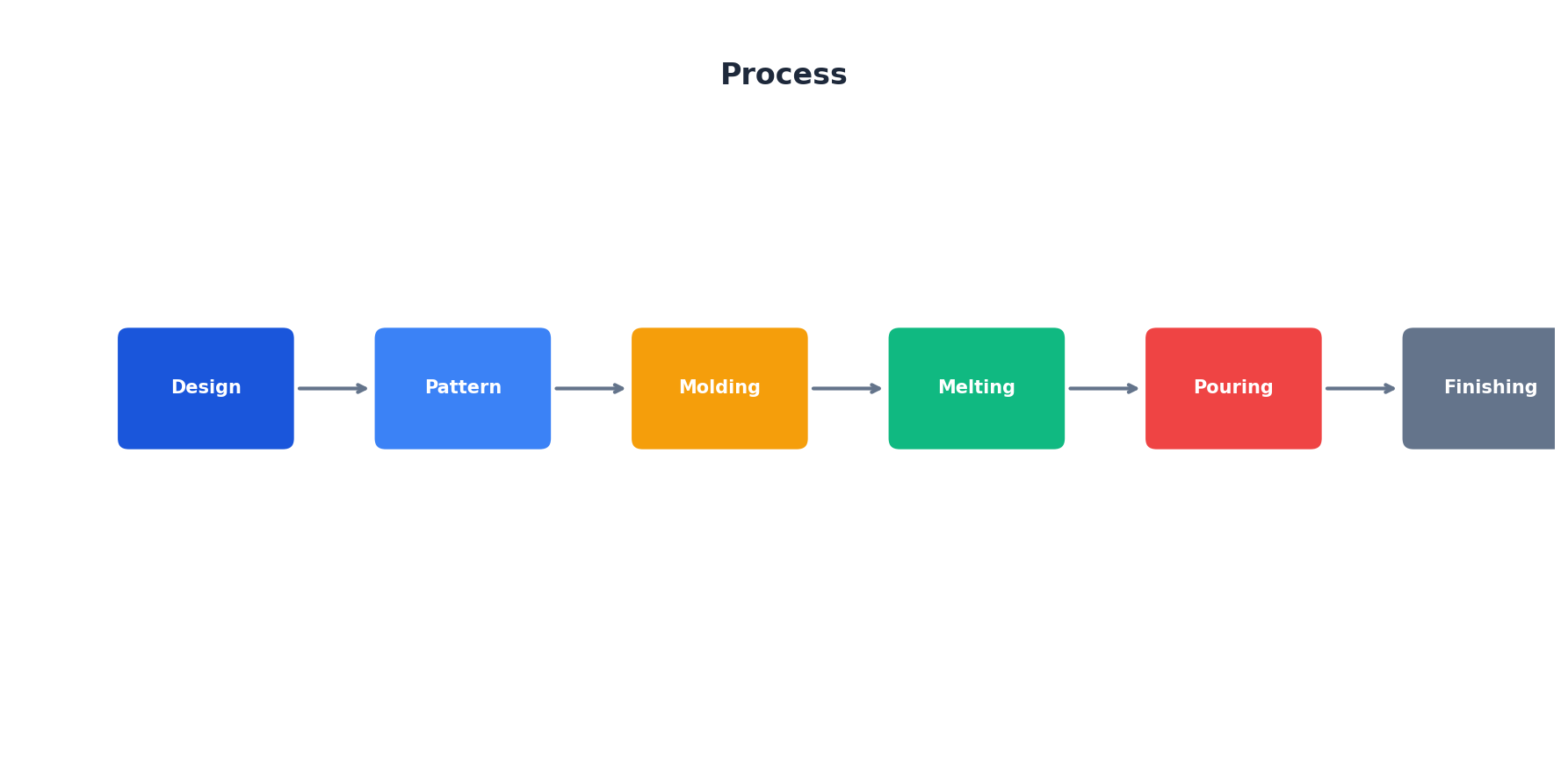
4. Quality Control: What You Must Specify
Quality issues in aluminum die casting fall into predictable categories. Specify these requirements upfront in your RFQ, and you'll eliminate 80% of problems before they happen:
4.1 Porosity Standards
Porosity is the #1 defect in aluminum die casting. It's caused by gas trapped during injection. You need to specify: maximum pore size (e.g., no pore >1mm), maximum pore density (e.g., no more than 3 pores per cm²), and acceptable locations (porosity in machined surfaces vs. non-machined areas). Most Chinese suppliers default to ASTM E505 Level 2. If you need Level 1 (aerospace grade), expect a 20-30% price premium.
4.2 Dimensional Inspection
Standard: full dimensional report on first article, plus sampling per AQL Level II during production. For critical dimensions (sealing surfaces, mating faces), request 100% inspection with CMM reports. Specify the acceptable Cpk value — 1.33 is standard for most applications, 1.67 for safety-critical parts.
4.3 Material Certification
Every heat of aluminum should come with a material certificate showing chemical composition per the specified alloy standard. For ADC12, you need: silicon (9.6-12.0%), copper (1.5-3.5%), iron (<1.3%), and the other elements within spec. We've tested "ADC12" parts from uncertified suppliers that turned out to be scrap aluminum with random composition — leading to cracking, poor machinability, and field failures.
4.4 Pressure Tightness Testing
If your part needs to hold fluid or air pressure (valve bodies, pump housings, transmission cases), specify the test method and acceptable leak rate upfront. Common tests: helium leak test (most sensitive), water dunk test (visual bubble check), or pressure decay test. Don't assume it's included — many suppliers only do visual inspection unless specified.
5. The 5 Most Costly Mistakes Buyers Make
We've seen these patterns repeat across hundreds of sourcing projects. Avoiding these five mistakes alone will save you thousands and months of delays.
Mistake #1: Choosing the Lowest Price
This sounds obvious, but here's what actually happens. The lowest bidder quotes $2.20/kg while the average is $3.50/kg. You think you've found a bargain. What you've actually found is a supplier who: uses recycled aluminum of unknown composition, skips X-ray inspection, has minimal process control, and will come back with "unexpected cost overruns" after you're already committed. The real cost of the "cheap" supplier — when you factor in rework, delays, and rejected parts — is almost always higher than going with a mid-tier supplier from the start.
The rule: Eliminate the lowest and highest quotes, evaluate the middle 3-4 on technical capability, then negotiate within that group.
Mistake #2: Not Specifying Alloy Grade and Standard
"Aluminum die casting" is not a specification. ADC12 (JIS), A383 (ASTM), and A380 (ASTM) are all similar but not identical. If your drawing says "ADC12" but the supplier quotes based on "A380," you might get acceptable parts — or you might get parts that fail your machinability or corrosion requirements. Always specify both the alloy and the standard on your drawing and in your RFQ.
Mistake #3: Ordering Tooling Before Process Qualification
This is the most expensive mistake we see. A buyer pays $15,000 for a die, waits 6 weeks, receives first articles, and discovers that: the shrinkage simulation wasn't done, the gating system doesn't fill properly, or the cooling channels are inadequate. Now you're $15,000 in and facing 4 more weeks and $5,000 in die modifications. Always require mold flow simulation before cutting steel. The $500-$1,000 cost is the best insurance you can buy.
Mistake #4: Ignoring Post-Casting Operations in Your Timeline
Die casting is fast — the actual casting cycle might be 30-60 seconds. But trimming, shot blasting, CNC machining, surface treatment, and inspection can take 2-4 weeks. Buyers who plan "4 weeks for casting" and forget the post-processing end up with delayed projects. Build a realistic timeline that accounts for all post-casting operations.
Mistake #5: Not Having a Third-Party Inspection
Even good suppliers ship bad parts sometimes. If you're not doing incoming inspection, you won't know until the parts hit your production line. A third-party inspection before shipment (at the supplier's facility) catches issues early and gives you leverage for correction. Budget $300-$800 per inspection day. It pays for itself the first time it catches a bad batch.
6. How to Structure Your RFQ for Best Results
The quality of your quotes is directly proportional to the quality of your RFQ. A vague RFQ gets vague pricing. Here's what to include:
Complete RFQ Package
- 3D model (STEP or IGES format) — essential for tooling design and mold flow simulation
- 2D drawing with GD&T — critical dimensions, tolerances, and datum references
- Alloy specification — exact grade (ADC12/A383/A356) + applicable standard
- Annual volume and order frequency — influences tooling amortization and pricing
- Machining requirements — which surfaces need machining and to what tolerance
- Surface treatment spec — as-cast, shot blasted, powder coated, plated
- Quality requirements — porosity standard, Cpk target, inspection AQL level
- Testing requirements — pressure test, X-ray, material cert, dimensional report
- Packaging and delivery terms — standard export packaging, FOB or CIF
- Target price and timeline — helps suppliers prioritize and flag mismatches early
7. 2026 Market Trends Affecting Aluminum Die Casting in China
7.1 Raw Material Price Volatility
Aluminum ingot (ADC12) prices in China fluctuated between ¥16,000 and ¥22,000 per ton in the past 12 months. As of Q1 2026, prices are around ¥18,500/ton ($2,540). But with China's ongoing power rationing policies affecting smelters in Yunnan and Sichuan, expect continued volatility. Negotiate price adjustment clauses tied to the Shanghai Futures Exchange (SHFE) aluminum contract, with quarterly reviews and ±8% bands.
7.2 Environmental Compliance Driving Consolidation
China's "dual carbon" policy is reshaping the die casting industry. Smaller foundries (<50 employees) without proper exhaust treatment and wastewater systems are being shut down. In Guangdong's Zhaoqing cluster alone, over 200 small die casting shops closed in 2024-2025. The result: remaining suppliers have more pricing power, but also better environmental practices that correlate with better quality control. This consolidation is actually good for serious buyers — it filters out the worst suppliers and makes the market more transparent.
7.3 Automation and Smart Manufacturing
Tier-1 Chinese die casting factories are investing heavily in Industry 4.0. We're seeing: IoT sensors on every machine feeding data to MES systems, AI-powered defect detection using machine vision, automated guided vehicles (AGVs) moving parts between stations, and digital twin simulation for new die designs. Suppliers who've made these investments can offer better consistency, shorter lead times, and traceable quality data — but they charge 10-20% more than non-automated competitors.
FAQ
Q: What's the minimum order quantity (MOQ) for aluminum die casting in China?
A: For simple parts with existing tooling: 500-1,000 pieces. For new tooling: typically 3,000-5,000 pieces per year to justify die costs. Some suppliers accept 500-1,000 piece first orders at a 20-30% premium. We help buyers consolidate multiple parts to meet MOQs.
Q: How long does tooling take?
A: Simple single-cavity dies: 3-4 weeks. Multi-cavity or complex dies with slides and cores: 6-10 weeks. Add 1-2 weeks for first article approval. Prototype tooling (casted aluminum dies): 2-3 weeks but limited life (10,000-50,000 shots vs. 200,000+ for hardened H13 steel).
Q: Can I get ASTM-certified aluminum die castings from China?
A: Yes, but verify the certification scope. Many Chinese die casting factories are ISO 9001 or IATF 16949 certified. For ASTM-specific certifications, ask for: (1) material test reports from CNAS-accredited labs, (2) dimensional reports traceable to the calibration standards, (3) porosity evaluation per ASTM E505. We verify all three before recommending a supplier.
Q: What's the typical payment term for new suppliers?
A: Industry standard: 30% T/T deposit with order, 70% against B/L copy. After 2-3 successful orders, negotiate 100% against B/L or 30-60 day terms. Never pay 100% upfront for a new supplier. For tooling, expect 50% with order and 50% on first article approval.
Q: How do I handle design changes after tooling is made?
A: It depends on the change. Minor changes (adding a hole, changing a radius): $500-$2,000 in die modification. Major changes (new geometry, different wall thickness): essentially a new die. Always negotiate a "reasonable change" clause in your tooling contract — typically 2-3 free minor changes within the first year.
Bottom Line
Aluminum die casting in China remains the most cost-effective option for volume production, with prices ranging from $2.00 to $6.00 per kg depending on complexity and volume. But the real savings don't come from the per-kg price — they come from specifying clearly, evaluating suppliers on technical capability (not just price), and building quality control into your process from day one.
The buyers who succeed in China aren't the ones who negotiate the hardest on price. They're the ones who invest time in supplier qualification, write detailed RFQs, and build long-term relationships with factories that invest in quality. The cheap quote is expensive. The thorough supplier is cheap.
Ready to source aluminum die castings from China?
We match you with 3 verified die casting suppliers in 24 hours. Each supplier is pre-audited for machine capability, quality systems, and export experience. Get transparent pricing with full specification breakdown.
Get Matched with Suppliers →