You're Not Buying Castings—You're Buying Process Control
Here's a number that should bother you: 8x.
That's the gap in defect rates between China's best aluminum foundries and the worst. Same country. Same alloy (A380, ADC12, A356). Same die casting machines from the same manufacturers. The difference isn't equipment—it's process discipline.
You've heard the horror stories. A buyer in Ohio ordered 5,000 ADC12 housings for a power tool line. The first 1,000 units looked fine. The next 3,800 had porosity so bad they leaked pressure. By the time QC caught it, the production line was down for two weeks. The factory blamed "shipping damage." The buyer ate the cost.
That story repeats itself every month. But you don't have to be the next one.
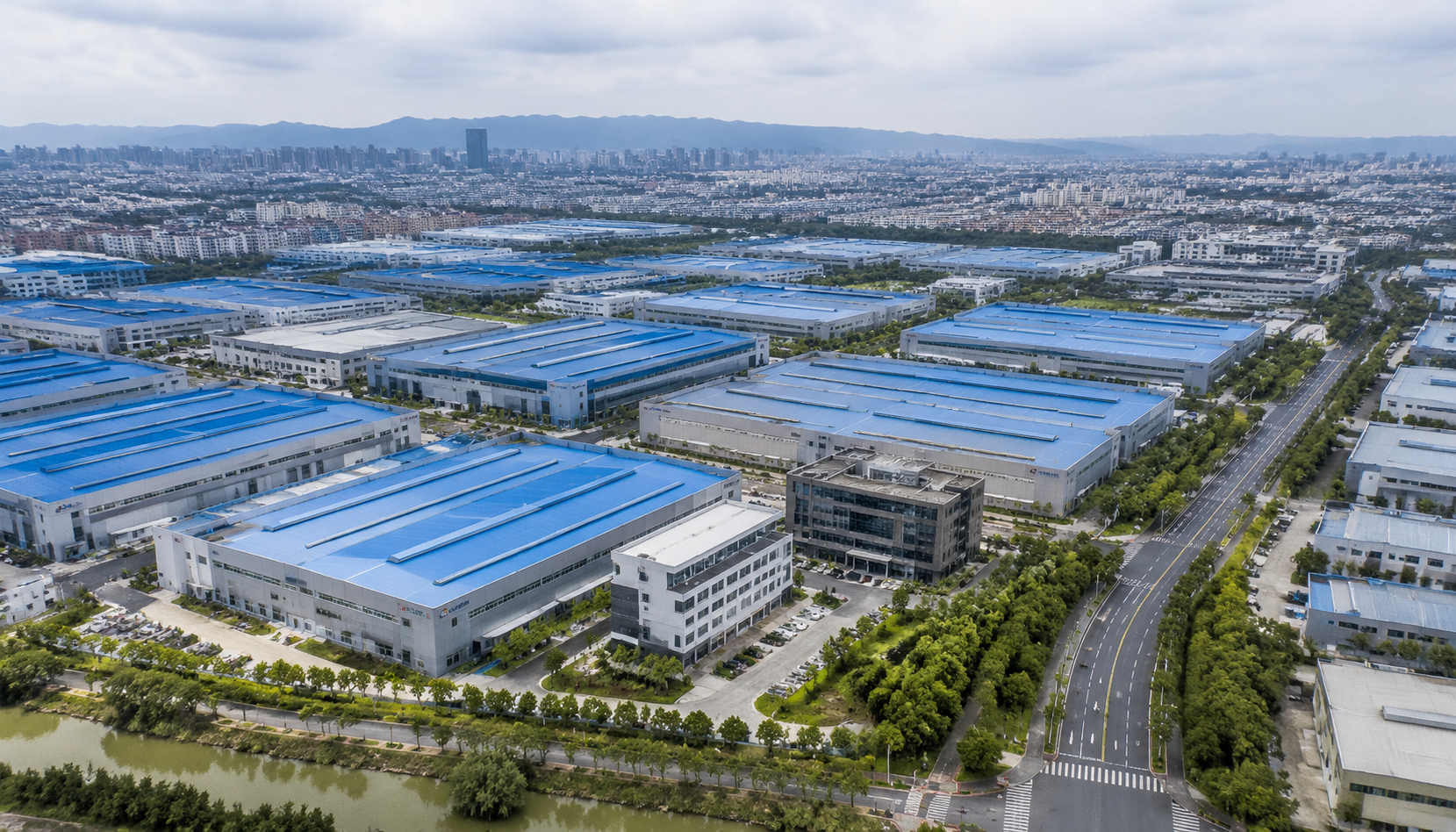
China's aluminum casting industry is massive—4.2 million metric tons in 2025, according to the China Foundry Association, ~48% of global production. The Pearl River Delta alone packs over 1,200 ISO-certified foundries. That's more than Germany, Italy, and France combined.
Volume isn't the problem. Variance is.
This guide gives you a system. Not a checklist you tick once and forget. A system to classify factories, verify their claims, and negotiate from data instead of hope.
China's Aluminum Foundries Fall Into 3 Tiers
You need to know which tier you're dealing with before you ask for a quote. Because the quote doesn't tell you much—but the factory's profile tells you everything.
Tier 1: Export-Oriented, Certified, Automated
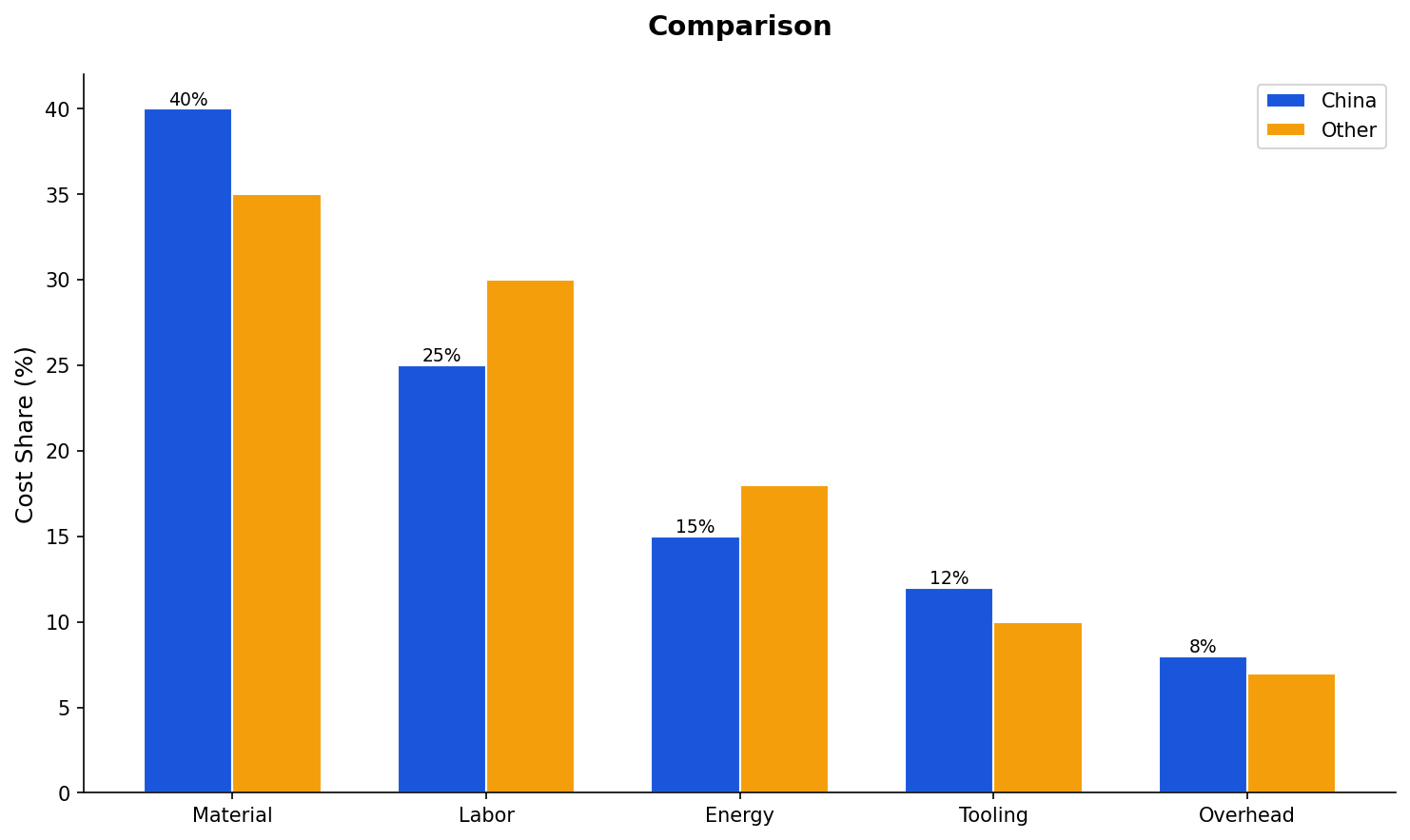
Who they are: Foundries with IATF 16949 or ISO 9001:2015, automated casting cells, in-house X-ray and CMM labs, and dedicated export sales teams. They supply Tier 1 automotive, medical, and industrial OEMs.
- Typical defect rate: <0.8%
- Price range (A380, FOB): $3.20–$5.50/kg
- MOQ: 5,000–20,000 pcs/year per part number
- Lead time: 6–10 weeks for new tooling
How you spot them: They offer PPAP before you ask. They name their third-party inspectors (SGS, TÜV, Bureau Veritas). Their sales engineer asks about your alloy spec, not just your volume.
Tier 2: Domestic-Focused, Mixed Quality
Who they are: Factories with ISO 9001 (sometimes expired), semi-automated production, basic QC (spectrometer + hardness tester, no X-ray). They serve domestic Chinese manufacturers and some export buyers who found them on Alibaba.
- Typical defect rate: 2–4%
- Price range (A380, FOB): $2.20–$3.80/kg
- MOQ: 1,000–5,000 pcs per order
- Lead time: 4–8 weeks for new tooling
The catch: You can get good parts from Tier 2 factories. But you need to inspect every shipment. Their process drift is real. A batch that passes in January might fail in June because the die was worn 0.03mm and no one checked.
Tier 3: Workshop Level—Proceed With Caution
Who they are: Small workshops with manual machines, no formal QC system, and certification that expired years ago. They compete on price alone.
- Typical defect rate: 5–12%
- Price range (A380, FOB): $1.60–$2.50/kg
- MOQ: 200–1,000 pcs
- Lead time: 3–5 weeks
Honest opinion: Avoid them for any part that matters. They're fine for temporary tooling or non-critical prototypes. But for production parts? The 5–12% defect rate eats your savings in replacement costs, line downtime, and customer returns.
How You Verify a Factory in 5 Steps
Dr. Zhang, a metallurgist with 22 years in Chinese foundries, told me: "I've walked into 300+ factories. The ones with the shiniest websites often have the dirtiest floors. The ones with bare-bones websites? Some of them run the tightest process control."
Here's what Dr. Zhang recommends you do—every time, no exceptions.
Step 1: Certificate Verification (15 minutes)
Don't just look at the PDF they emailed you. Verify it.
- ISO 9001: Check on CNCA (China's certification authority) or the certifying body's database (SGS, TÜV, BSI).
- IATF 16949: Check on IATF's database.
- Note the scope: Does it cover aluminum die casting specifically, or just "metal processing"?
You'd be surprised how many factory tours start with a framed certificate that expired two years ago.
Step 2: PPAP Request (The Real Test)
Ask for a Production Part Approval Process (PPAP) on a sample part. Not a quote—a PPAP.
How they react tells you more than any certificate:
- Positive response: "Sure, here's our PPAP template. We typically include dimensional report, material cert, and X-ray results." → This is your Tier 1 candidate.
- Hesitant response: "What do you need exactly? We can provide some test reports." → Tier 2. Proceed with inspection plan.
- Negative response: "We don't do that. Our parts are good quality." → Tier 3 or worse. Move on.
Step 3: Video Walkthrough (Better than Nothing)
Can't visit in person? Schedule a video call. Ask them to walk you through:
- The melting area (what type of furnace? how do they control alloy chemistry?)
- The casting cell (machine age, brand, maintenance logs)
- The QC lab (spectrometer, CMM, tensile tester—are they actually in use?)
- The scrap bin (how much scrap? what do they do with it?)
A Tier 1 factory will do this without hesitation. A Tier 2 factory might be reluctant but will agree. A Tier 3 factory will make excuses.
Step 4: Third-Party Inspection (Non-Negotiable)
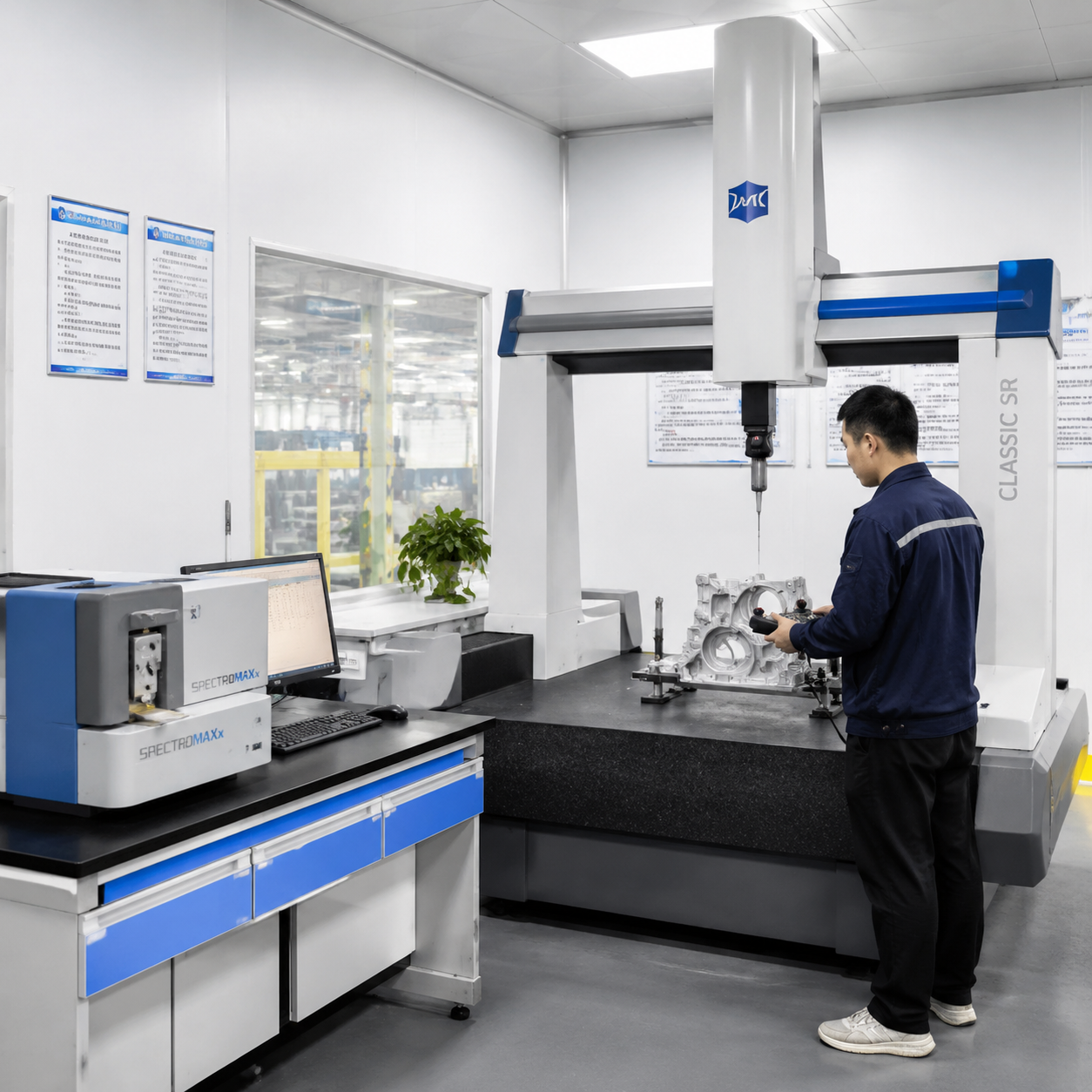
For the first 3 shipments, hire a third-party inspector (SGS, TÜV, Bureau Veritas, or a specialized casting inspector) to be present during production and before container loading.
Cost: $400–$800 per man-day. Worth every dollar. One caught defect saves you 20x that amount in returned goods and production delays.
After 3 clean shipments, you can reduce to spot checks. But never eliminate them entirely. Process drift is real, and Chinese factories change shift leads more often than you'd think.
Step 5: Reference Check (The Right Way)
Ask for 3 customer references. But don't just call the ones they give you. Search LinkedIn for "procurement manager" + "aluminum casting" + "China." Find people who source similar parts. Ask them: "Who do you use? Who did you try and drop? Why?"
This 30-minute investigation has saved buyers more grief than any contract clause ever written.
7 Red Flags No One Tells You About
Most articles give you vague warnings like "check quality." Helpful, right? Let's get specific.
- They won't share third-party test reports. Not even a generic one. "We have our own lab" is not a substitute. Everyone has a lab. Not everyone's lab is calibrated.
- Their ISO certificate is expired or unverifiable. You checked CNCA and it's not there. Or the certificate number returns a different company name. Walk away.
- They quote impossibly low prices. If a factory quotes $1.80/kg for A380 die casting with tooling included, they're either lying about the alloy, planning to short-shot your parts, or planning to hit you with charges later. You don't get A380 parts at $1.80/kg. Period.
- They can't name the alloy grade. Ask: "What alloy do you use for this part?" If they say "aluminum" or "standard die casting alloy" instead of "ADC12" or "A380" or "A356" with a specific temper, they don't know their own material.
- They resist PPAP. "We don't do that paperwork" is code for "we don't have process control." Next.
- Factory tour shows aging, unmaintained equipment. Old machines can produce good parts if maintained. But if the floor is oily, the dies are rusting in the corner, and the maintenance log is blank, the process discipline isn't there.
- Payment terms: 100% TT in advance. Standard terms for established exporters are 30% deposit, 70% against BL copy or after inspection. 100% upfront means they need your cash to buy material. That's a risk you don't take.
One more from Dr. Zhang: "The worst factories have the best salesmen. Don't evaluate a factory based on the person who answers your email. Evaluate it based on the person who runs the QC lab."
2026 Pricing Benchmarks: What You Should Pay
Prices change monthly with aluminum LME, but the relationship between factory tiers stays constant. Here's what you should expect for A380 die casting, FOB China port (Shanghai or Ningbo), in mid-2026:
| Part Complexity | Tier 1 (USD/kg) | Tier 2 (USD/kg) | Tier 3 (USD/kg) |
|---|---|---|---|
| Simple (e.g., flat bracket, no slides) | $3.20–$4.00 | $2.20–$3.00 | $1.60–$2.20 |
| Moderate (e.g., housing with 2–3 slides) | $3.80–$4.80 | $2.80–$3.50 | $2.00–$2.50 |
| Complex (e.g., transmission housing, 5+ slides) | $4.80–$5.50 | $3.50–$3.80 | Not recommended |
Tooling costs (single cavity, P20 or H13 steel):
- Simple part: $8,000–$15,000
- Moderate part: $15,000–$25,000
- Complex part: $25,000–$35,000+
You can negotiate tooling cost sharing—some factories will absorb part of the tooling cost in exchange for a volume commitment. But if a factory quotes tooling at $3,000 for a moderate-complexity part, that tooling will fail before you hit 50,000 cycles. Period.
Frequently Asked Questions
How do I verify an aluminum casting factory in China is legitimate?
Start by checking their ISO 9001 and IATF 16949 certifications online via CNCA or IATF databases. Then request a PPAP for a sample part. Finally, schedule a video call walkthrough of their QC lab and production floor. If they refuse any of these, that's a red flag.
What is the typical price per kg for aluminum die casting in China in 2026?
For A380 alloy, expect $2.20–$3.80/kg for simple parts and $3.50–$5.50/kg for complex parts with tight tolerances. For A356-T6, add 15–25%. Tooling costs range from $8,000 to $35,000 depending on cavity count and complexity. These are FOB China prices.
What are the red flags when sourcing from Chinese aluminum foundries?
Seven red flags: (1) they won't share third-party test reports, (2) their ISO certificate is expired or unverifiable, (3) they quote impossibly low prices, (4) they can't name the alloy grade, (5) they resist PPAP, (6) their factory tour shows aging equipment without maintenance logs, (7) they ask for 100% TT upfront.
How long does it take to qualify a new aluminum casting supplier in China?
A proper qualification takes 8–16 weeks: 2–3 weeks for document review and PPAP, 3–4 weeks for sample production and testing, 2–3 weeks for on-site audit (or third-party audit), and 1–2 weeks for contract and commercial terms. Rushing this is the #1 cause of sourcing failures.
Do I need to speak Chinese to work with an aluminum casting factory in China?
No. Most export-oriented foundries have English-speaking sales staff. But quality issues often get lost in translation when discussing technical specs. Using a bilingual sourcing agent or insisting on written English for all technical documents is a smart move.
Your Next Move
Sourcing aluminum castings from China isn't a gamble if you have a system. The data is clear: 4.2 million tons of capacity, 1,200+ ISO foundries, and an 8x gap between the best and worst. Your job is to find the top quartile and work with them.
Here's what you do today:
- Download our Factory Qualification Checklist (PDF)—it covers every step in this article in a printable format.
- Identify 3–5 candidate factories using the Tier framework above.
- Run the 5-step verification on each one.
- Compare quotes with the pricing benchmarks in this guide.
If you're not sure where to start, submit your part specs here and we'll help you match with pre-vetted Tier 1 and Tier 2 foundries. No commissions. No markups. Just a direct introduction to factories that have already passed our audit.
Got questions about a specific factory or quote? Drop the details in our sourcing forum—the community's seen it all and will tell you straight.