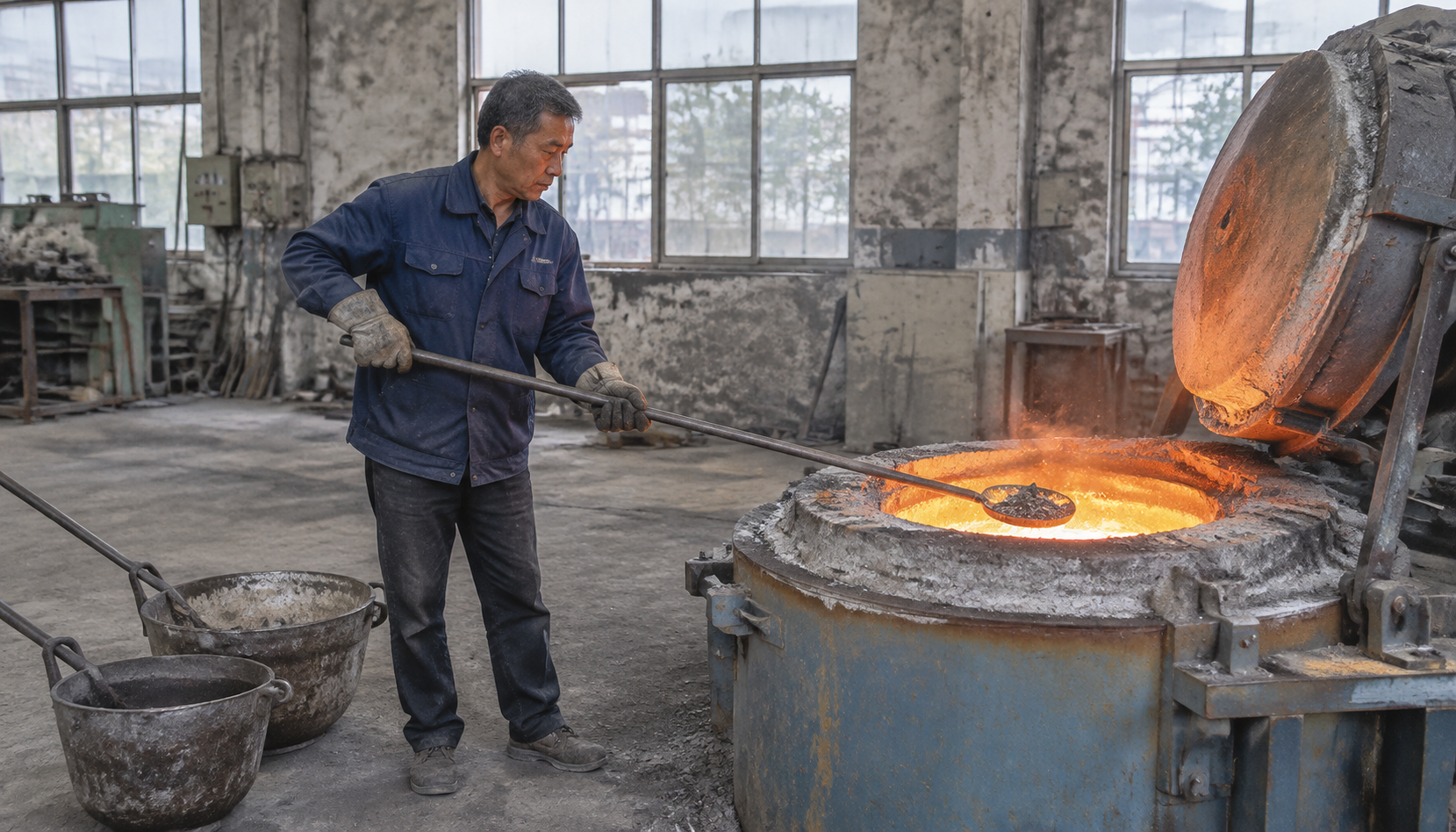
China produced roughly 38 million tonnes of stainless steel crude in 2024. That's over 60% of the global total, according to International Stainless Steel Forum figures. You'd think that number means you can throw a dart at a map of Jiangsu province and hit a foundry that pours 316L.
It doesn't.
Here's the number that actually matters to you. Of the 40 to 80 Chinese suppliers that will answer an RFQ for a 316L valve body, maybe 10 to 15% can produce a CF3M casting with correct chemistry, sound sections, and a heat number that survives an audit. That's an estimate from watching this segment for years, not a published statistic — treat it as a working range, not gospel. But the direction is right. China is enormous in stainless capacity and thin in stainless discipline.
So before you sign an LOI on that first order, run the numbers on the part itself. Material. Certificate. Defect profile. Price structure. Each one has a data story, and each one tells you something a factory tour alone won't.
What 316L actually costs you in molybdenum
316L isn't 304 with a nicer label. It carries 2.00–3.00% molybdenum, and that single element is the reason your quote is what it is.
The molybdenum price is volatile in a way nickel isn't. It traded around USD 40 per pound in early 2023, slid through the rest of that year, and has bounced around since. Every time it moves, the foundry's material cost moves with it — because 316L can carry roughly 2.5% Mo by weight. On a 12 kg casting, that's about 300 grams of molybdenum before you account for melt loss and returns. At USD 45/lb, that's over USD 29 of molybdenum in a single part. Compare that to a CF8 (304) equivalent, where the molybdenum line is zero.
This is why the per-kilo gap between 304 and 316L castings sits in the 25 to 40% range most years, and why a supplier who quotes 316L at 304 pricing is telling you something. Either they haven't costed it, or they intend to substitute.
Also worth checking: pitting resistance. The standard PREN formula — chromium plus 3.3 times molybdenum plus 16 times nitrogen — puts 316L at about 25, versus roughly 19 for 304. Your specification sheet may say "corrosion resistant stainless," which is meaningless. If the service environment has chlorides, that PREN gap is the whole point of paying the premium in the first place.
The dual-grade problem: CF3M, A351, A743, and what your PO says
Open a Chinese quotation against your drawing and count the grade designations. You'll usually see two or three.
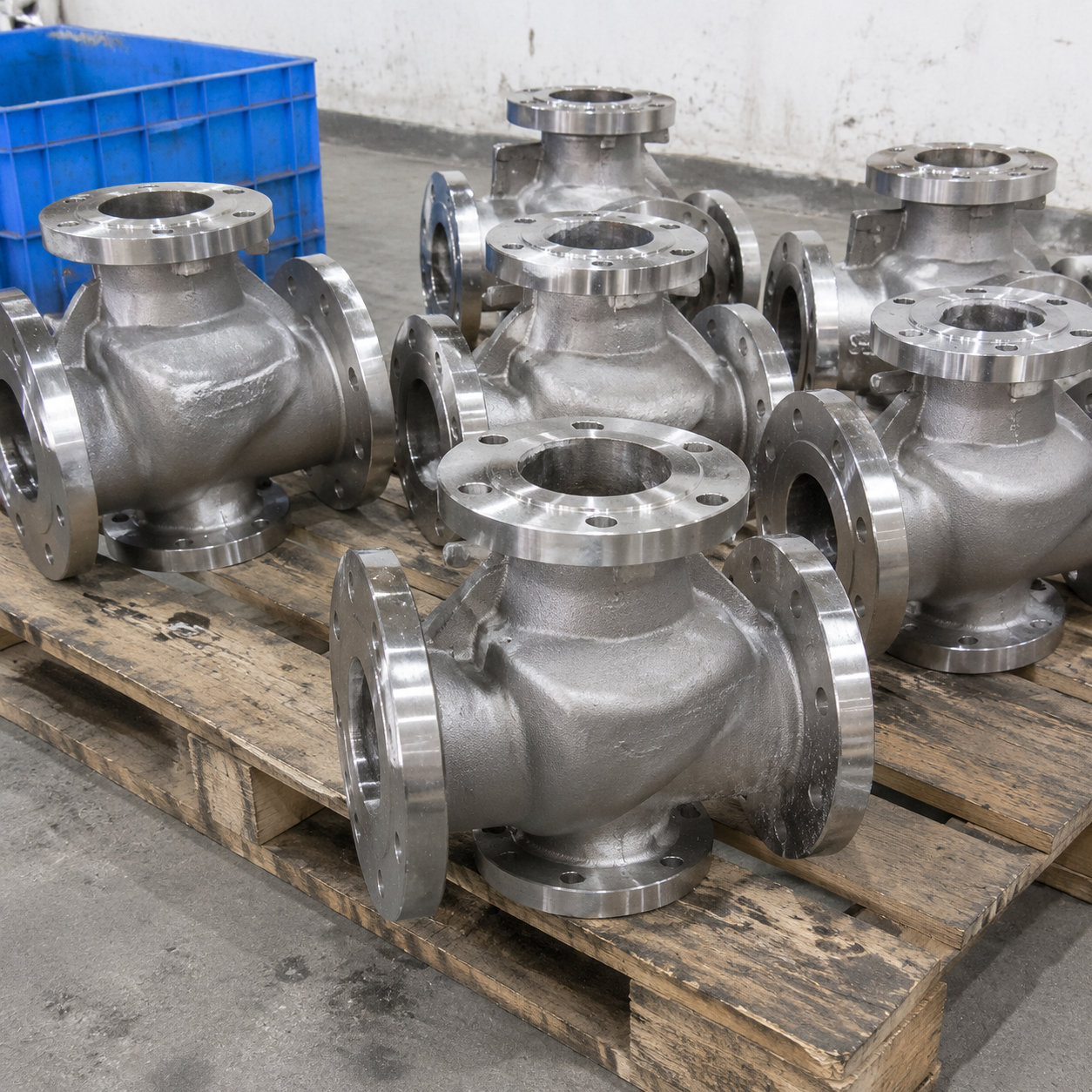
316L is a wrought designation. The cast equivalent is CF3M, and it lives in different standards depending on what the part does:
- ASTM A351 CF3M — pressure-retaining components at elevated temperature. This is the one you want for valves, pump housings and fittings under ASME jurisdiction.
- ASTM A743 CF3M — general corrosion-resistant service, not pressure-retaining. Cheaper test package, less documentation.
- ASTM A744 CF3M — for severe corrosive service. Different acceptance criteria again.
These are not interchangeable, and the difference isn't academic. A351 requires tension testing per heat, and it drags in ASME Section IX for welding and Section V for NDE. A743 does not. If your drawing says "316L" and the foundry quotes against A743 because the part "doesn't look like a pressure part," you may have just bought yourself a documentation problem that surfaces at your customer's incoming inspection.
There's a chemistry wrinkle too. Cast CF3M permits silicon up to 1.50%. Wrought 316L caps it at 1.00%. Foundries push silicon because it improves melt fluidity and helps thin walls fill. It also affects weldability and can shift the ferrite balance. Ask for the actual silicon on the heat certificate. If it's running at 1.4% and the part gets welded downstream, that's a conversation you want to have before the parts ship.
Certificates: where 316L documentation goes wrong in China
EN 10204 Type 3.1 is your baseline. It says an independent inspection representative of the manufacturer's quality department has verified the results against the order. The key phrase is tied to a specific heat number.
What you should be reading on that certificate:
- Heat number that matches the heat number stamped, etched or tagged on the parts
- Actual chemistry, element by element, with carbon at 0.03% max and molybdenum in the 2.00–3.00% window
- Tensile and yield results from a test bar cast with the same heat — not from a separate test coupon poured weeks later
- Solution anneal temperature and holding time, if the foundry performs it
Here's the uncomfortable part. A surprising share of small Chinese foundries run a certificate template in Word. The chemistry numbers are real enough — they come from somewhere. The question is whether they came from your heat. I've seen certificates where the heat number on the paper didn't exist in the furnace log, and the certificate would have sailed through a desk review. If you want the full documentation checklist, our quality and inspection guide walks through the paper trail item by item.
Robert Davis, a building hardware wholesaler in Georgia who spends around USD 1.5 million a year on cast components, put it plainly: "The certificate is a piece of paper until you tie it to a heat and a test bar. I stopped accepting 3.1 documents at face value after I got a batch where the moly came back at 1.7%. Now I pay a hundred dollars for an XRF spot check on three parts from every lot, and I make the foundry watch me do it."
That's cheap insurance. A handheld XRF won't tell you carbon, but it will tell you chromium, nickel and molybdenum in about fifteen seconds per part. For a few hundred dollars across a year's shipments, you get a real check against the paper.
In our own review of field returns on small stainless castings, roughly 70% trace back to three causes: inadequate solution annealing, shrinkage porosity, and undocumented weld repair. Chemistry rarely makes the top three.
Where 316L castings actually fail
Understanding the failure modes tells you what to look for at the factory. The metal itself is rarely the problem. The process around it is.
Insufficient solution annealing. CF3M should be annealed at a minimum of 1,040°C — most shops run 1,040–1,120°C — and then rapidly cooled by water quench or forced air, not "left to cool in the corner." This step dissolves carbides back into solution and restores the corrosion resistance. Skip it, or pull the parts out too early because the furnace is needed for the next order, and you get chromium-depleted grain boundaries. The parts pass dimensional and pass chemistry. Then they pit in service six months later, in the heat-affected zone around a weld. Nobody finds out until there's a complaint.
Shrinkage porosity. Castings with isolated heavy sections — a boss on a thin wall, a flange transition — are prone to it. It hides under the skin. On a machined surface it shows up as a dark speck. On an unmachined casting, it shows up after three weeks in salt spray. Investment casters usually catch this with radiography on sample parts. Sand casters often don't have a film budget for anything under a certain order value.
Undocumented weld repair. Nearly every foundry does weld repair. It's normal and allowed under ASTM, within limits. The problem is when the repair happens after the final anneal and never gets re-annealed, or when nobody logs where it was done. Ask to see the repair log for your heat. If the answer is "we don't have one," you've learned what you needed to learn.
Ferrite imbalance. CF3M benefits from a small amount of delta ferrite in the structure — typically in the 3 to 10% range — to resist solidification cracking and stress corrosion cracking. Too much, and you lose ductility and corrosion resistance. Too little, and you risk cracking during welding. Some foundries measure ferrite on every heat. Most don't. If your part gets welded into an assembly, ask.
The factory visit: three stops that tell you the most
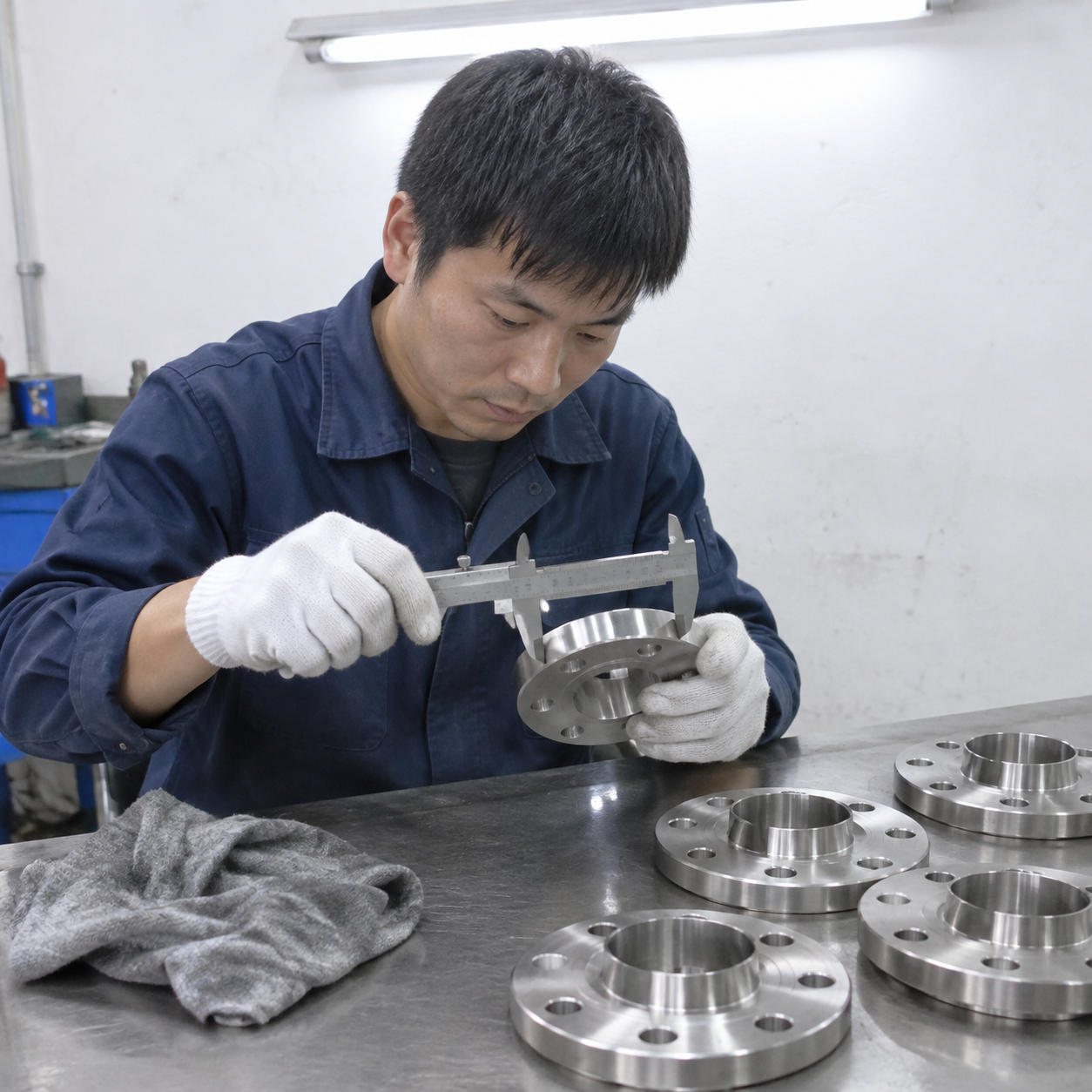
A one-day visit will cost you maybe USD 1,200 in flights and hotel. A bad first shipment of 316L valve bodies can cost you the account. Do the math. If you're still deciding how to structure the whole sourcing process around that visit, start with our sourcing playbook before you book the flight.
Stop one: the spectrometer. Every foundry that pours stainless has an optical emission spectrometer. What you want to see is whether it's calibrated, whether the calibration log is current, and whether somebody actually runs it on every heat. Ask them to run a piece of your sample, right now, while you watch. A foundry that hesitates on this is a foundry that uses the machine occasionally.
Stop two: the heat treatment records. Ask to see the furnace chart from the last CF3M order they ran. You're looking for a real curve with a real hold time at temperature, and a quench step that isn't a straight drop to room temperature over twelve hours. If they send the parts out for annealing, find out where and ask how the transfer happens. A part that cools slowly in a truck is not a properly annealed part.
Stop three: the weld-repair bench and the grinding area. This is where the truth lives. Count the parts sitting there. Look at whether there's a logbook. Ask what happens to a part after it's welded — does it go back into the furnace, or straight to finishing? If the answer is straight to finishing, and your part is going into a chloride environment, you now know where the corrosion is going to start.
While you're walking, look at the pattern and die inventory. Rusty patterns, patched shells, dies with visible heat checking — these all predict dimensional variation. Nobody shows you that on the slideshow.
Reading a 316L quote: what's inside the per-kilo number
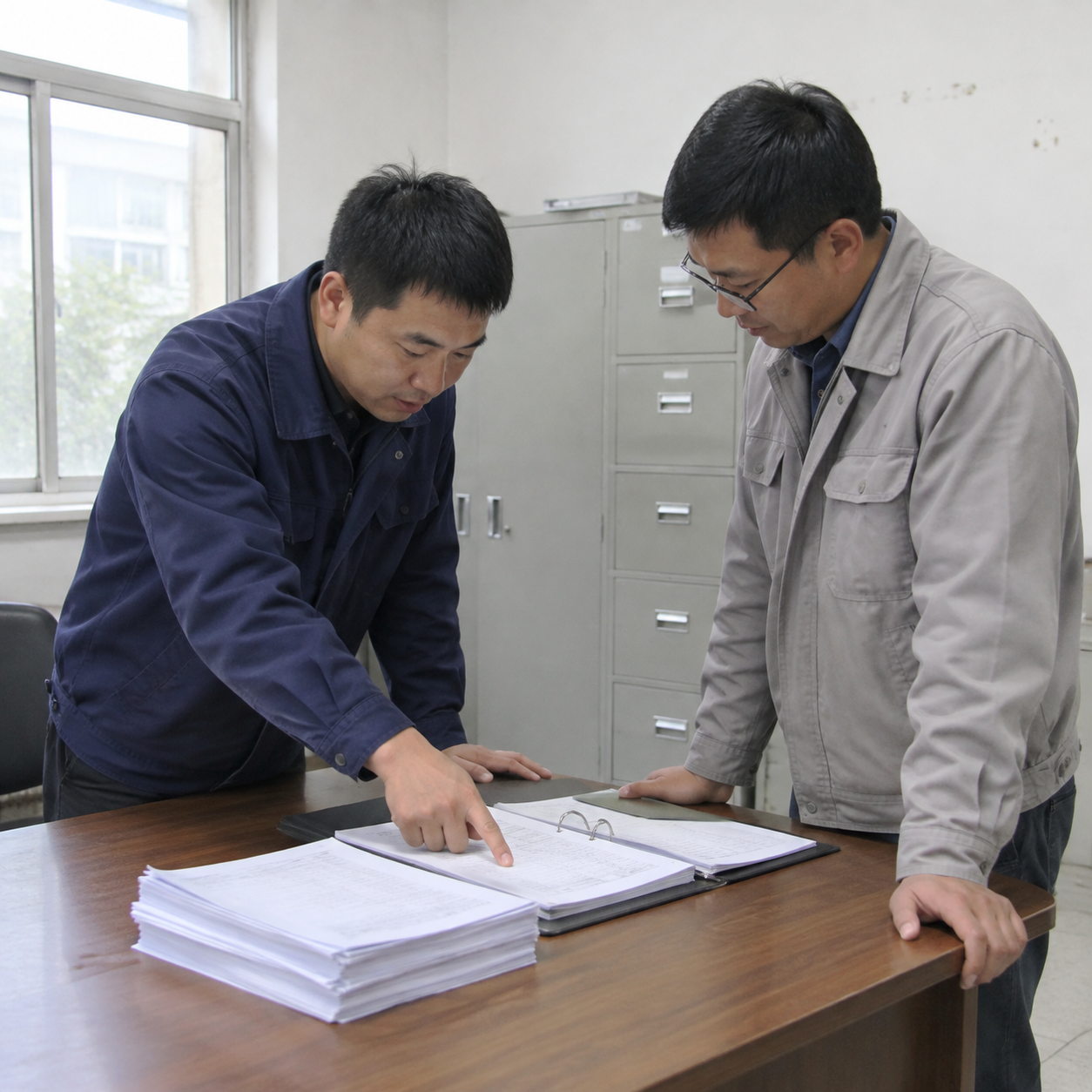
The per-kilo price you get back is a composite. Break it apart and you'll find five or six line items hiding inside.
First question to ask: is it quoted on gross weight or net weight? On an investment casting with a gating system, gross weight can exceed finished weight by 40 to 60%. On a sand casting it's less dramatic but still real. Two suppliers quoting "USD 6.20/kg" against different bases are not quoting the same number at all.
Second: the alloy surcharge. Molybdenum and nickel move. Ask how the surcharge is calculated and against what reference — LME monthly average, a specific published index, and what the base price assumes. Robert from Georgia again: "I insist on a written formula with the reference price and the trigger threshold. If a supplier won't put the alloy adjustment formula in the contract, the 'fixed' price is only fixed until the next moly spike."
Third: tooling. For a first order, pattern or die cost is often quoted separately, and sometimes it's amortized into the unit price. The difference matters if you might move the part later.
Fourth: the inspection and documentation package. Third-party inspection by SGS, BV or TÜV is usually an add-on. Radiography on a percentage of castings is an add-on. A 3.2 certificate is an add-on. Get these listed as line items, not folded into "price includes standard inspection," because "standard" is a word that means whatever the seller wants it to mean.
Fifth: minimum order quantity and the setup charge that comes with it. A lot of Chinese foundries quote a low per-kilo rate on the assumption of an annual volume, then quote the same rate on a 200-piece trial order and lose money. Some will refuse the trial. Some will accept it and quietly deliver the cheapest version. Know which one you're dealing with.
A rough benchmark for 2026: simple sand-cast CF3M parts run roughly USD 3.80 to 5.50 per kg on gross weight, and investment-cast CF3M parts roughly USD 5.50 to 9.00 per kg. Treat those as a sanity band, not a target. Walls under 4 mm, tight tolerances and machining allowances push you toward the top of the band or past it.
Common mistakes buyers make with Chinese 316L suppliers
Approving a supplier off a sample. The sample was probably made by the best molder on the day shift, with the best shell, and it went through the annealing furnace on its own. Production parts are made by whoever's on the shift in August with a furnace that's two-thirds full. Approve the process, not the sample.
Specifying "316L" and nothing else. Your drawing needs the casting standard, the acceptance criteria, the NDE requirements, the documentation type and the surface condition. A vendor will meet the loosest reading of an ambiguous spec every time, and they're not being dishonest — they're pricing to what you asked for.
Skipping the pre-production meeting. Half an hour on video, walking through the drawing line by line before the die gets cut, prevents most of the rework. Nobody does this because it feels like overhead. It isn't.
Accepting the certificate without a heat check. Covered already, but it's the single most common failure. Cross-check one heat number against the shipping tag on one box. That takes four minutes.
Ignoring the second-tier supplier problem. Many "manufacturers" in China are traders with a factory relationship. That's not automatically bad — a well-run trading house sometimes delivers better quality control than a small foundry because their reputation depends on it. But you need to know which one you're buying from, because it changes who you hold responsible when something goes wrong.
FAQ
Is CF3M the same as 316L?
Close, but not identical. CF3M is the cast equivalent under ASTM A351. Chemistry is nearly the same, but cast CF3M allows up to 1.50% silicon versus 1.00% for wrought 316L, and the mechanical properties are specified differently. You shouldn't substitute one for the other on a pressure-retaining part without an engineering review.
What certificate should I require for 316L castings from China?
EN 10204 Type 3.1 as a minimum, tied to a specific heat number, with chemistry and mechanical results from that heat. For pressure equipment or sour service, ask for Type 3.2, which requires third-party witnessing. A 3.1 certificate with no heat traceability is a document, not evidence.
How much does a 316L casting cost from China in 2026?
Roughly USD 3.80 to 5.50 per kg for simple sand castings and USD 5.50 to 9.00 per kg for investment castings, quoted on gross weight. Wall thickness, machining allowance, inspection scope and machining content all move the number. Lock the alloy adjustment formula, not just the price.
Why do 316L castings fail in service?
Mostly three things: intergranular corrosion from a skipped or badly run solution anneal, shrinkage porosity that only appears after machining, and unrecorded weld repairs that never got re-annealed. Chemistry is rarely the culprit — process control is.
Do I need to visit the foundry before ordering?
Yes, on anything above roughly USD 20,000 or any pressure-retaining part. One day on site — the spectrometer, the furnace records, the weld-repair bench — tells you more than three months of email exchange. Bring your own sample and ask them to run it.
Before you cut that purchase order
The data says China has the capacity. What the data doesn't say is whether the specific factory quoting you has the discipline. That's a judgement call, and it's yours to make — but it's a cheap one to make early and an expensive one to make late.
Four things to lock down before the PO goes out:
- The casting standard, written into the drawing, not just the alloy name
- The certificate type and the heat traceability requirement, in the contract
- The alloy surcharge formula, with a reference price and a trigger
- One XRF spot check on the first lot, done while the supplier watches
None of that is complicated. All of it is commonly skipped. The buyers who skip it are the ones who call me eighteen months later asking how to salvage a container of parts that pitted in a salt spray booth.
Start with the drawing and the standard. Everything else follows from there.
Need Help with 316L Stainless Casting Manufacturer China: What Data Says?
Get matched with 3 verified foundries in 24 hours. No markup, transparent pricing.
Request Quotes →