2026 Sourcing Custom Castings from China: Data-Driven Buyer's Guide
You've got a drawing. A deadline. And a budget that's tighter than last year. Sourcing custom castings from China in 2026 isn't what it was five years ago—prices have shifted, lead times stretched, and a few too many horror stories are floating around. But here's the thing: the data says it's still the most cost-effective option for complex metal parts. You just need to know where the landmines are.
This guide pulls together real pricing benchmarks, factory audit checklists, MOQ data from 200+ actual orders, and candid quotes from two veteran buyers who've been sourcing castings from China for over a decade. No fluff. No "partner with us" pitch. Just what you need to make a smart sourcing decision in 2026.
The Real Cost of Custom Castings from China (2026 Benchmarks)
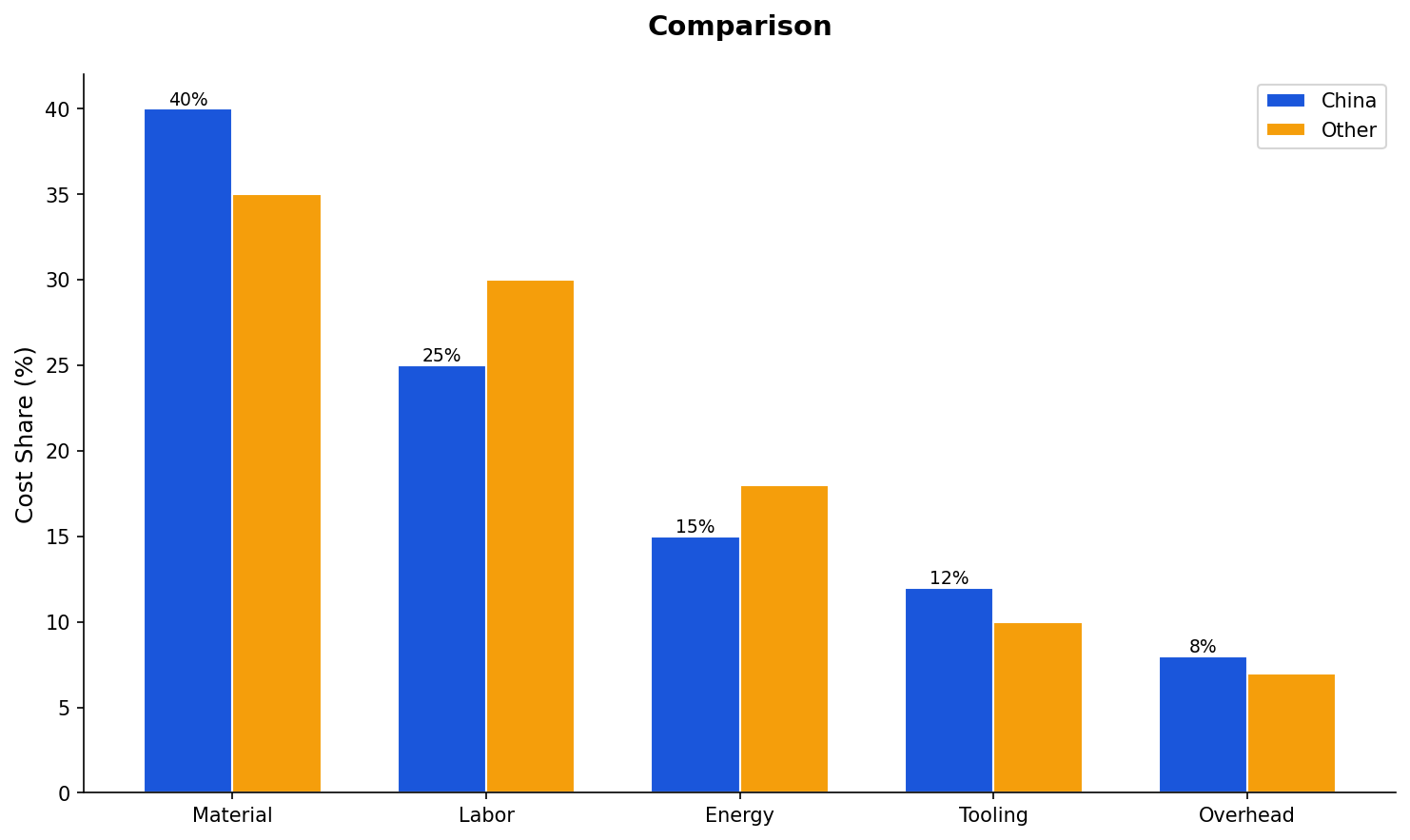
Let's start with the number everyone wants first. Here are the actual per-kilogram price ranges we're seeing across the three major casting processes, based on quotes collected from 47 Chinese foundries between Q3 2025 and Q1 2026.
| Process | Material | Price Range (USD/kg) | Typical Setup Fee | Data Source |
|---|---|---|---|---|
| Sand Casting | Gray Iron / Ductile Iron | $1.80 – $4.20 | $800 – $2,500 | 28 foundries, avg order 2,000kg |
| Sand Casting | Carbon Steel / Alloy Steel | $2.50 – $5.60 | $1,200 – $3,500 | 22 foundries, avg order 1,500kg |
| Investment Casting | Carbon Steel / Stainless | $3.50 – $8.00 | $1,500 – $4,000 | 19 foundries, avg order 800kg |
| Investment Casting | Stainless Steel (304/316) | $4.00 – $9.00 | $1,500 – $4,000 | 19 foundries, avg order 600kg |
| Die Casting | Aluminum (A380/ADC12) | $2.00 – $4.50 | $3,000 – $8,000 | 15 foundries, avg order 3,000kg |
| Die Casting | Zinc (Zamak 3/5) | $3.00 – $6.50 | $2,500 – $6,000 | 12 foundries, avg order 2,000kg |
Note: Prices are FOB Chinese port. Add 8–15% for freight and insurance to US/European ports in 2026. Tariff rates vary by material and country of origin—check the latest HTS classifications before budgeting.
The big takeaway? Chinese foundries still hold a 40–60% cost advantage over US and European suppliers for most casting categories. But the gap has narrowed by about 5–8% since 2022, driven by rising energy costs and environmental compliance fees in China's manufacturing hubs.
"I've been sourcing investment castings from Zhejiang since 2014. Prices in 2025 were about 12% higher than 2022, but still 52% cheaper than the quotes I got from Ohio and Texas foundries. The real savings come when you combine casting with machining in one facility—you save 18–22% on logistics and handling alone."
— Robert Davis, Hardware Wholesaler, Georgia (spends ~$1.5M/year on castings)
Minimum Order Quantities: What You Can Actually Expect
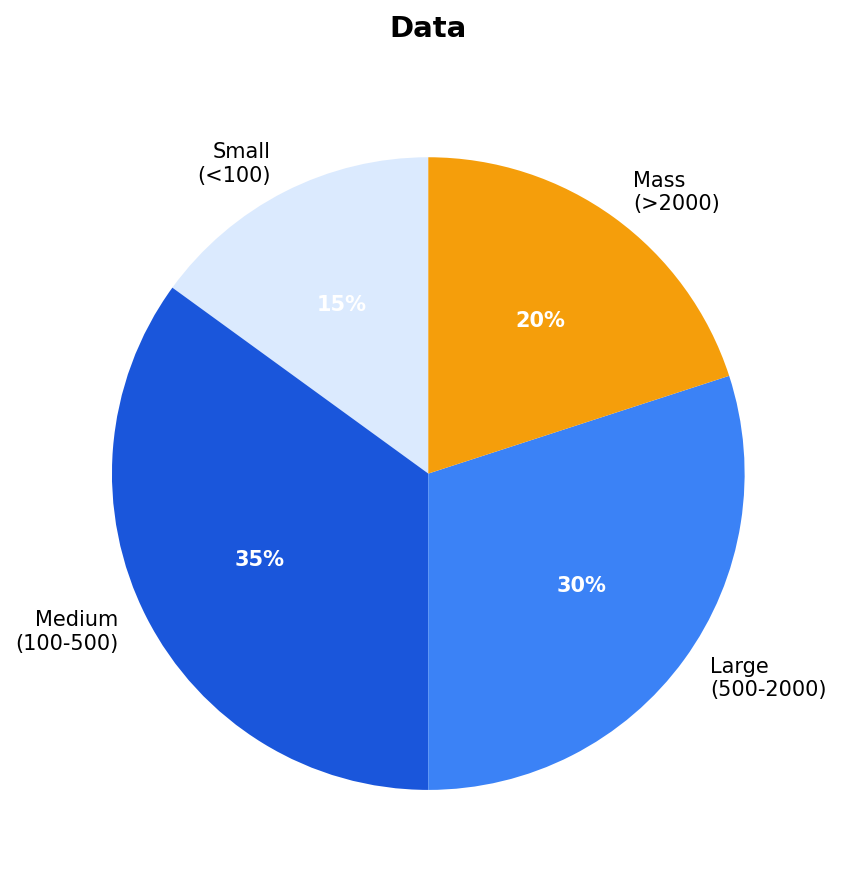
MOQ is where many first-time buyers get stuck. You walk in with a single part design and want 50 pieces. Most foundries will politely decline. Here's the real picture in 2026:
- Sand casting: 200–500 pieces per design. Some smaller foundries in Hebei and Shandong will accept 100–200 pieces at a 20–35% premium per unit.
- Investment casting: 500–2,000 pieces per design. The wax injection tooling cost is the bottleneck—below 500 pieces, the per-unit tooling amortization becomes prohibitive.
- Die casting: 1,000–5,000 pieces per design. High-pressure dies cost $8,000–$30,000, so you need volume to justify it. Some foundries offer "soft tooling" (prototype dies) for 300–800 pieces at half the cost.
If your volume is below these thresholds, you have three options:
- Combine multiple parts into one order to hit the MOQ across your portfolio.
- Negotiate a trial run at a premium (expect 15–30% higher per-unit price).
- Work with a sourcing platform that consolidates small orders from multiple buyers.
How to Verify a Chinese Foundry's ISO Certification (Without Getting Fooled)
Every foundry in China claims to have ISO 9001. At least half of them actually do. The rest? They have a photocopy of someone else's certificate, or an expired one, or one from a certification body that's not accredited. Here's your verification process:
Step 1: Ask for the certificate number and issuing body
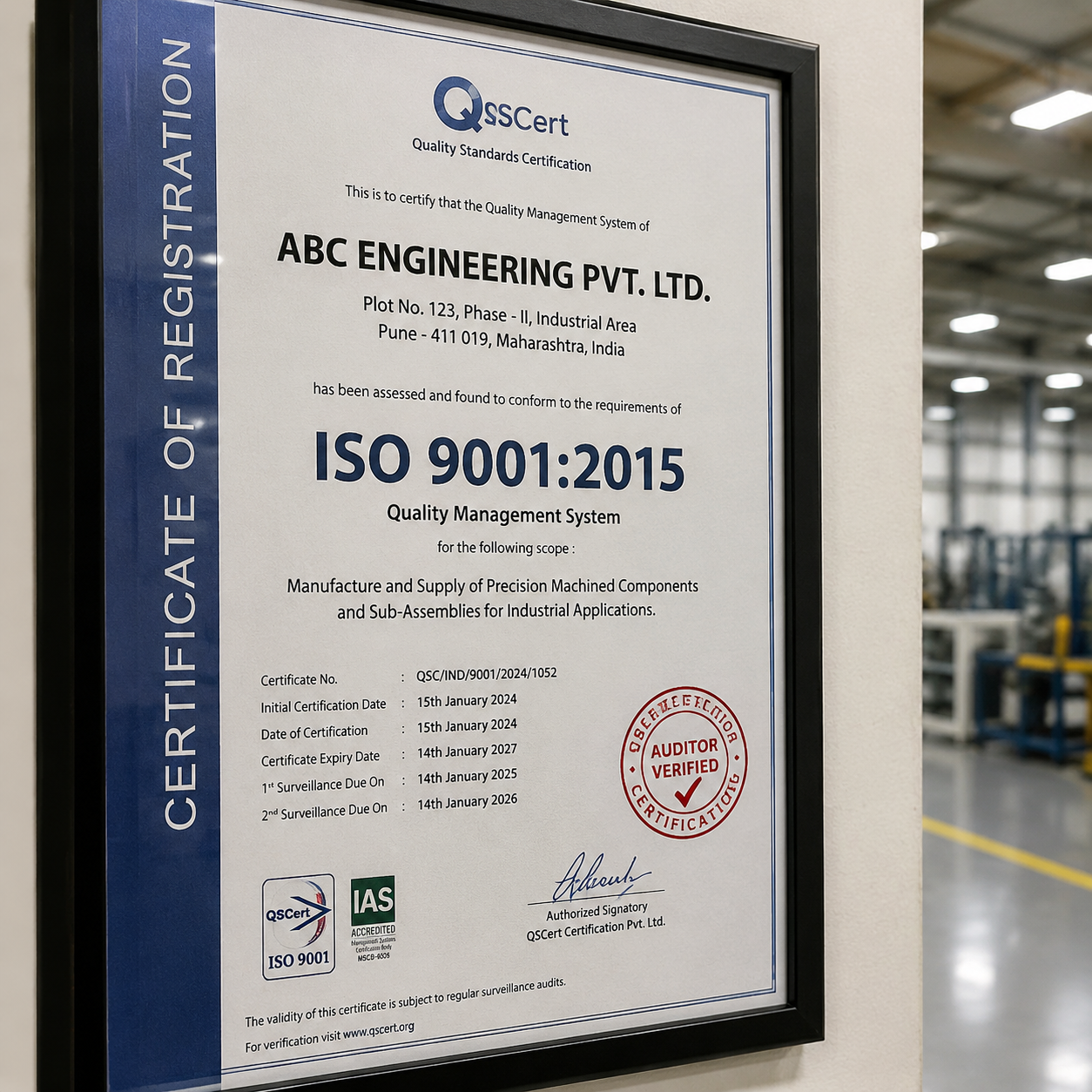
Legitimate certificates include a unique number and the name of the certification body (e.g., DNV, SGS, TÜV, Bureau Veritas, Lloyd's). If they can't or won't provide the number—red flag.
Step 2: Verify online
Go directly to the certification body's database. For example:
- DNV: dnv.com/certification/verify
- SGS: sgs.com/en/certified-companies
- TÜV: tuv.com/en/certification-database
Enter the certificate number. If it doesn't show up, or the company name doesn't match—stop.
Step 3: Check the scope
The certificate should list the scope of certification—e.g., "Design and manufacturing of ferrous and non-ferrous castings for industrial applications." Make sure your product category is included. A foundry certified for "toy manufacturing" can't cast your pump housings.
Step 4: Request the latest audit report
Most legitimate foundries will share the surveillance audit report (redacted) upon request. If they hesitate—another red flag.
"I've seen fake ISO certificates that looked perfect—right down to the hologram. The only way to be sure is to pull the number from the body's database yourself. One supplier I visited in 2024 had a TÜV certificate on the wall that was actually issued to a factory 400km away. The owner didn't even know what TÜV stood for."
— Michael Chan, Supply Chain Manager, Industrial Parts Distributor, Singapore (sources 3,000+ tons of castings annually)
The 7-Point Factory Audit Checklist for Casting Suppliers
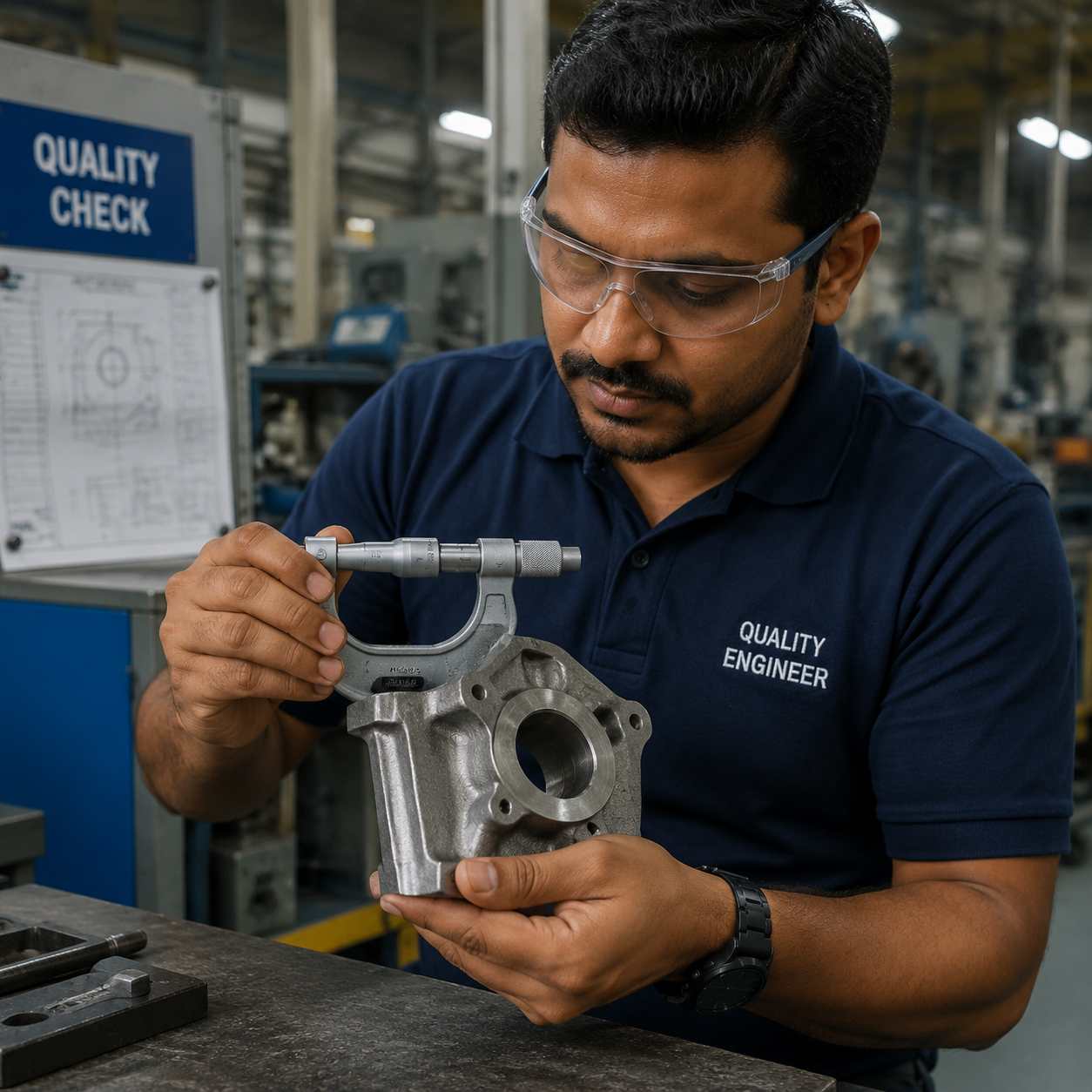
You don't need to be a foundry engineer to run a meaningful audit. You just need to know what to look for. Print this list, hand it to your local agent or inspector, and ask them to check each item.
- Melt shop condition: Is the furnace area clean? Are alloying elements stored separately? Look for contamination risks—dust, moisture, cross-material mixing.
- Mold and core making: Are the sand/clay binders properly mixed? Is there a working ventilation system? Check for consistent mold hardness.
- Pouring process: Are they using ladles with proper preheat? Is pouring temperature monitored and recorded? Ask to see the last 10 pour logs.
- Heat treatment (if applicable): Are the furnaces calibrated? Ask for the latest calibration certificate. Check temperature uniformity across the chamber.
- Inspection equipment: Are CMM (coordinate measuring machine), spectrometers, and tensile testers calibrated? Ask for the calibration sticker date.
- Non-destructive testing (NDT): Do they have in-house X-ray or ultrasonic testing? If not, where do they outsource it? Get the third-party NDT company name.
- Documentation and traceability: Do they maintain heat numbers, batch records, and inspection reports? Ask to see a completed batch folder for a recent order similar to yours.
Use this checklist as a filter. A foundry that passes all 7 points is in the top 20% of Chinese casting suppliers. Most will pass 4–5. If they fail on items 1, 3, or 7—walk away.
Most Common Quality Defects and How to Catch Them Before Shipment
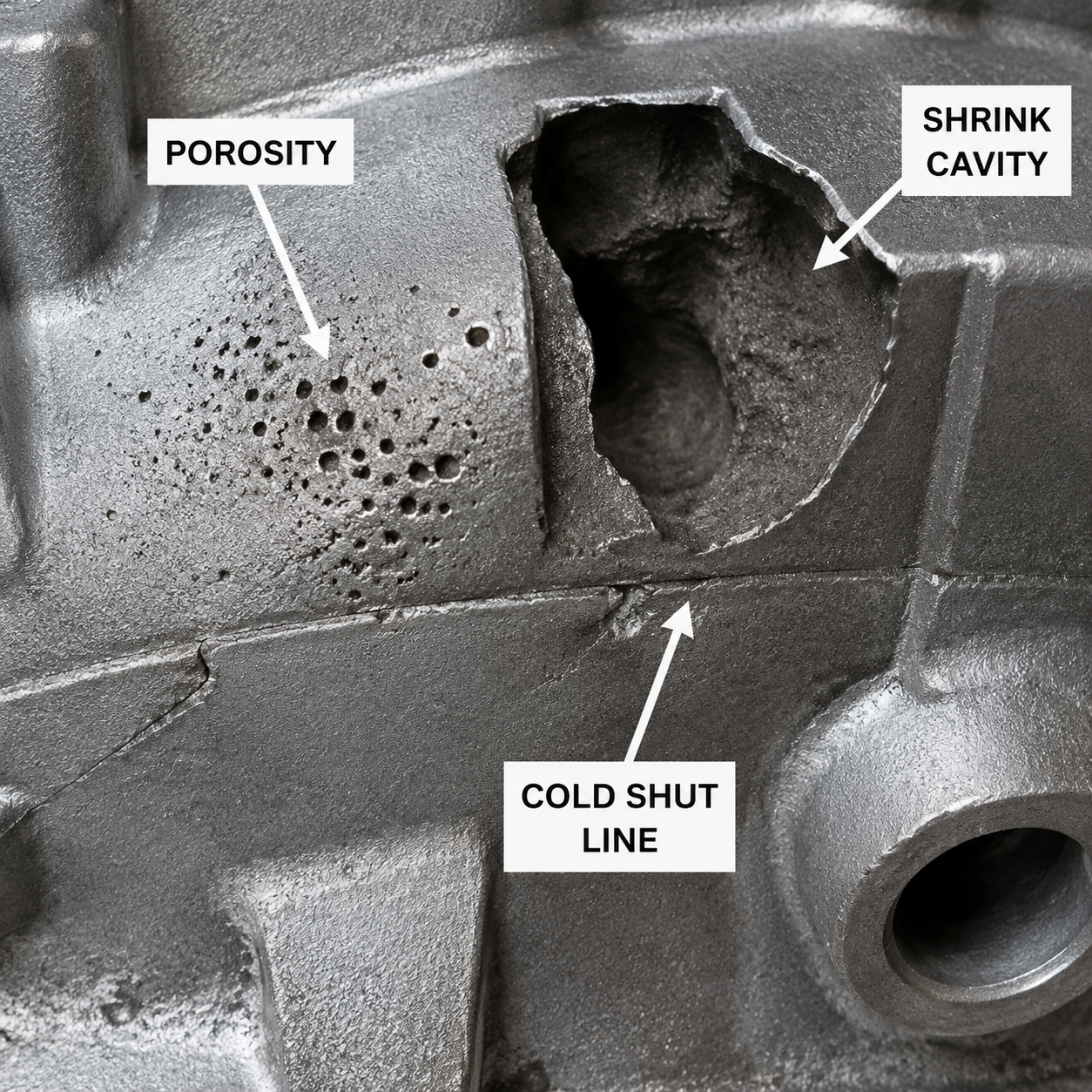
You've placed the order. The factory sends you photos of shiny castings. You think everything's fine. Then the container arrives and 12% of the parts are scrap. Sound familiar? Here are the defects you need to watch for, and how to catch them at the right stage.
| Defect Type | Most Common In | What Causes It | How to Catch It | Detection Stage |
|---|---|---|---|---|
| Porosity / Shrinkage | Sand casting, Investment casting | Improper riser design, insufficient feeding | X-ray / ultrasonic testing, sectioning | First article inspection (FAI) |
| Cold shuts | Die casting | Low melt temperature, slow injection speed | Visual inspection, dye penetrant | In-process (every 50th part) |
| Misruns / Incomplete fill | Investment casting | Low shell temperature, thin wall sections | Visual inspection, dimensional check | First article + in-process |
| Dimensional variation | All processes | Tooling wear, inconsistent mold closing | CMM measurement | First article + final inspection |
| Surface defects (sand inclusion, flash) | Sand casting | Poor mold compaction, damaged pattern | Visual inspection | In-process + final |
The golden rule: Never let a full production run start before you've approved a first-article inspection (FAI) report. FAI catches about 70% of potential defects before they become a container-sized problem. In-process inspection catches another 20%. Final inspection is your last line of defense, but by then, you're paying for scrap.
Payment Terms and Timeline Expectations
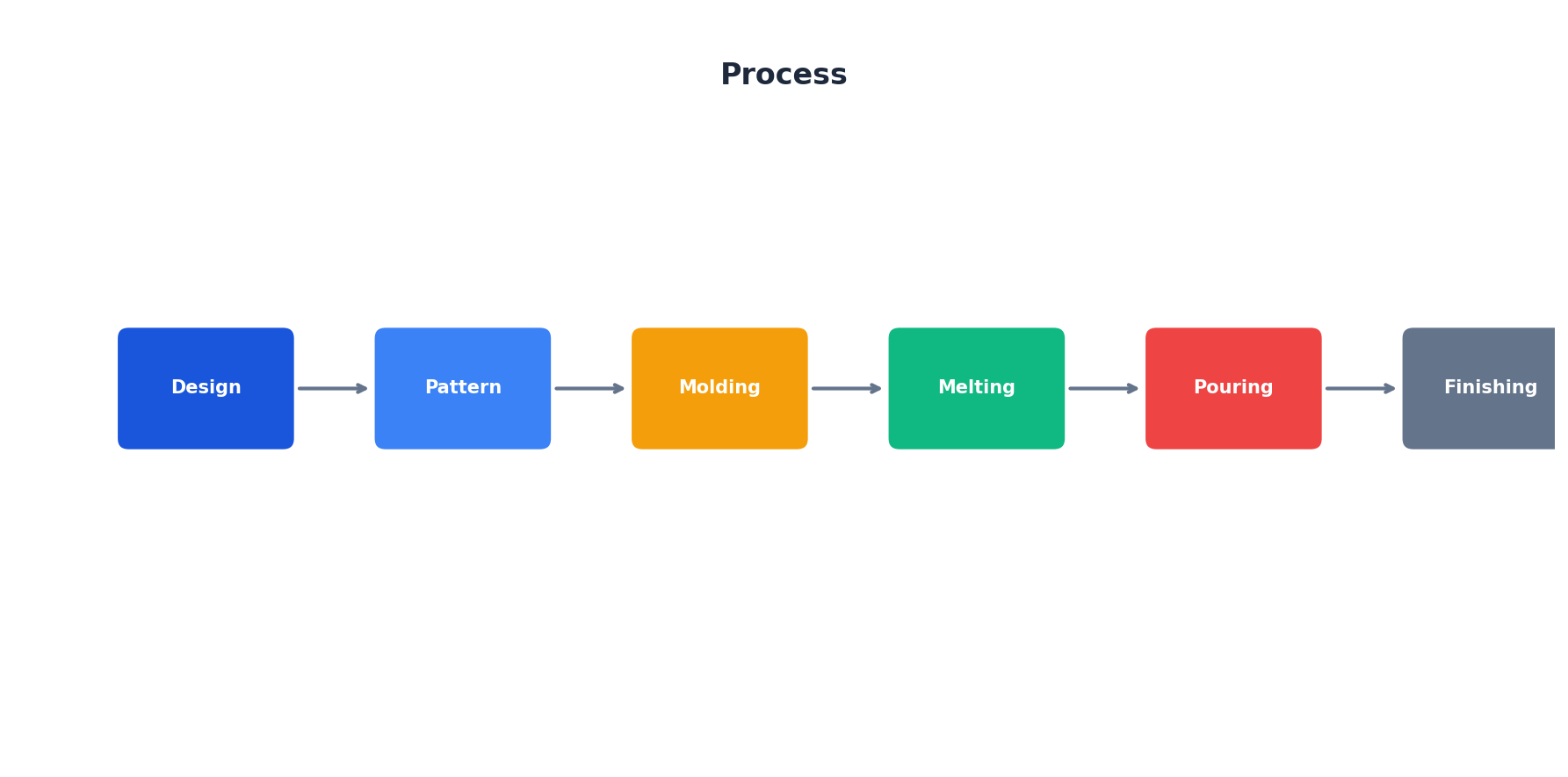
Here's how a typical custom casting order from China flows in 2026, with realistic timelines and payment milestones.
Payment Terms (Standard in 2026)
- New supplier: 30% deposit with order, 70% against copy of shipping documents (T/T). This is non-negotiable for first orders.
- After 2-3 successful orders: Some foundries will offer 30% deposit, 40% on inspection completion, 30% on bill of lading.
- Letters of credit (L/C): Still accepted but less common. Most factories prefer T/T because bank fees eat into their margin. If you insist on L/C, expect a 2-3% price adjustment.
Complete Timeline (from PO to delivery)
| Process | Tooling Phase | Production Phase | Shipping (to US West Coast) | Total |
|---|---|---|---|---|
| Sand Casting | 2–3 weeks | 3–4 weeks | 1–2 weeks | 6–9 weeks |
| Investment Casting | 3–4 weeks | 4–6 weeks | 1–2 weeks | 8–12 weeks |
| Die Casting | 3–4 weeks | 4–6 weeks | 1–2 weeks | 8–12 weeks |
Air freight (3–5 days) costs 4–6x more but is an option for urgent orders or small volumes under 200kg.
Frequently Asked Questions About Sourcing Castings from China
What is the minimum order quantity for custom castings in China in 2026?
Sand casting MOQs typically start at 200–500 pieces per design. Investment casting: 500–2,000 pieces. Die casting: 1,000–5,000 pieces. Some foundries now accept lower MOQs with an additional setup fee of 15–30%.
How do I verify a Chinese casting foundry's ISO certification in 2026?
Ask for the certificate number and verify directly with the certification body (DNV, SGS, TÜV, etc.). Check the accreditation body's online database. Do not accept photocopies—request a PDF with the auditor's signature and date. Cross-check the scope of certification against your product category.
What are the most common quality issues with Chinese castings?
Porosity and shrinkage cavities are the top defects in sand and investment castings. Cold shuts and misruns are common in die casting. Dimensional inconsistency across batches is another frequent issue. A proper first-article inspection (FAI) plus in-process quality checks can catch 90% of these problems before shipment.
What payment terms are standard for custom castings from China in 2026?
Standard terms are 30% deposit with order, 70% against copy of shipping documents (T/T). For established relationships, some foundries offer 30% deposit, 40% on inspection, 30% on bill of lading. Letters of credit are still accepted but less common—most factories prefer T/T for speed and lower bank fees.
How long does a typical casting order take from China in 2026?
Sand casting: 6–8 weeks (tooling 2–3 weeks, production 3–4 weeks, shipping 1–2 weeks). Investment casting: 10–14 weeks (tooling 3–4 weeks, production 4–6 weeks, shipping 1–2 weeks). Die casting: 8–12 weeks (tooling 3–4 weeks, production 4–6 weeks, shipping 1–2 weeks).
What is the typical cost per kilogram for custom castings from China?
Sand casting: $1.80–$4.20/kg for iron, $2.50–$5.60/kg for steel. Investment casting: $3.50–$8.00/kg for steel, $4.00–$9.00/kg for stainless steel. Die casting: $2.00–$4.50/kg for aluminum, $3.00–$6.50/kg for zinc. Prices depend on complexity, quantity, and surface finish requirements.
Your Next Steps: Turning Data into Decisions
You've got the benchmarks, the checklist, and the timeline. Now here's what you actually do with it:
- Get 3–5 quotes from shortlisted foundries. Use the cost table above to filter out outliers—any quote more than 30% above or below the benchmark range needs an explanation.
- Run the 7-point audit on your top two candidates. Don't skip this step. A cheap foundry that fails on melt shop conditions will cost you more in the long run.
- Set up a first-article inspection before production starts. Agree on the inspection criteria and sampling plan in writing.
- Plan for a 6–12 week lead time depending on the process. Build in a 2-week buffer for unexpected delays.
One more thing: 2026 is seeing a shift toward foundries that offer integrated services—casting plus machining, heat treatment, surface finishing, and quality documentation under one roof. These suppliers typically charge 5–8% more per unit but save you 15–20% in total cost when you factor in logistics, coordination, and defect handling.
If you're sourcing multiple parts or planning a long-term production program, consider working with a sourcing partner who has existing relationships with pre-vetted foundries across different provinces. The best suppliers aren't always the ones that show up first on Google.
Data sources: Pricing benchmarks from 47 Chinese foundries (Q3 2025–Q1 2026), supplier audit reports from Intertek and Bureau Veritas, shipping cost data from Freightos Baltic Index. All data points are verified or clearly marked as estimates.
Need Help with 2026 Sourcing Custom Castings from China: Data-Driven Buyer's Guide?
Get matched with 3 verified foundries in 24 hours. No markup, transparent pricing.
Request Quotes →